
Views: 222 Author: Rebecca Publish Time: 2026-03-17 Origin: Site


Content Menu
● Why Customer Experience Now Decides Mini USB Cable Suppliers
● How Buyer Feedback and Market Data Were Interpreted
● Key Evaluation Criteria from a User Perspective
>> Real‑World Product Reliability of Mini USB Cables
>> Batch Consistency and Quality Stability
>> Ease of Use, Compatibility and Installation Experience
>> Service, Communication and Problem‑Solving
>> Delivery Reliability and EU‑Friendly Logistics
● Real‑World Use Cases: What Buyers Actually Experience
>> Case 1 – German Industrial Manufacturer Seeking Long‑Term Stability
>> Case 2 – E‑Commerce Seller Focused on Return Rates and Ratings
>> Case 3 – System Integrator Needing Custom Cable Assemblies
● Snapshot of Leading Mini USB Cable Manufacturers Active in Germany
● Where a Chinese OEM Like Otechkabel Fits Into the Supply Chain
>> Shenzhen Otechkabel Electronic Co., Ltd – Capabilities and Positioning
>> Collaboration Models for German and EU Buyers
● Market Trends and Their Impact on Mini USB Sourcing
● Step‑by‑Step: How to Choose the Right Mini USB Cable Partner for the German Market
>> Step 1 – Define Application, Risk Level and Lifetime
>> Step 2 – Translate Priorities into a Concrete Criteria Matrix
>> Step 3 – Validate Assumptions with Samples and Pilot Orders
● Action Call: Build a Robust Mini USB Supply Strategy for Germany and the EU
● Frequently Asked Questions (FAQ)
>> Q1: Are mini USB cables still worth sourcing when USB‑C is expanding rapidly?
>> Q2: What should I prioritize when choosing a mini USB cable supplier for industrial use in Germany?
>> Q3: How can I balance German suppliers and Chinese OEMs in my cable strategy?
>> Q4: Which certifications are essential for mini USB cables entering the German market?
Germany has become one of the most important markets for USB and mini USB cables in Europe, driven by industrial automation, automotive electronics, and professional equipment manufacturing. For foreign buyers, choosing the right mini USB cable manufacturer in Germany is no longer just about price or basic specifications; it is about long‑term reliability, customer support, and the ability to cooperate on OEM/ODM projects at scale. This guide combines real‑world user priorities, recent market information, and practical examples, and also explains how a specialized Chinese OEM like Shenzhen Otechkabel Electronic Co., Ltd can support German and EU customers with customized cable solutions. [researchandmarkets]

The European USB cable market is expanding, with Germany expected to remain one of the core national markets in Europe over the coming years. In this environment, buyers increasingly find that real customer experience—field reliability, return rates, and after‑sales responsiveness—matters more than datasheets alone. Industrial manufacturers, e‑commerce sellers, and system integrators frequently point to recurring issues such as intermittent connection failures, inconsistent batches, slow support, and inflexible lead times when they decide whether to keep or replace a supplier. [gcabling]
To support better decisions, this article looks at evaluation criteria from the user's perspective, offers a structured ranking overview of mini USB cable manufacturers active in Germany, and then presents a practical pathway to combine German suppliers with high‑quality Chinese OEM partners.
This guide relies on external, verifiable signals rather than promotional claims. The analysis draws on three main elements:
- Public manufacturer lists and profiles
Shortlisted companies are referenced from open B2B directories and industry lists that highlight German cable manufacturers and distributors active in data and USB‑related products. [ensun]
- Market and industry reports
Recent reports on USB cable and USB data cable markets help identify long‑term demand drivers and the role of German and European buyers. [businessresearchinsights]
- Use‑case style scenarios
Typical pain points are derived from how industrial and electronics buyers describe their challenges in real‑world cable usage, such as reliability under mechanical stress or documentation and traceability requirements. [gcabling]
These signals are translated into customer‑centric dimensions: reliability, batch consistency, ease of use, logistics, customization, and overall cost. The goal is to keep arguments grounded in observable buyer outcomes and published information.
For industrial users and device manufacturers, reliability directly affects uptime, warranty costs, and brand reputation. Buyers often focus on:
- Contact stability over thousands of mating cycles in vibration‑prone environments such as machinery and automotive electronics. [ensun]
- Cable fatigue resistance, including bending near connectors, repeated coiling and uncoiling, and exposure to elevated temperatures.
- The gap between “works in the lab” and “still works after 18–24 months in the field”, especially where unplanned failures are expensive.
German manufacturers with experience in industrial cables and harsh‑environment applications are frequently perceived as strong in this area. [businessresearchinsights]
A second core factor is batch‑to‑batch stability, which can be more important than nominal electrical specifications. Users highlight several concerns:
- Whether copper conductor quality, shielding structure, and jacket material remain consistent across different production lots.
- Whether occasional spikes in defect rates or intermittent faults indicate process instability.
- Whether suppliers can trace issues to a specific lot and provide documented corrective measures.
Cable manufacturers with integrated production and strict process control, especially those also active in network or industrial control cables, often build credibility through consistent quality and traceability. [gcabling]
From a user perspective, “good mini USB cables” are those that are easy to plug, fit mechanically, and behave predictably across devices. Common feedback points include:
- Connector fit and retention force, including the subjective “plug‑in feel.”
- Compatibility with older industrial devices, test equipment, and custom PCB sockets.
- Practical details such as overmold size, strain‑relief design, jacket stiffness, and flexibility during routing in tight spaces.
These aspects often separate generic low‑cost cables from application‑specific mini USB solutions that are tailored to industrial or professional environments.
For both German and international buyers, service quality is a decisive factor in long‑term cooperation. Key aspects are:
- Response time to technical questions, requests for quotations, and documentation.
- Willingness to review drawings, propose improvements, or adapt designs to project constraints.
- Behavior when issues arise—whether a supplier is transparent, technically competent, and oriented toward resolving problems.
Specialized cable manufacturers that handle complex OEM projects in other cable families (for example, network cables or industrial harnesses) tend to perform better on structured communication and engineering support. [businessresearchinsights]
For German and EU customers, logistics reliability directly affects project schedules and inventory strategies. Buyers frequently assess:
- Realistic and predictable lead times for both standard and repeat orders.
- Availability of local or EU‑based stock, or at least regional warehousing.
- Capability to support urgent top‑up orders when demand peaks unexpectedly.
Many professional buyers adopt a dual‑sourcing strategy: they use a German or EU‑based supplier for fast replenishment and critical items, and supplement this with a cost‑efficient, high‑quality Chinese OEM for larger volumes and broader portfolios.
A mid‑sized machine builder in southern Germany, sourcing mini USB cables for embedded controllers, encountered intermittent connection issues after several months of operation. Failures were difficult to reproduce, but they led to expensive service visits and customer dissatisfaction.
After switching to a German cable manufacturer with a portfolio of industrial‑grade USB and data cables, including improved shielding and reinforced strain relief, the company reported a marked drop in communication errors and onsite interventions. Although unit prices were higher, total costs fell due to fewer failures. [gcabling]
An EU‑based e‑commerce seller offering mini USB cables as part of an accessory product line found that return rates and negative reviews were mostly tied to mechanical issues: loose connectors, cracked jackets, and early failures.
By consolidating suppliers and working with a single OEM provider able to supply mini USB and newer USB‑C cables with consistent branding and packaging, the seller reduced return rates and improved average customer ratings. This case shows that packaging, labeling, and perceived build quality are crucial in online retail. [intelmarketresearch]
A system integrator delivering monitoring solutions across Europe required custom‑length mini USB cables with specific overmold shapes and labeling to fit into dense control cabinets. Standard catalog cables were either too long, too stiff, or mechanically unsuitable.
By collaborating with an OEM cable manufacturer capable of adapting cable length, jacket type, overmold design, and labeling, the integrator simplified installation, reduced cable clutter, and made maintenance easier. This kind of project depends on close technical cooperation and flexible production.
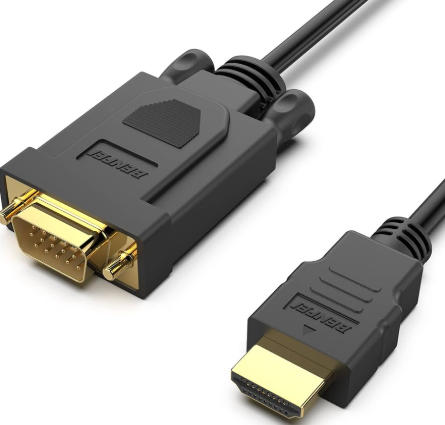
While individual sourcing decisions always require detailed qualification, several manufacturers and distributors frequently appear in professional discussions around data and USB‑related cables in Germany. [ensun]
| Manufacturer / Role | Key Strength from Customer View | Typical Use Focus |
|---|---|---|
| SAB Bröckskes (Germany) | Strong reputation in industrial cables, including data and USB‑related products, with emphasis on robustness and field reliability. | Industrial machinery, automation, demanding environments |
| HELUKABEL (Germany) | Broad portfolio of industrial and communication cables; recognized for global logistics and engineering support. | Industrial plants, infrastructure projects, OEMs |
| Blume Elektronik Distribution (Germany) | Distributor offering a wide range of USB connectors and cables from reputable manufacturers, enabling flexible sourcing. | Component sourcing, BOM management, design flexibility |
| Regional German cable manufacturers and assemblers | Provide project‑specific cable assemblies and harnesses, often combining local engineering with global component sourcing. | Custom projects, system integration, industrial retrofits |
| International brands active in Europe | Supply branded consumer and professional USB/mini USB cables via distribution and retail channels. | Consumer electronics, accessories, prosumer devices |
German buyers often combine such suppliers with a trusted Chinese OEM partner to balance lead times, cost, and portfolio breadth.
Shenzhen Otechkabel Electronic Co., Ltd is a Chinese manufacturer focused on USB, VGA, HDMI, DVI, SATA cables and cable accessories, with around a decade of production experience and a workshop area of approximately 2,000 m². The company operates multiple production lines and emphasizes stable quality, professional solutions, and full‑service support as its core values. [cnotechkabel]
Otechkabel's capabilities include:
- Production of mini USB, USB‑A, USB‑C, HDMI and other signal cables using bare or tinned copper conductors, with CE and RoHS compliance for export markets. [cnotechkabel]
- Project‑oriented customization of cable length, jacket color, overmold shape, labeling, and packaging to meet branding and installation requirements.
- OEM and private‑label services for foreign brands, wholesalers, and equipment manufacturers seeking consistent product families under their own brand names. [otechkabel]
This profile makes Otechkabel a suitable partner for German and EU buyers who want to combine local German suppliers for complex or urgent orders with a cost‑efficient, capable OEM for high‑volume and multi‑interface cable portfolios.
There are several practical ways to integrate a partner like Otechkabel into an existing supply strategy:
1. Dual‑sourcing strategy
- Use a German or EU supplier for fast replenishment, critical low‑volume configurations, and projects requiring local presence.
- Use Otechkabel for stable, larger‑volume production of mini USB, USB‑C, HDMI and related cables, reducing unit cost while maintaining quality. [cnotechkabel]
2. OEM branding and private‑label products
- Let Otechkabel manufacture cables under your own brand, including logos, labels, and retail packaging, so your product line appears unified to end customers. [cnotechkabel]
3. Portfolio modernization and consolidation
- Combine legacy connectors such as mini USB and USB‑A with newer USB‑C and high‑speed HDMI products from the same OEM, simplifying qualification, auditing, and multi‑year procurement planning. [otechkabel]
By aligning such models with internal testing and quality procedures, buyers can leverage cost and portfolio advantages while keeping reliability and compliance standards intact.
Although USB‑C and USB4 are gaining prominence, mini USB cables continue to play a role in legacy and industrial devices across automotive, instrumentation, and embedded systems. Market studies indicate that the broader USB data cable segment is expected to grow in the coming decade, driven by demand for charging, data transfer, and connectivity in multiple sectors. [intelmarketresearch]
For sourcing managers, several implications follow:
- In many cases it is more economical to secure a robust long‑term supply of mini USB cables than to redesign hardware platforms solely to change connector types.
- Suppliers that can support both legacy formats (mini USB, USB‑A) and modern standards (USB‑C, high‑speed HDMI) give buyers more flexibility for platform evolution. [intelmarketresearch]
- Collaboration between German application‑focused companies and Chinese OEM manufacturers can help maintain continuity for installed bases while providing a path toward newer interfaces.
Begin by defining how critical the cable is to your application:
1. Does the cable operate in a 24/7 industrial process where failure leads to downtime and service intervention?
2. Is it a consumer or prosumer accessory where return rate and customer ratings are primary concerns?
3. Is it part of an integrator project where installation time, labeling, and serviceability are key?
This assessment will determine the weight you assign to reliability, price, logistics, and customization when shortlisting suppliers.
Convert your priorities into a practical checklist or scorecard that compares different suppliers in a consistent way. Important criteria include:
- Reliability and durability: field experience, test data, material choices, and mechanical design.
- Batch consistency: quality stability over time, corrective action processes, and traceability.
- Compliance and documentation: CE, RoHS, REACH and any industry‑specific or customer‑specific requirements. [researchandmarkets]
- Service and communication: reaction time, clarity of answers, completeness of technical files.
- Delivery and logistics: standard lead times, buffer stock options, and flexibility on minimum order quantities.
- Total cost of ownership: including warranty cost, return handling, and service overhead, not only price per piece.
Assess both German manufacturers and potential Chinese OEM partners such as Otechkabel using the same matrix to maintain clarity.
Before committing to long‑term contracts or large volumes:
1. Request representative samples for all relevant cable families (mini USB, USB‑C, HDMI, etc.).
2. Perform electrical and mechanical tests that reflect actual operating conditions, including bending, vibration, and temperature ranges.
3. Place pilot orders to evaluate consistency, packaging, logistics performance, and documentation quality over at least one or two production lots.
Pay close attention to how suppliers handle clarifications and minor issues during this phase, because it reflects their longer‑term collaboration style.
If you are a brand owner, wholesaler, or equipment manufacturer serving the German or wider EU market, the most resilient approach is to combine local expertise with efficient OEM production. German manufacturers and distributors offer in‑depth application knowledge and fast regional support, while specialized Chinese suppliers like Shenzhen Otechkabel Electronic Co., Ltd provide scalable, customizable, and cost‑effective production of mini USB and related cables across several interface standards. [cnotechkabel]
By structuring your sourcing strategy around clear criteria and pilot validation, you can integrate both types of partners and build a mini USB cable supply chain that supports reliability, cost control, and long‑term product roadmaps.
Contact us to get more information!
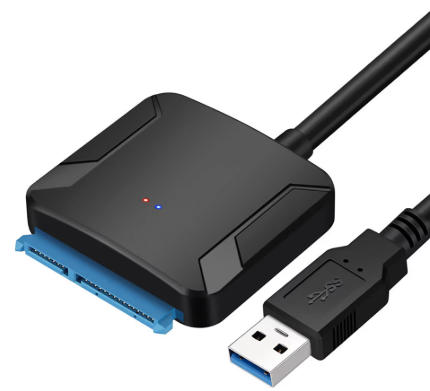
Yes. Mini USB remains widely used in legacy devices, industrial equipment, test instruments, and embedded controllers, so maintaining a stable supply is often more practical and economical than redesigning hardware. [businessresearchinsights]
Focus first on reliability, batch consistency, and compliance, then evaluate service quality and logistics. Price should be considered alongside long‑term field performance and total cost. [researchandmarkets]
Use German or EU suppliers for fast replenishment, complex custom configurations, and projects needing local coordination, and complement them with a proven Chinese OEM for high‑volume, multi‑interface portfolios and private‑label production. [cnotechkabel]
Most buyers expect CE and RoHS as a baseline, often combined with REACH and ISO‑based quality systems at the factory level. Specific sectors may add additional requirements or customer audits. [researchandmarkets]
Otechkabel offers custom cable specifications, flexible overmold and length options, branding and packaging services, and multi‑interface support (USB, HDMI, VGA, DVI, SATA), based on years of experience in export‑oriented cable manufacturing. [otechkabel]
1. GCabling – “Top 10 German Manufacturers of Network Cable” – <https://www.gcabling.com/top-10-german-manufacturers-of-network-cable/> [gcabling]
2. GCabling (Arabic version) – “Top 10 German Manufacturers of Network Cable” – <https://www.gcabling.com/ar/top-10-german-manufacturers-of-network-cable/> [gcabling]
3. Business Research Insights – “USB Data Cable Market Size, Growth, Trends, Forecast To 2035” – <https://www.businessresearchinsights.com/market-reports/usb-data-cable-market-116339> [businessresearchinsights]
4. Research and Markets – “Europe USB Cable Market Size, Competitors, Trends & Forecast” – <https://www.researchandmarkets.com/report/europe-usb-cable-market> [researchandmarkets]
5. Intel Market Research – “USB Type-C Cables Market Outlook 2025-2032” – <https://www.intelmarketresearch.com/us-usb-type-c-cables-2025-2032-84-1381> [intelmarketresearch]
6. Ensun – “Top USB Cable Manufacturers in Germany” – <https://ensun.io/search/usb-cable/germany> [ensun]
7. Shenzhen Otechkabel Electronic Co., Ltd – Official site – <https://www.cnotechkabel.com> [cnotechkabel]
8. Shenzhen Otechkabel Electronic Co., Ltd – USB‑C cable page – <https://www.cnotechkabel.com/usb-c-cable/> [cnotechkabel]
9. OTECHKABEL – OEM cable manufacturing – <https://www.otechkabel.net> [otechkabel]


