


Views: 255 Author: Otechkabel Publish Time: 2026-07-15 Origin: Site


Content Menu
● Introduction: China's Position in Fiber Cable Manufacturing
● How We Selected the Top 10 Manufacturers
● What Experienced Buyers Check in Fiber Cable
● Top 10 Fiber Cable Manufacturers in China (2026)
>> 1. Shenzhen Otechkabel Electronic Co., Ltd. – Flexible OEM Partner for Mixed Cable Needs
>> 2. ZTT (Zhongtian Technology)
>> 4. Yangtze Optical Fibre and Cable (YOFC)
>> 7. Tongding Interconnection
>> 10. Shanghai Shenghuai Cable Group
● Practical Buyer's Guide: From Verification to Logistics
>> Verifying the Factory and Its Documentation
>> Sample Management and Pilot Orders
>> Logistics, Incoterms and Packaging Considerations
● Common Pitfalls and Insider Advice
>> Material Substitution and Hidden Downgrades
>> Overstated Capacity and Overloaded Production Lines
>> An Internal Practice: Structured Dual Sourcing
Over the past decade, China has built one of the most complete industrial chains for optical fiber and cable, from preform production to finished assemblies. A dense network of upstream material suppliers, precision equipment makers and testing laboratories supports large‑scale and highly specialized production.
In parallel, the rapid roll‑out of 5G, data centers and national broadband projects has pushed domestic fiber cable makers to meet demanding technical and reliability requirements. For overseas procurement teams, this combination of volume, technical maturity and export experience makes China an attractive sourcing base for both telecom infrastructure and data‑center connectivity.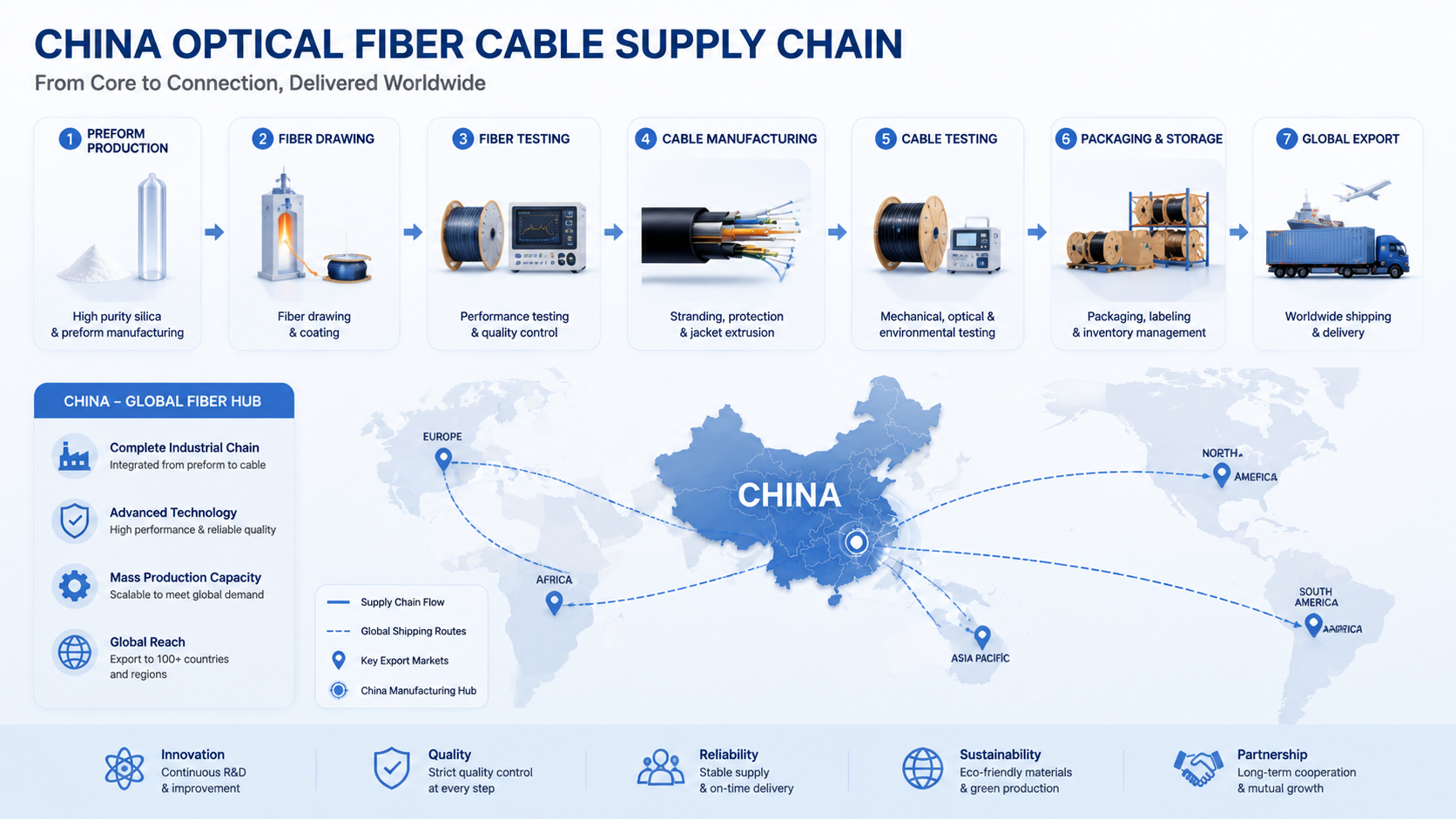
This guide is written from the perspective of international purchasing managers looking for long‑term suppliers rather than one‑off spot buys. The companies listed below were chosen based on several transparent criteria, with an emphasis on practical suitability for sustained cooperation.
Key selection dimensions include:
- Demonstrated production history of several years or more in optical fiber cable or closely related connectivity products.
- Proven export track record to demanding markets such as Europe, North America or large national operators and system integrators.
- Established quality management systems, including traceable processes for incoming inspection, in‑process control and final testing.
- Capability to support custom constructions, labeling and packaging when needed, rather than only standard catalog items.
- Stable lead times and the ability to communicate effectively in English on technical, commercial and logistics matters.
Within this framework, very large corporations, specialized niche manufacturers and agile OEM‑oriented factories are all included. The aim is to help buyers match supplier type to project needs, not simply to rank by size.
Before choosing a partner, experienced procurement managers often run through a technical and process checklist that goes far beyond basic datasheets. A few areas tend to be non‑negotiable.
First, the range of fiber types must cover mainstream requirements. For long‑haul and access networks, single‑mode grades such as G.652D remain a workhorse, while bend‑insensitive variants like G.657A1 and G.657A2 are preferred for indoor and drop applications where tight bends are common. Multimode grades such as OM3 and OM4 are essential for high‑speed data‑center and short‑reach enterprise links.
Second, cable construction and materials must match the installation environment. Strength members – often FRP or steel for indoor and outdoor distribution and aramid yarn for aerial or high‑tension uses – need to be specified clearly. Jacket compounds (LSZH, PVC or PE) must align with fire performance, UV resistance, flexibility and environmental requirements.
Third, buyers increasingly require clear evidence of compliance with safety and environmental regulations. This includes valid declarations and reports for directives that restrict hazardous substances and regulate emissions, particularly for shipments to Europe and other regions with strict rules.
Finally, robust testing and documentation are expected. That usually includes routine optical measurements such as attenuation, insertion loss and return loss, mechanical tests like tensile strength and crush resistance, and, where relevant, temperature cycling and water penetration tests. Equally important is the factory's ability to provide consistent batch reports and to maintain traceability when an issue needs investigation months later.
Shenzhen Otechkabel Electronic Co., Ltd., established in 2006 in Guangdong, has long specialized in data and interface cables such as USB, HDMI, Type‑C, audio and SATA. Over time, it has evolved into a connectivity partner that can also support fiber‑related assemblies and patching solutions for customers seeking a unified vendor for multiple cable categories.
Otechkabel is particularly attractive to small and mid‑size brands that require a high degree of customization. The company offers engineering support for custom lengths, connectors, overmolding, labeling and consumer‑grade packaging, all while maintaining export‑oriented production management and quality control. This makes it well suited to product lines where fiber patch cords or simple indoor fiber runs need to be bundled with a range of copper cables in one coordinated supply program.
What sets Otechkabel apart is its combination of flexibility and communication efficiency. The team is used to working with detailed drawings, iterative sampling cycles and brand‑specific cosmetic requirements. For overseas buyers managing a diverse catalog of electronics, this can reduce the complexity of dealing with many specialized factories and simplify logistics through consolidated shipments out of the Shenzhen electronics hub.
ZTT is one of the largest cable groups in China and a core supplier to national grid and telecom projects. Its portfolio ranges from conventional optical communication cables to complex composite designs such as optical ground wire for power transmission lines and submarine cables for intercity and intercontinental links.
With vertically integrated production and significant investment in research and development, ZTT is geared towards long‑distance, high‑reliability applications. It has amassed extensive references from large carrier and utility projects, which gives procurement teams confidence when planning long‑term frameworks. The trade‑off is that ZTT tends to focus on large, structured orders with high minimum volumes and more formal qualification processes.
Hengtong Optic‑Electric is another global name in optical fiber and cable, active in land‑based backbone networks, submarine systems and data‑center interconnects. It is known for its scale in preform and fiber production and for continuous development of advanced fiber types targeted at very high data rates and extended reach.
From a buyer's perspective, Hengtong stands out for its ability to deliver end‑to‑end solutions for complex transmission networks. Its manufacturing base is capable of supporting large national and international projects with stringent performance requirements. As with other top‑tier global producers, Hengtong generally prioritizes sizeable contracts and long‑term partnerships, making it most suitable for carriers, major integrators and large corporate networks.
YOFC is widely regarded as the world's largest producer of optical fiber and a leading supplier of fiber cable. Its capabilities run from preform manufacturing through to finished cables and, in some cases, related components. Many international buyers see YOFC as a benchmark for consistency and capacity.
The company's product range covers the mainstream single‑mode and multimode grades required for telecom networks, access infrastructure and data‑center applications. It also works on specialty fibers for low‑latency and high‑capacity systems, which makes it relevant for financial networks and bandwidth‑intensive applications. For mid‑size and smaller importers, access may be easier through distributors or integrators that source from YOFC rather than through direct contracts.
FiberHome occupies a unique position in that it manufactures both active network equipment and passive fiber cable and connectivity. This dual role enables it to serve as a one‑stop provider for operators wanting to standardize on a single supplier for much of their optical network.
In fiber cable, FiberHome covers a wide range from indoor and outdoor distribution cables to drop cables for last‑mile access. These products are typically optimized to match the company's own transmission and access systems. For overseas buyers seeking tight interoperability and consolidated technical support, this can be attractive, though it often comes with more complex qualification and contract structures.
Futong is a major player in the Yangtze River Delta region, with strong capabilities in both fiber and cable manufacturing. It has built its reputation on high‑volume output for urban and residential networks, particularly duct and distribution cables.
For planners of large access and metro projects, Futong offers a wide selection of standardized products that have already been proven in extensive domestic deployments. Its processes are designed for repeatability and throughput, making it a solid option when the priority is dependable performance across many thousands of kilometers rather than highly customized constructions.
Tongding Interconnection plays an important role in the roll‑out of mobile and fixed broadband infrastructure across China. The company provides a range of products from traditional outdoor cables to compact solutions suited for dense urban environments and new‑build developments.
In recent years, Tongding has increased its focus on export markets, especially in developing regions that are rapidly expanding their communication networks. For international buyers, it can offer a balance between technical robustness and competitive pricing, particularly where overall network cost is a critical constraint but reliability cannot be compromised.
FS is somewhat different from traditional manufacturers in that it operates as a global brand combining manufacturing, stocking and online sales of optical connectivity products. It offers fiber patch cords, trunk assemblies, MPO/MTP solutions, transceivers and related accessories through a highly digitalized purchasing experience.
This model is especially convenient for enterprise IT departments and smaller integrators that need rapid delivery of standard configurations. While FS does support customized options, its main strength lies in maintaining inventory of popular items and keeping lead times short. Buyers that require stable, catalog‑driven availability for data‑center or campus deployments often find this advantage compelling.
Dekam‑Fiber is a more export‑focused manufacturer that has gained traction in cost‑sensitive markets such as parts of Africa, Latin America and Southeast Asia. It often concentrates on rugged outdoor cables, armored constructions and fundamental FTTH components.
Where budgets are tight and large areas must be covered, Dekam‑Fiber offers basic but reliable designs that can withstand challenging environments. The emphasis is on durability and value rather than on the very latest specialty fibers, making it suitable for operators and integrators that need to balance coverage expansion with strict capital constraints.
Shanghai Shenghuai Cable Group targets demanding industrial and special‑environment projects rather than mainstream telecom roll‑outs. The company produces cables designed for extreme temperatures, chemical exposure, mechanical stress and, in some cases, radiation or military conditions.
Its products are often used in sectors such as oil and gas, mining, heavy industry and defense‑related infrastructure. For buyers in these fields, off‑the‑shelf telecom cables are usually insufficient. Working with a specialist like Shenghuai can ensure that cables meet the combination of mechanical, chemical and safety requirements defined by sector‑specific standards and project specifications.
The first step in working with any new supplier is confirming who you are actually dealing with. Experienced buyers obtain the legal company name, registration number and full address, then cross‑check this information on official business registration platforms or authoritative databases. This ensures that the entity issuing invoices and contracts is the same one operating the factory.
Equally important is confirmation of management system certificates and product‑related approvals. Genuine certificates list the company name, address, certified scope and validity dates, and can be verified against the issuing body's own database. A frequent hidden risk is that the certified scope covers only a portion of the product range or even a different category entirely. Taking the time to match the scope description with the specific cables you plan to purchase can prevent serious problems later.
Professional buyers rarely move directly from a quotation to full‑scale orders. Instead, they design a sampling and pilot‑order process that tests both the product and the supplier's internal controls. The initial step is usually a small set of samples covering each target cable type, delivered with full test reports and clear labeling. This allows technical teams to inspect structure, workmanship and performance.
After approval of samples, a pilot order acts as a stress test for the factory's production planning, quality consistency and logistics. The pilot should be large enough to expose potential weaknesses but small enough to limit financial risk. During incoming inspection, buyers often perform random optical and mechanical testing, checking whether the pilot shipment matches the reported data and the previously approved samples.
Because fiber cables are relatively heavy and bulky compared with their unit price, logistics planning has a big impact on total cost. Long‑distance trunk cables and large access network orders tend to move by sea under terms such as FOB or CIF, while higher‑value or urgent assemblies may justify air freight under terms like CIP. The choice of departure port, consolidation strategy and freight partner all influence lead time and damage risk.
Packaging details deserve equal attention. Drum size, unit length per drum, palletization, moisture protection and outer labeling all affect how easy it is to handle and deploy the cable once it arrives on site. Many buyers now specify not only the physical packaging but also unique identifiers such as barcodes or QR codes on each drum to support traceability and warehouse management.
One of the most frequent problems in low‑cost offers is subtle material downgrading. This can involve replacing specified LSZH compounds with cheaper mixes that look similar but release more smoke or toxic gases in a fire, or reducing the amount of aramid yarn in aerial cables, which may only show its effect years later through increased sag or higher break rates. Because basic tests can still pass, such substitutions often go unnoticed until a failure occurs.
To guard against this, experienced buyers demand detailed material specifications, including compound grades, mechanical properties and, where relevant, flame and smoke performance classifications. They also reserve the right to send random samples for independent testing, a practice that both protects projects and signals to suppliers that long‑term relationships will be built on transparency rather than on blind trust.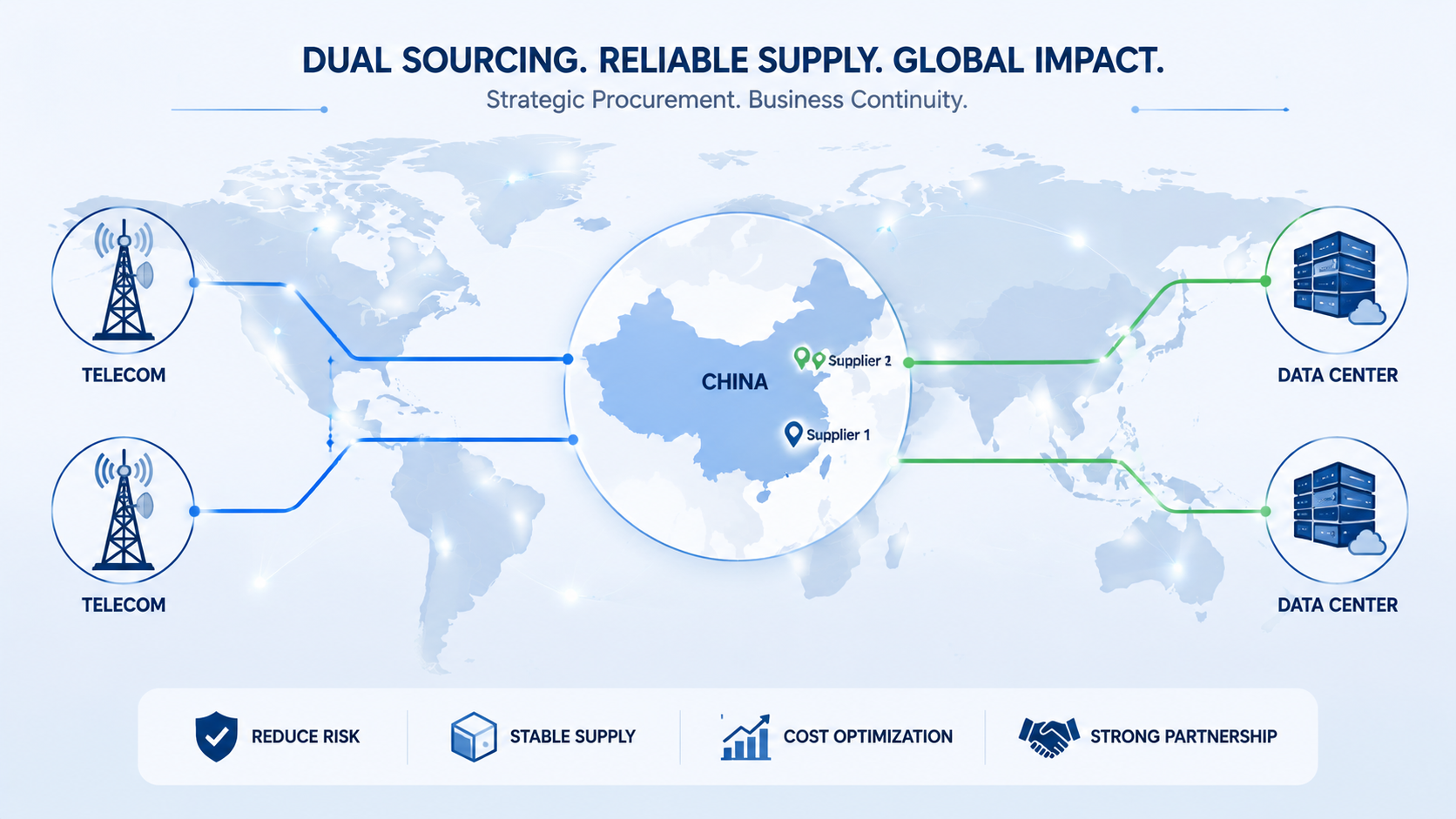
Another recurring risk is a mismatch between promised and actual capacity. Smaller factories in particular may accept multiple large orders near the same time, pushing their production lines beyond sustainable throughput. The result can be slipped delivery dates, rushed production, or both. These issues may only surface after the first major order, when schedules are already tight.
Experienced procurement managers therefore request realistic production plans for big projects. This can include a week‑by‑week output schedule and visibility into how many lines will be assigned to the buyer's order. Where volumes are substantial, some buyers also negotiate penalties for late deliveries and incorporate them into framework agreements to align incentives.
Even technically capable factories may struggle with consistent documentation. Some batches arrive with complete optical and mechanical test reports, while others include only basic summaries. This inconsistency complicates troubleshooting and makes it difficult to link a field failure back to specific batches or process conditions.
To avoid this, buyers define documentation requirements as part of the technical agreement: which tests are mandatory, what format reports should follow, and what identifiers (batch numbers, drum numbers, production dates) must appear. Linking final payments to the delivery of both acceptable products and complete documentation helps ensure these requirements are taken seriously.
One internal practice followed by many network operators and larger integrators is structured dual sourcing. Rather than relying on a single factory, they qualify at least two suppliers for each major cable category – commonly one large, established producer and one more flexible mid‑sized factory.
This arrangement maintains competitive tension and provides a natural backup if one source faces capacity or logistics issues. It also enables buyers to allocate complex, high‑visibility projects to the largest suppliers while using more agile partners for niche products, fast‑track orders or projects with special construction and labeling requirements.
1. Optical Fiber and Cable Manufacturing in China – Market size and growth outlook. https://www.ibisworld.com/china/market-size/optical-fiber-and-cable-manufacturing/611/
2. Analysis of the status of the optical fiber and cable industry. https://en.fibercore.cn/news_detail/11.html
3. China exports of optical fiber cables – trade statistics and partner countries. https://wits.worldbank.org/trade/comtrade/en/country/CHN/year/2024/tradeflow/Exports/partner/ALL/product/854470
4. China exports of insulated wire and cable – time series data. https://www.ceicdata.com/en/china/usd-export-by-major-commodity-value/export-insulated-wire-or-cable
5. Top fiber optic cable manufacturers in China – industry overview and company profiles. https://hkcablemachine.com/top-10-fiber-optic-cable-manufacturers-in-china/
6. Ranking and analysis of leading Chinese fiber optic cable manufacturers. https://www.ztocable.com/chinas-top-10-fiber-optic-cable-manufacturers-for-2026/
7. Guidance on verifying factory certifications and management system documents. https://www.sourcingwill.com/how-to-verify-factory-certifications-in-china-iso-ce-etc/
8. ISO 9001 certified Chinese manufacturers – buyer guidance. https://seller.alibaba.com/blogs/2026/southeast-asia/baby-products/iso-9001-certification-guide-alibaba-b2b-sourcing
9. Compliance and regulatory standards for optical networking products. https://atgbics.com/pages/compliance
10. Examples of RoHS and REACH compliance statements for fiber optic cables. https://www.occfiber.com/reach/
11. Company overview and product scope of Shenzhen Otechkabel Electronic Co., Ltd. https://www.otechkabel.net/aboutus.html
12. Trade and company profile of Shenzhen Otechkabel Electronic Co., Ltd. https://otechkabel.en.alibaba.com/company_profile.html


