


Views: 288 Author: Otechkabel Publish Time: 2026-07-17 Origin: Site


Content Menu
● Introduction: The Role of DVI Cables in the American Market
● How to Evaluate High‑Quality DVI Cable Suppliers
● Technical Factors Specific to DVI Cables
● Selection Criteria Used in This Guide
● Key DVI‑Related Partners Serving the American Market
>> Shenzhen Otechkabel Electronic Co., Ltd. – Agile OEM Partner for Brand Owners
>> Belden – Industrial and Enterprise Connectivity Brand
>> Tripp Lite – Broad IT and AV Connectivity Portfolio
>> CommScope – Large‑Scale Infrastructure Cabling
>> Panduit – Structured Cabling and Industrial Systems
>> American Distributors and Specialist Cable Houses
>> Global Directories as Starting Points
● Representative Comparison of Supplier Roles
● Buyer's Guide: Practical Steps for Sourcing DVI Cables
>> Verifying certifications and documentation
>> Designing a sample and pilot process
>> Managing logistics and inventory for American projects
>> Working with OEM partners like Otechkabel
● Common Pitfalls in DVI Cable Procurement and How to Avoid Them
● Frequently Asked Questions from Professional Buyers
Although newer interfaces such as HDMI and DisplayPort dominate consumer electronics, DVI remains widely used in industrial computers, medical equipment, legacy broadcast systems, and professional AV installations across America. These environments value signal stability, predictable lifecycles and backward compatibility more than rapid interface changes. For procurement managers, this means DVI cables are often part of long‑running platforms where component quality and continuity of supply are critical.
Choosing partners that serve the American market effectively is not simply a question of geography. Many brands and distributors operate domestically while relying on overseas factories for production. The real challenge is to identify suppliers and OEM partners that combine robust engineering, mature quality control, and stable capacity with clear communication and reliable logistics. This guide focuses on those aspects and outlines how to screen, compare and cooperate with such partners over multiple years.
Professional buyers rarely rely on a single signal of reliability. Instead, they apply a structured set of criteria when shortlisting DVI cable suppliers, whether they are domestic manufacturers, distributors, or overseas OEM factories.
First, certifications and compliance form the foundation. A serious cable factory will operate under a documented quality management system such as ISO 9001, supported by environmental and workplace standards where relevant. On the product side, DVI cables must comply with the safety and environmental regulations of their target markets, including restrictions on hazardous substances and requirements for proper labeling and documentation.
Second, engineering and development capability matter greatly for DVI assemblies. A supplier that only performs basic assembly with purchased components is far less flexible than one that owns tooling and molding equipment, uses professional design software, and can adjust conductor, shielding, strain relief and overmolding to match specific application requirements. For industrial or medical projects, buyers benefit significantly from partners who can participate in the design process instead of merely following a fixed specification.
Third, quality control and testing separate serious cable manufacturers from low‑end assemblers. Beyond simple continuity checks, mature factories invest in signal integrity testing for single‑link and dual‑link DVI, environmental aging tests, mechanical stress tests on connectors, and detailed inspection routines at multiple stages of production. Buyers should pay attention not only to the presence of test machines, but also to documented procedures and traceability practices.
Finally, capacity, lead time and delivery stability determine whether a supplier can support long‑term contracts. Workshop size, number of lines, annual output, and historical on‑time delivery performance give procurement managers a realistic view of what the factory can handle. Ideally, partners should be able to scale production without compromising on quality or pushing lead times beyond workable limits for projects in America.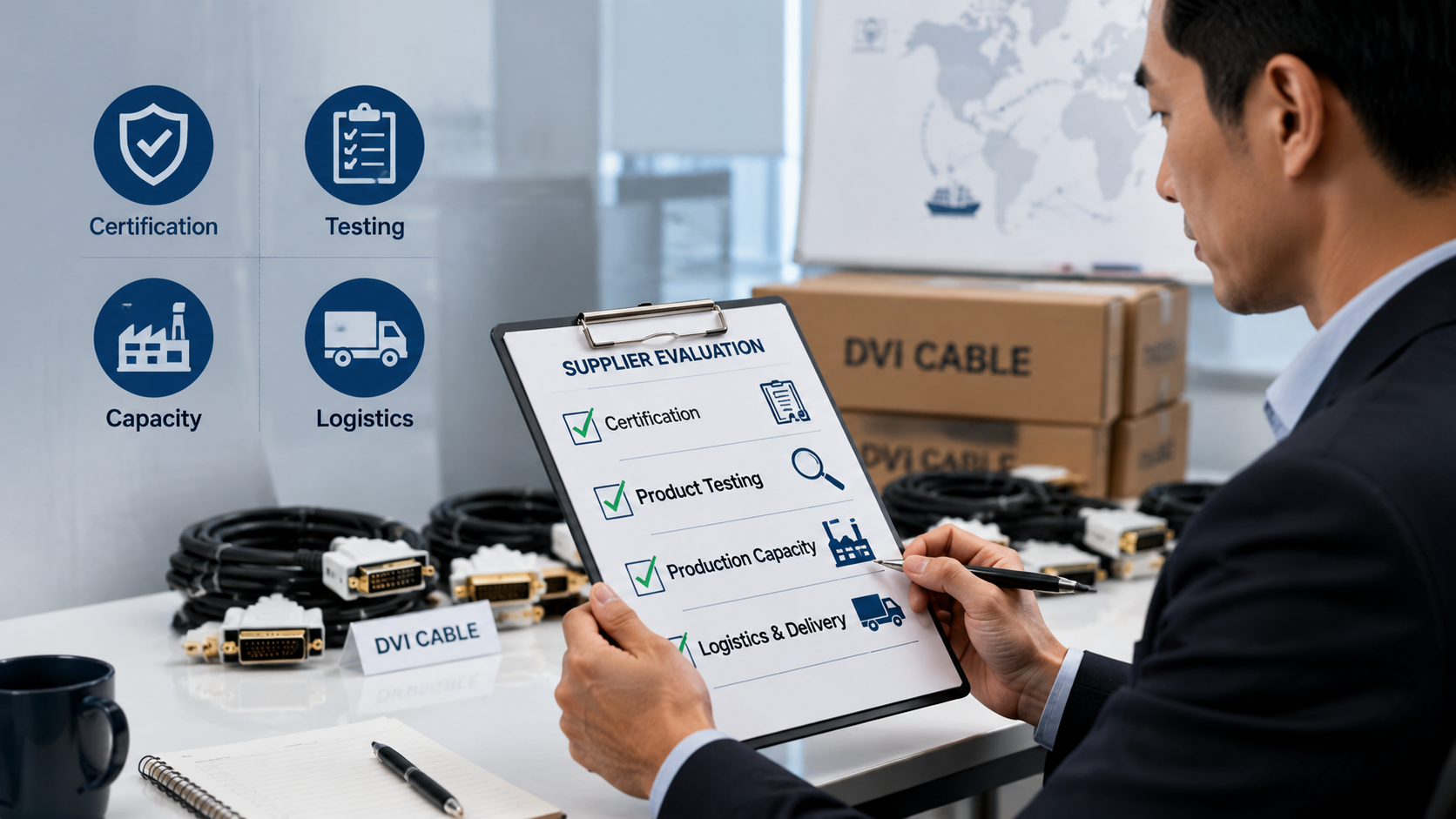
On the surface, a DVI cable may look like a simple commodity. In practice, several technical variables influence performance, durability and total cost of ownership, especially in professional environments.
One key factor is the conductor and shielding design. High‑quality DVI cables use consistent copper conductors and carefully specified shielding structures that manage impedance and electromagnetic interference. In dual‑link configurations, where the cable carries more data for higher resolutions, small deviations in design can translate into intermittent display issues or complete signal loss in noisy environments such as factory floors.
Connector design and manufacturing also play a central role. The plating thickness and uniformity on contacts affect both electrical performance and mechanical longevity. Poor plating can pass initial tests yet fail after repeated mating cycles. Strain relief and overmolding are equally important, as they protect solder joints and contacts from mechanical stress when the cable is frequently bent or connected and disconnected.
Environmental suitability is another dimension. Jacket materials and overall construction must withstand the conditions of the installation: heat, cold, chemical exposure, flexing, or tight routing near other cables. In medical or industrial settings, a DVI cable that cannot maintain insulation integrity and flexibility over time becomes a maintenance risk and potential safety concern.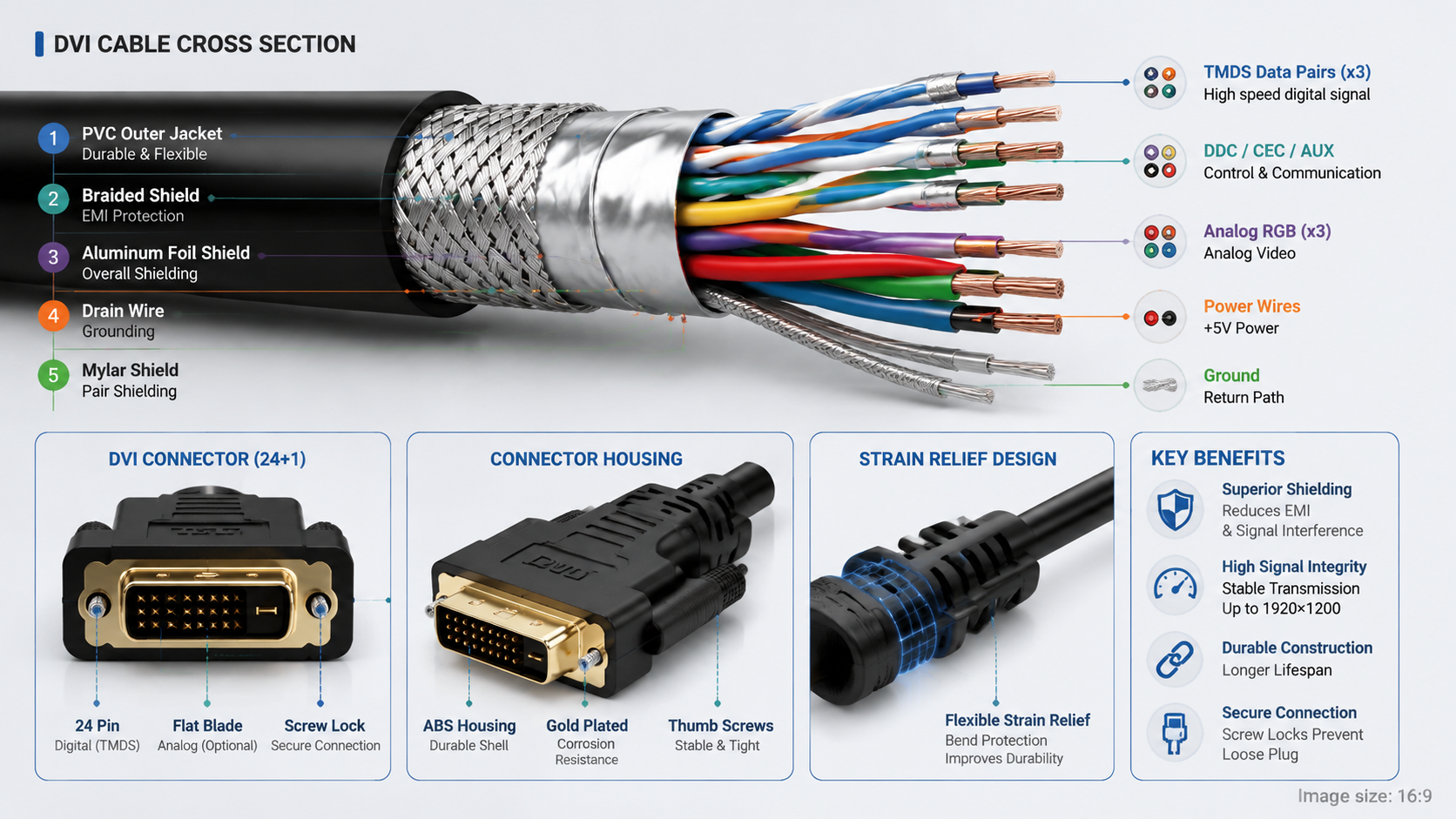
To keep this guide practical for procurement managers, a set of transparent selection criteria was applied when choosing representative manufacturers and suppliers relevant to DVI cables in the American context.
The first criterion is demonstrated activity in DVI or closely related video cable assemblies. While many companies have shifted their attention toward newer interfaces, the focus here is on partners that maintain DVI products or have a clear legacy support strategy. This includes both direct manufacturers and brands that control their cable portfolios through contract production.
The second criterion is the ability to serve buyers in America at scale. Some companies manufacture domestically, others ship from overseas yet have established export channels and distribution networks. What matters for buyers is the combination of practical lead times, predictable logistics, and a clear after‑sales support structure.
The third criterion is evidence of compliance and structured quality control. This goes beyond marketing statements and looks for external certifications, documented processes and clear indications that the supplier treats cable production as an engineered activity rather than a purely manual operation.
The fourth criterion is proven experience with OEM or customized projects. DVI cables frequently require variations in length, shielding, labeling, or connector configurations to match specific device designs. Suppliers that can handle such variations consistently offer more long‑term value than those limited to a fixed catalog.
Taken together, these criteria favor a mix of American brands and distributors, plus carefully selected OEM factories that work closely with American clients. This combination reflects how many real‑world supply chains for DVI and related cables are structured today.
Shenzhen Otechkabel Electronic Co., Ltd. is located in China's electronics manufacturing cluster and has spent more than a decade producing computer and video cables, including DVI, HDMI, USB, VGA and related accessories, for overseas buyers. Its factory operates multiple production lines in a mid‑size workshop and uses dedicated testing equipment to ensure basic electrical and functional reliability across batches.
A distinctive feature of Otechkabel is its emphasis on in‑house engineering and development for cable projects. The company maintains its own tooling and molding facilities and relies on professional design software to create and adjust connector and cable structures. This allows it to support OEM and ODM projects where procurement managers and engineers need more than off‑the‑shelf cables, such as customized lengths, specialized shielding, different overmolding designs, or tailored labeling and packaging.
From the perspective of American brand owners and mid‑size distributors, Otechkabel is interesting because it combines relatively flexible minimum order quantities with attentive communication from its international sales team. Instead of targeting only very large volume contracts, it is willing to invest effort in small and medium projects, helping emerging brands and niche integrators build differentiated product lines with stable quality and reasonable cost.
Belden has long been associated with industrial and enterprise cabling solutions, providing cables and connectivity components for automation systems, broadcast, data centers and other high‑reliability applications. While the company's portfolio today is strongly focused on network and fieldbus technologies, it maintains support for legacy video and control interfaces, including various forms of specialized assemblies that coexist with DVI in industrial PCs and professional display systems.
As a brand, Belden tends to be selected not only for individual cable part numbers but also for its system‑level approach. Buyers in regulated and mission‑critical environments value the company's documentation practices, product lifecycle management and engineering support. When DVI cables are part of a broader infrastructure, procuring them from the same brand that supplies other connectivity components can simplify qualification and reduce risk.
Tripp Lite, now under a larger power and connectivity group, offers a broad range of IT and AV cables, including DVI variants for computers, monitors and projectors. The brand's catalog covers common single‑link and dual‑link DVI cables, adapters to and from other interfaces, and mixed connectivity accessories used in corporate IT and education environments.
For procurement managers, Tripp Lite's value lies in its extensive catalog and strong distribution footprint in America. It is often possible to consolidate purchases of DVI cables with surge protection, power distribution and other connectivity hardware from the same source, thereby streamlining procurement and logistics. The company has also made efforts to incorporate more environmentally conscious cable designs, which can help buyers meet internal sustainability goals while maintaining compatibility with existing equipment.
CommScope is known for its involvement in telecommunications and data center infrastructure, supplying copper and fiber systems used in large deployments. DVI is not one of its headline products, yet the company's broader cabling ecosystem frequently surrounds installations where legacy video interfaces remain in use.
Some buyers choose to source DVI or related cables from partners aligned with their main infrastructure providers, particularly when large sites are standardized around one cabling architecture. In such cases, CommScope's documentation, compliance assurances and project management experience can be relevant, even if DVI volumes are modest compared to network cables.
Panduit provides structured cabling systems and industrial connectivity solutions used widely in factories, data centers and commercial buildings. Its offerings emphasize mechanical robustness, labeling, routing accessories and system integration rather than standalone cables.
Procurement managers dealing with complex facilities sometimes prefer to buy video and control cables from the same supplier that provides structured cabling, cable management hardware and documentation templates. This approach makes it easier to manage installations over the long term and to maintain a consistent standard across different types of connectivity, including DVI where required.
Across America, specialist cable houses and broad‑line distributors carry DVI cables as part of their inventory. Many of these companies are listed in industrial directories and operate as intermediaries between buyers and manufacturing partners, often including overseas factories.
For urgent or smaller projects, these distributors can be the most practical source of DVI cables. They maintain domestic stock, offer short lead times, and provide a degree of technical support and warranty handling that is difficult to match when purchasing directly from distant factories. In many cases, they also manage private‑label or branded products produced by OEM partners, thereby combining cost advantages with a familiar local label.
Engineering and procurement teams frequently use technical directories to identify potential DVI suppliers. These platforms allow users to filter companies by region, capabilities and product categories, making them suitable for early‑stage research rather than direct ordering.
While directory listings cannot replace deep due diligence, they are useful for expanding the candidate pool, discovering niche manufacturers, and identifying distributors willing to support specialized projects. Buyers can then reach out directly, request more detailed information and move into a structured evaluation process.
Different types of DVI cable partners serve different strategic roles in the supply chain for American buyers. A simplified comparison helps clarify where each type fits best.
Otechkabel represents the flexible OEM factory category. It focuses on customized production, supports varying cable designs, and is comfortable working with mid‑size volumes. Its strengths are engineering support, adaptability and cost‑effective manufacturing, which make it suitable for brand owners building differentiated products or private labels.
Large connectivity brands such as Belden, Tripp Lite, CommScope and Panduit occupy the system and infrastructure space. They provide broader solutions where DVI is one of many components. Their strengths include long product lifecycles, comprehensive documentation and integration with other parts of a site's connectivity architecture. They suit buyers who prioritize standardization and rely on long‑term support.
Domestic distributors bridge the gap between factory and end customer. They offer short lead times, local service and the convenience of consolidating multiple cable types into single purchase orders. For buyers managing complex inventories, distributors often become the go‑to source for standard DVI cables and replacement stock, while OEM factories handle larger or more customized batches.
Buyers should always request full sets of certifications and technical documents from potential suppliers. This includes quality management certificates, product‑level compliance declarations and third‑party test reports where applicable. The important step is to confirm that certificates are current, issued by recognized bodies and correspond to the actual legal entities that will sign the supply contract.
Beyond certificates, technical datasheets and drawings provide insight into how seriously a supplier approaches engineering. Good documentation clearly states conductor type, shielding structure, connector materials, plating thickness, mechanical tolerances and environmental ratings. Procurement teams should expect these details to be available for any DVI cable used in demanding applications.
A structured sample process reduces risk before entering long‑term agreements. Buyers typically start with small batches of DVI cables matching the intended specification and run both laboratory and field tests. In many cases, it is wise to test multiple suppliers in parallel, especially when the project involves dual‑link DVI or challenging installation environments.
After initial technical approval, pilot orders for limited volumes can validate the factory's ability to reproduce the product consistently. Procurement managers should track not only quality metrics but also communication responsiveness, adherence to promised lead times and clarity of packing and labeling. These behavioral signals often reveal whether a supplier will be a reliable long‑term partner.
When sourcing from overseas factories, buyers must account for ocean or air freight transit times, customs clearance and potential delays at ports. DVI cables are relatively compact and robust, but they still require appropriate packaging to avoid connector damage and kinking. Clear carton labeling and documentation accelerate inspection and stocking processes once the goods arrive.
Many American buyers choose a hybrid approach: they maintain baseline inventory through domestic distributors and supplement it with container shipments from OEM partners for larger, planned projects. This combination balances inventory risk, cash flow and flexibility. It also provides a buffer if unexpected project changes or schedule shifts occur.
To get the most out of an OEM factory, buyers should share detailed product roadmaps, expected volumes and technical roadmaps early in the relationship. For example, if a brand intends to phase out certain DVI lengths or transition to mixed DVI and adapter solutions, the factory can adjust tooling plans, material procurement and workforce allocation accordingly.
International factories appreciate clear communication and timely feedback on samples and pilot orders. When issues are identified, buyers that respond with specific observations and data help the factory implement corrective actions more effectively. Over time, this collaborative pattern builds trust and reduces friction.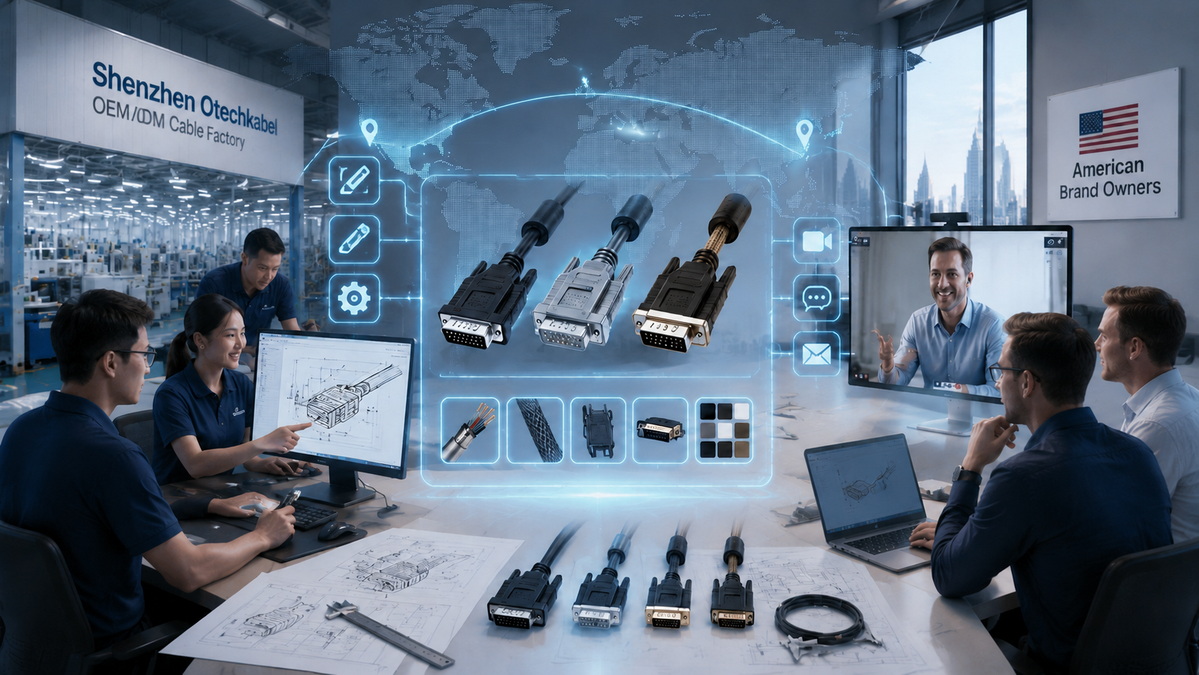
Despite the apparent simplicity of DVI cables, several recurring problems affect long‑term performance and procurement outcomes.
One of the most common issues is material substitution without adequate disclosure. This can take the form of lower‑grade copper, reduced shielding coverage or changes in jacket compounds that cut costs but compromise performance or durability. Because basic continuity tests do not reveal these differences, buyers must specify material requirements explicitly, audit material suppliers when feasible and perform periodic incoming inspections.
Another frequent problem is connector reliability. Thin or inconsistent plating, poorly controlled soldering and insufficient strain relief can lead to intermittent failures and increased warranty claims. These issues often appear after months of use, long after initial qualification tests. Mitigation involves specifying minimum plating thickness, requesting connector drawings, and requiring that the factory run mechanical lifecycle tests representative of real‑world use.
A less visible concern arises when certification expiry dates are overlooked. Some suppliers continue to display old certificates on websites or catalogs even after they have lapsed. Buyers who rely solely on these images risk compliance issues later. It is therefore important to verify certificate status directly with issuing bodies or through trusted validation platforms and to check that certificate scope aligns with the specific products being purchased.
Finally, there is an internal habit among experienced buyers that rarely appears in public documentation: asking for anonymized non‑conformance and corrective action records from recent audits. Suppliers willing to share such information, even in summarized form, tend to have more mature quality cultures and are more open to improvement. This form of transparency often predicts how a factory will respond when issues inevitably arise during long‑term cooperation.
1. How can I confirm that a factory's quality certification is still valid?
You can request the certificate number and issuing body from the supplier, then verify the details directly through the issuing organization or its validation platform. Checking the expiry date and scope ensures that the certificate covers the relevant production activities and has not lapsed.
2. What tests should be included in a DVI cable validation plan for demanding applications?
A robust plan generally includes electrical continuity, insulation resistance, signal integrity testing at the target resolution, mechanical strain tests on connectors and environmental aging simulations such as temperature cycling. For dual‑link DVI, signal integrity becomes particularly critical and should be performed under worst‑case conditions.
3. How can I evaluate whether an OEM factory is truly capable of handling customized DVI projects?
Look for evidence of in‑house design tools, tooling and molding equipment, and a track record of past custom projects in similar product categories. Factories that can show drawings, prototypes and case studies of tailored cable assemblies are more likely to support design iterations effectively than those limited to catalog production.
4. What is a practical way to combine American distributors and overseas factories without losing control of quality?
One practical approach is to define a unified technical specification and testing protocol for each DVI part number, then share it with both domestic distributors and OEM factories. Periodic cross‑checking of samples from each source, along with shared non‑conformance reporting, helps maintain alignment and prevents divergence between batches produced in different locations.
5. How can I reduce the risk of downgraded materials in long‑term DVI supply contracts?
To reduce this risk, embed material specifications directly into contracts and purchase orders, and make them auditable. Include periodic inspections and, where feasible, audits of the factory's key material suppliers. Using multiple data points—such as incoming inspection results, traceability records and occasional third‑party tests—creates a deterrent against silent material changes.
1. Allied Market Research – DVI Cable Market Size, Share & Industry Growth | Analysis – 2027 https://www.alliedmarketresearch.com/dvi-cable-market-A08076
2. Data Insights Reports – Dual Link DVI Cable Market: Market Analysis and Growth Roadmap https://www.datainsightsreports.com/reports/dual-link-dvi-cable-market-277012
3. Cabledatasheet – Top 15 Network Cable Suppliers in US https://www.cabledatasheet.com/global/top-15-network-cable-suppliers-in-us/
4. Thomasnet – DVI Cables Manufacturers and Suppliers in the USA and Canada https://www.thomasnet.com/suppliers/usa/dvi-cables-97002349
5. GlobalSpec – DVI Cables Suppliers https://www.globalspec.com/suppliers/5606/dvi_cables
6. Global Sources – DVI Cable Assemblies Manufacturers and Suppliers https://www.globalsources.com/category/dvi-cable-assemblies-manufacturer-supplier_22677/
7. Statista – Connectivity and Video Interface Market Data (various reports, 2025–2026) https://www.statista.com
8. IAF CertSearch – Certification Validation for ISO Standards https://www.iafcertsearch.org/
9. IRQS – Electronics Sector Quality Certification Overview https://www.irqs.co.in/sectors/electronics
10. CapelFPC – How to Get ISO 9001 Certification: A Straightforward Guide for Electronics Manufacturers https://www.capelfpc.com/industry-news/how-to-get-iso-9001-certification-a-straightforward-guide-for-electronics-manufacturers
11. Otechkabel – About Shenzhen Otechkabel Electronic Co., Ltd. https://www.otechkabel.net/aboutus.html


