


Views: 234 Author: Otechkabel Publish Time: 2026-07-10 Origin: Site


Automotive USB has moved far beyond the simple car charger. Today, it powers fast charging, data transfer, infotainment, passenger convenience, and the connected vehicle experience. For manufacturers, distributors, and brand owners, this shift creates a clear opportunity: better USB cable design can directly improve product performance, user satisfaction, and automotive fitment.
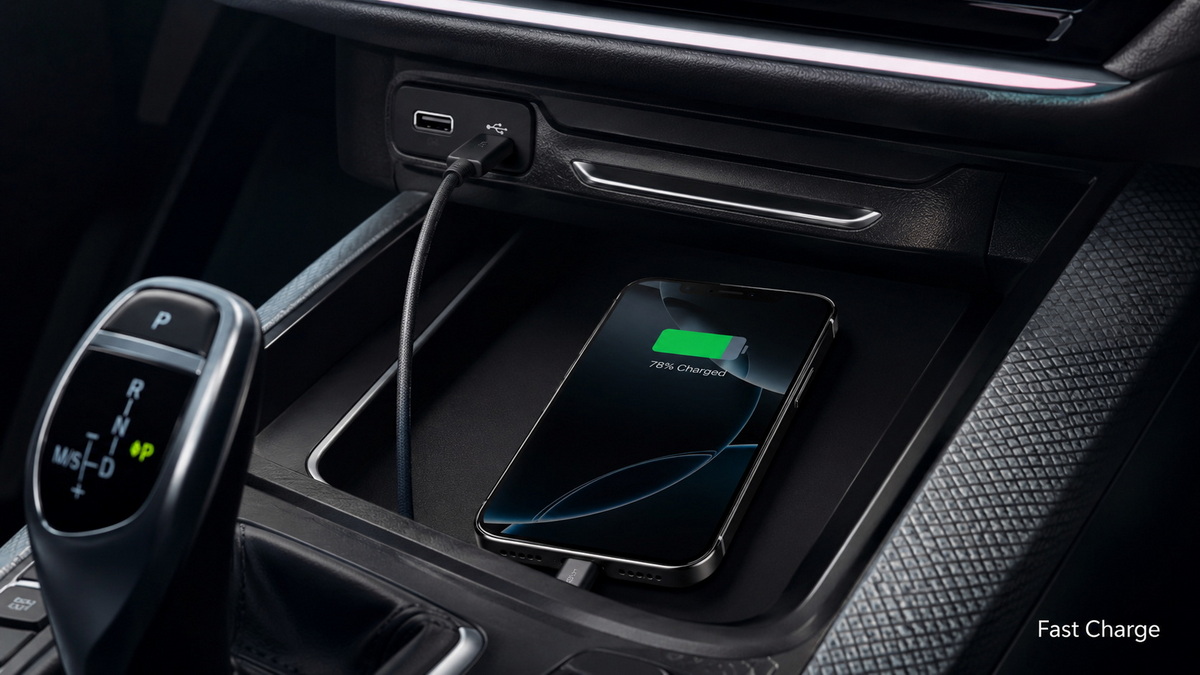
The old idea of "USB in the car" meant one port for charging a phone. That is no longer enough. Modern vehicles increasingly need reliable, high-speed, durable, and heat-resistant USB connectivity that supports both power delivery and data transmission.
From a user perspective, the expectations are simple:
- Fast charging for phones, tablets, and accessories.
- Stable data connection for infotainment and media.
- Multiple-device support for drivers and passengers.
- Long-term durability in high-vibration, high-temperature environments.
For OEM and aftermarket buyers, the challenge is different. The cable must not only work, but also meet automotive use conditions, brand requirements, and compliance expectations. That is where a specialized cable manufacturer becomes critical.
The market has evolved from basic charging ports to a broader ecosystem of USB-C, multi-port hubs, integrated infotainment connections, and power-hungry mobile devices. In practical terms, this means the cable is no longer a commodity accessory. It is part of the product experience.
Three major shifts are driving this change:
1. USB-C adoption is accelerating. USB-C supports reversible insertion, higher power, and better compatibility across device types.
2. Power demands are increasing. Users now expect fast charging instead of slow trickle charging.
3. Vehicle interiors are becoming digital hubs. Cables must support more than power, including audio, data, and connected-device functionality.
For suppliers, this creates demand for custom automotive USB cable assemblies that balance performance, reliability, and cost.
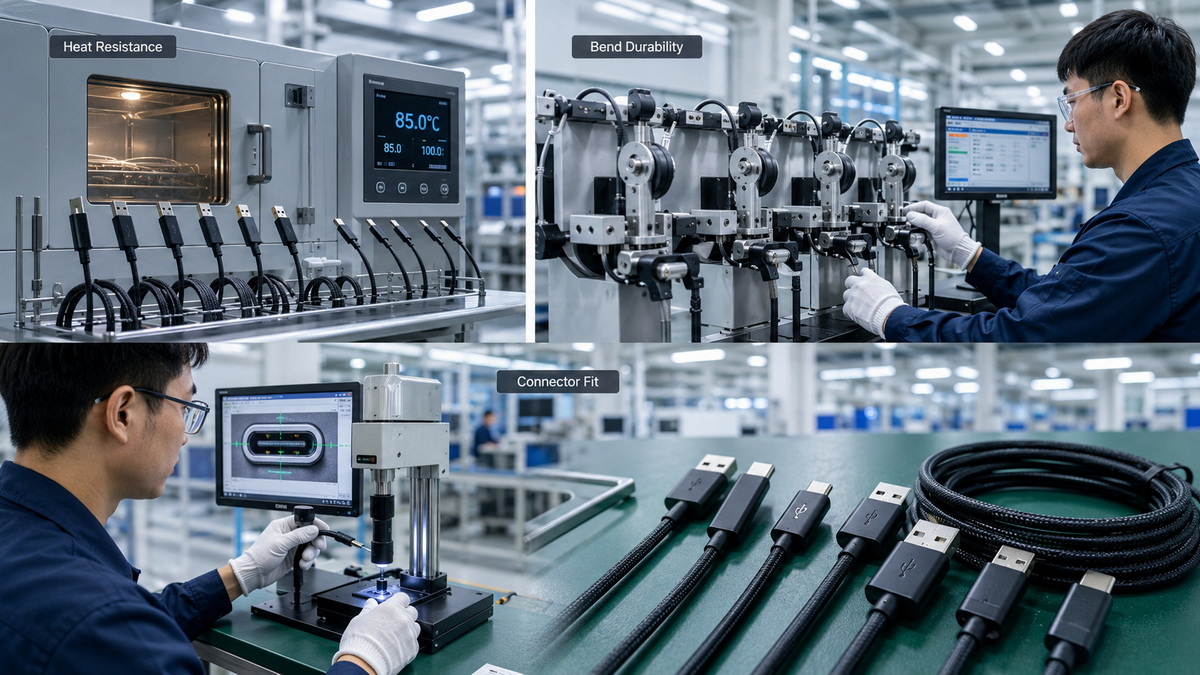
A cable used in a car is exposed to conditions far harsher than a typical desktop or home accessory. The design must account for heat, movement, repeated plugging, and long service life.
Automotive environments are tough. Cables must maintain stable performance under temperature fluctuations and continuous vibration. Poor-quality materials can weaken over time, causing intermittent connections or failure.
Loose connectors create frustration for users and can interrupt charging or data transfer. A strong mechanical connection matters, especially in vehicles where motion is constant.
Modern consumers want faster charging. That means the cable must be built to support the required current and pair correctly with the vehicle's power system and charging protocol.
If the cable supports infotainment or media transfer, signal integrity becomes essential. Noise interference and poor shielding can degrade user experience.
Brand owners and distributors often need custom lengths, colors, connector combinations, overmolding, and packaging. This is especially important for private label automotive USB cables and branded accessory programs.
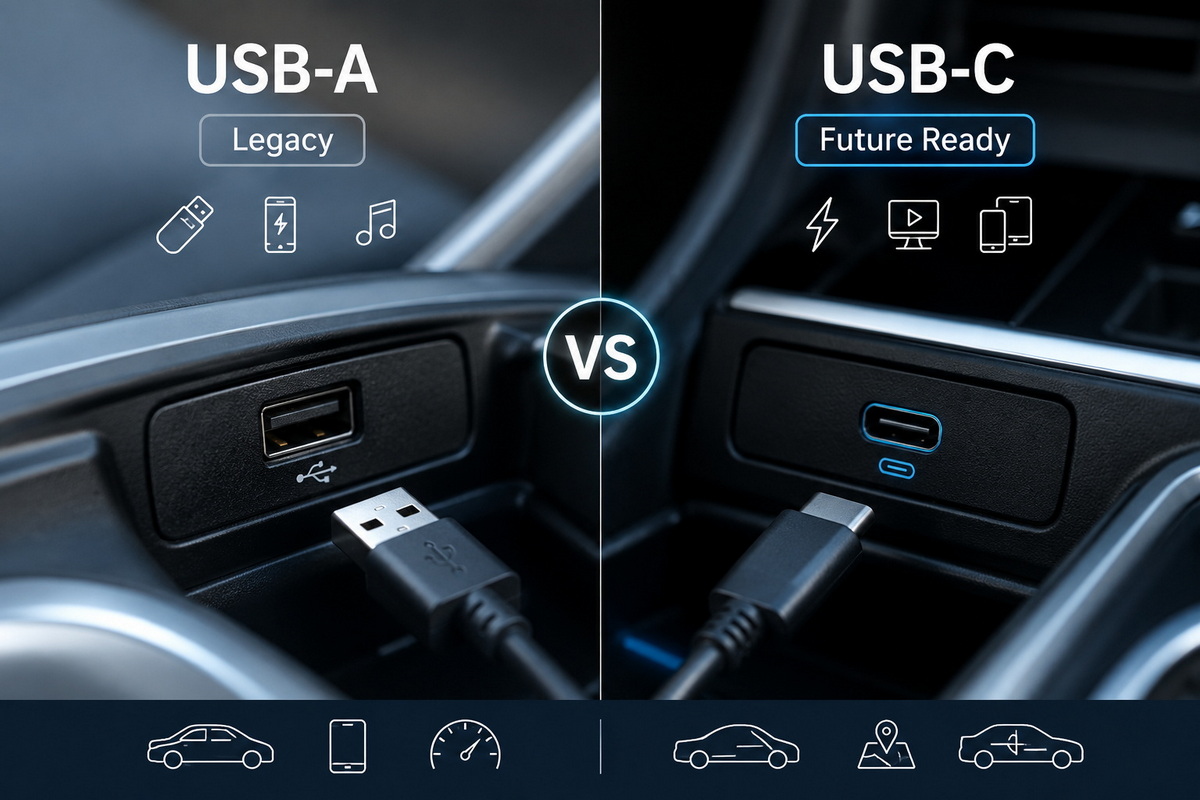
Choosing the right interface is one of the most important decisions in automotive cable sourcing. Each option has a role.
| Interface | Best Use Case | Main Benefit | Limitation |
|---|---|---|---|
| USB-A | Legacy vehicle systems | Widely compatible | Slower and less future-ready |
| USB-C | New vehicles and fast charging | High power and reversible plug | Requires system compatibility |
| Hybrid cable assemblies | Transition products and mixed-device support | Flexible for OEM programs | More complex design and sourcing |
For most forward-looking automotive applications, USB-C is the strongest long-term direction. Still, USB-A remains relevant in replacement, retrofit, and legacy vehicle markets. A good OEM partner should be able to support both.
Most articles about car USB stop at charging speed. That misses the bigger business story. For B2B buyers, the real decision factors are often:
- Product reliability in real-world use
- Custom branding opportunities
- Compatibility across vehicle and device types
- Manufacturing consistency
- Supply chain flexibility
This is where OEM cable manufacturing adds measurable value. A well-designed cable helps reduce returns, strengthen brand trust, and improve customer satisfaction. In a competitive market, those advantages are often more valuable than a slightly lower unit price.
If you are sourcing automotive USB cables, use these steps to improve outcomes.
1. Define the use case first. Charging-only, charging plus data, or infotainment integration?
2. Match the connector to the market. Use USB-C for future-facing programs and USB-A where legacy compatibility matters.
3. Specify cable length and routing. Vehicle interiors require different cable lengths than consumer electronics.
4. Request material and durability details. Jacket material, shielding, connector housing, and strain relief matter.
5. Test in real conditions. Heat, vibration, insertion cycles, and daily use should all be evaluated.
6. Plan for branding early. Packaging, logo placement, and product labeling should be part of the sourcing discussion.
This approach reduces rework and helps you choose a supplier that understands automotive requirements, not just consumer cable production.
End the article with a direct commercial action. For example:
Looking for a reliable automotive USB cable OEM partner? Contact Shenzhen Otechkabel Electronic Co., Ltd for custom USB, VGA, HDMI, DVI, SATA, and cable assembly solutions tailored to your brand, market, and technical requirements.
Automotive USB is used for charging devices, transferring data, connecting infotainment systems, and supporting in-car digital accessories.
USB-C is becoming more common because it supports faster charging, higher versatility, and a reversible connector design that improves convenience.
Automotive USB cables must withstand heat, vibration, repeated use, and tighter fitment requirements than standard consumer cables.
Yes. OEM cable programs often include custom length, color, connector type, jacket material, branding, and packaging.
Buyers should verify durability, charging performance, signal quality, compatibility, compliance needs, and manufacturer quality control.
Use the following sources to support technical claims and industry framing:
1- Google Search Central, "Creating helpful, reliable, people-first content"
https://developers.google.com/search/docs/fundamentals/creating-helpful-content
2- QuickCreator, "E-E-A-T for Technical Content: 2025 Best Practice Guide"
https://quickcreator.io/blog/eeat-for-technical-content-2025-best-practice-guide/
3- AISEOShift, "How to Write E-E-A-T Content: A Practical Guide for 2026"
https://aiseoshift.com/blog/how-to-write-eeat-content/
4- Archive Market Research, "Automotive USB-C Analysis 2026 and Forecasts 2033"
https://www.archivemarketresearch.com/reports/automotive-usb-c-591812
5- Strategy Analytics summary on USB-C growth in cars
6- Sales Layer, "SEO for Manufacturing Companies: The 2026 Strategy Guide"


