


Views: 230 Author: Otechkabel Publish Time: 2026-07-20 Origin: Site


Content Menu
● Why USB-C Cable Wholesale Requires Careful Selection
● USB-C Cable Types We Manufacture
● How to Choose the Right USB-C Cable for Wholesale
● USB-C Cable Compliance and Certification
● OEM Customization for Brand Buyers
>> Custom Dimensions and Structure
● Quality Control That Supports Long-Term Supply
● When a Custom USB-C Cable Makes Sense
● A Better Wholesale Buying Process
● Why Buyers Choose Otechkabel
● FAQ
>> 1. What is the difference between a 60W and 240W USB-C cable?
>> 2. Do all USB-C cables support fast charging?
>> 3. Can you print our logo on the cable?
>> 4. What customization options are available?
>> 5. Why is quality control important for wholesale buyers?
>> 6. How do I know which USB-C cable is right for my market?
USB-C has become the standard connector for smartphones, tablets, laptops, docking stations, and charging accessories. However, not every USB-C cable is built the same. The market now includes cables for charging only, data transfer, high-power delivery, and advanced performance applications, which means the wrong specification can create compatibility problems or customer complaints.
For B2B buyers, the challenge is not simply finding a cable. It is finding the right balance of performance, durability, branding, and cost control. A good wholesale decision starts with understanding your market, your target devices, and the expectations of your end customers.
We manufacture a wide range of USB-C cable products for wholesale and OEM projects, including:
- USB-C to USB-C cable.
- USB-A to USB-C cable.
- USB-C OTG cable.
- USB-C female cable.
- USB-C extension cable.
- 60W, 100W, and 240W USB-C charging cables.
- USB-C 2.0, 3.0, 3.1, 3.2, and USB4-related cable solutions.
This product range supports different use cases, from everyday charging accessories to higher-performance cables for laptops and professional devices. For buyers, this flexibility helps align one sourcing program with multiple sales channels and customer segments.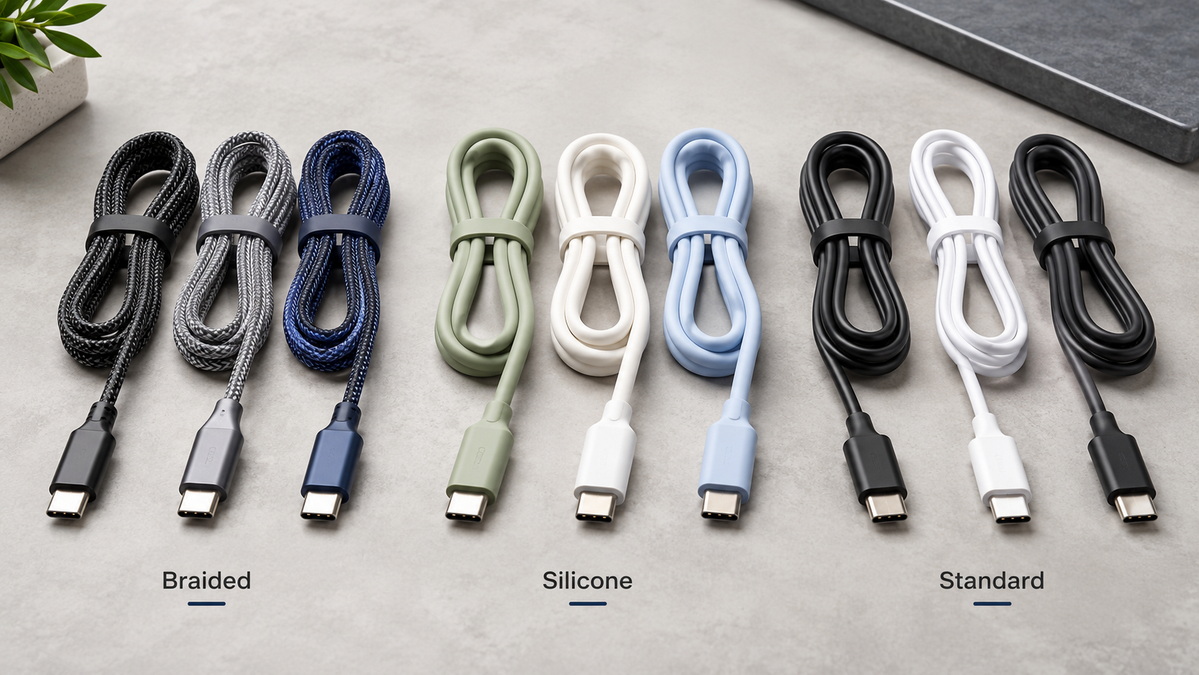
Not every wholesale project needs the same cable. A brand selling phone accessories may prioritize price and packaging, while an industrial buyer may focus more on reliability, tolerance, and testing consistency. The right cable should be selected based on power, data, length, materials, and end-user environment.
USB-C cables are typically chosen based on their power capability, such as 60W, 100W, or 240W. If your customers use laptops or high-power devices, a 100W or 240W cable may be more suitable than a standard charging cable. If your product line is focused on phones and small accessories, a lower-power cable may be enough and can improve price competitiveness.
Some USB-C cables are designed mainly for charging, while others are built for faster data transmission or advanced use cases. This matters because a cable that looks premium but cannot meet the intended data requirement can create unnecessary returns. Always match the cable specification with the device category and the claim you plan to make in your market.
Cable jacket material affects flexibility, durability, appearance, and price. Common options include PVC, TPE, nylon braided, PU leather, and silicone. For retail products, nylon braided or silicone cables often improve perceived value. For cost-sensitive programs, PVC or TPE may be the better fit.
Length is not just a technical detail; it also affects user satisfaction and product positioning. Common lengths include 1 ft, 3 ft, 4 ft, 5 ft, 6 ft, 10 ft, and longer custom options. Color also plays a role in branding because it helps your product stand out on shelves and in online listings.
For international buyers, compliance is an important part of trust. USB-C cables that are designed for international markets should be developed with relevant product safety and market requirements in mind.
USB-C cables intended for higher-power use should clearly communicate their supported power level and performance characteristics. This helps distributors, brand owners, and end users understand what the product is designed to do. For wholesale buyers, compliance should never be treated as an afterthought.
A practical takeaway is simple: do not choose cables by appearance alone. Ask for the rated power, supported data performance, test reports, and packaging details that match the product claim.
Our OEM and ODM service is designed for brands that want more than a standard commodity cable. We support logo printing, customized packaging, custom labeling, shape customization, and open-mold development when a project requires a unique product identity.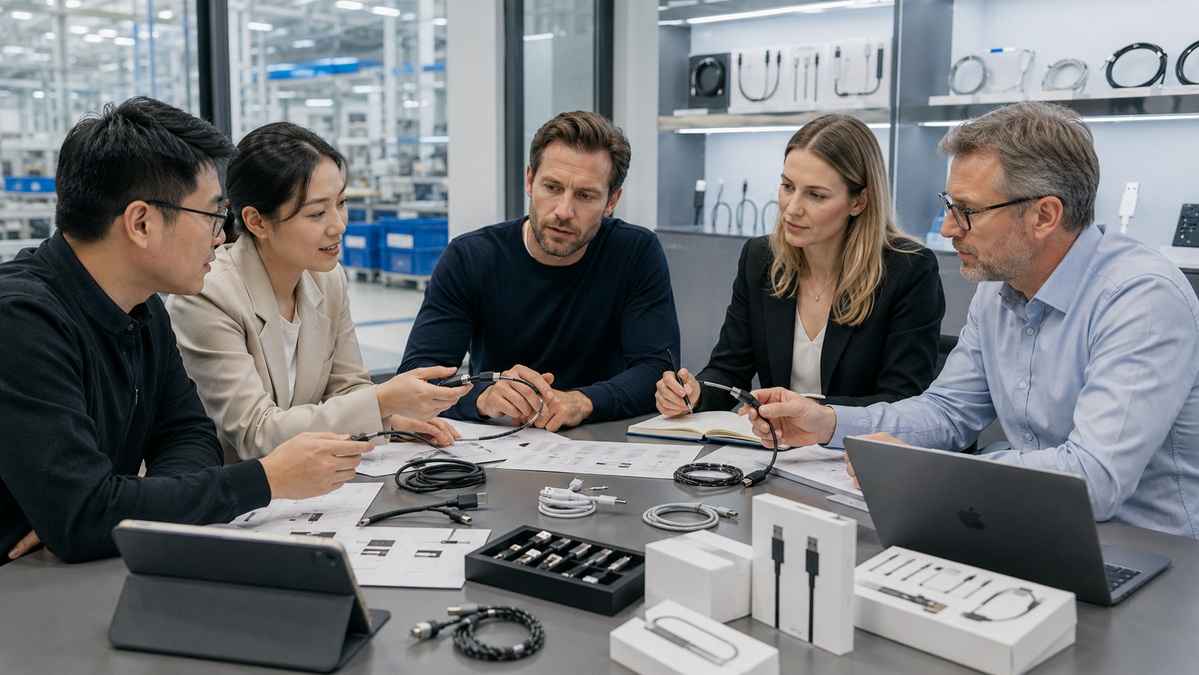
We offer laser engraving, silk printing, and embossing options depending on the product structure and brand requirement. This is especially useful for private label sellers and distributors who want stronger shelf presence. Consistent branding can also make the product easier to recognize across channels.
We can provide color box packaging, OPP bags, and related packaging support. If needed, we can also help with packaging die-cut files so your design team can move faster. For export buyers, packaging should be treated as part of the product strategy.
Some buyers need a standard cable; others need a special cable shape or connector configuration. We support custom length requests, cable color matching, and mold development for specialized designs. This is useful when a client wants to build a differentiated SKU instead of competing only on price.
For B2B buyers, consistent quality is often more important than a one-time low price. We maintain a quality control system with inspections at different production stages, and our team includes multiple QC members to help monitor product quality before shipment.
A strong quality process reduces the risk of cross-market inconsistency, customer complaints, and channel penalties. It also helps brands scale more confidently across retail, distribution, and industrial channels. In wholesale supply, quality stability is part of the service, not just a factory function.
Custom development makes sense when the buyer has a clear business reason to differentiate. Typical examples include a brand launching a premium charging line, a distributor serving a specific device category, or a manufacturer needing a special cable for an integrated product bundle.
In these cases, the right custom cable can improve user experience and support stronger product positioning. It can also reduce the number of SKUs needed by combining performance and branding requirements into one solution. That is why OEM development is often the best option for buyers who care about margin and market identity.
A professional sourcing process should be simple and transparent. We recommend the following steps:
1. Define your target device, use case, and sales channel.
2. Choose the required power rating and data standard.
3. Confirm cable length, material, and color.
4. Decide whether you need branding, packaging, or a new mold.
5. Request samples and review performance before mass production.
6. Approve final packaging and shipment details.
7. Start production with agreed quality checkpoints.
This process keeps the project clear for both the buyer and the factory. It also reduces costly revisions later in the cycle. For international procurement teams, clear specifications are one of the best ways to control total cost.
We work with overseas brands, wholesalers, and manufacturers that need stable OEM support and dependable communication. Our team responds quickly, supports product consultation, and focuses on practical manufacturing solutions that fit real business needs.
Our value is not just cable production. It is the ability to support brand growth through customization, quality control, and responsive service. That combination matters when your business depends on repeatable supply.
Choosing the right USB-C cable wholesale partner is about more than finding a supplier with a low price. The best results come from matching the right specification, packaging, and customization options to your target market. A reliable manufacturing partner can help you reduce risk, improve product consistency, and build a stronger brand presence over time.
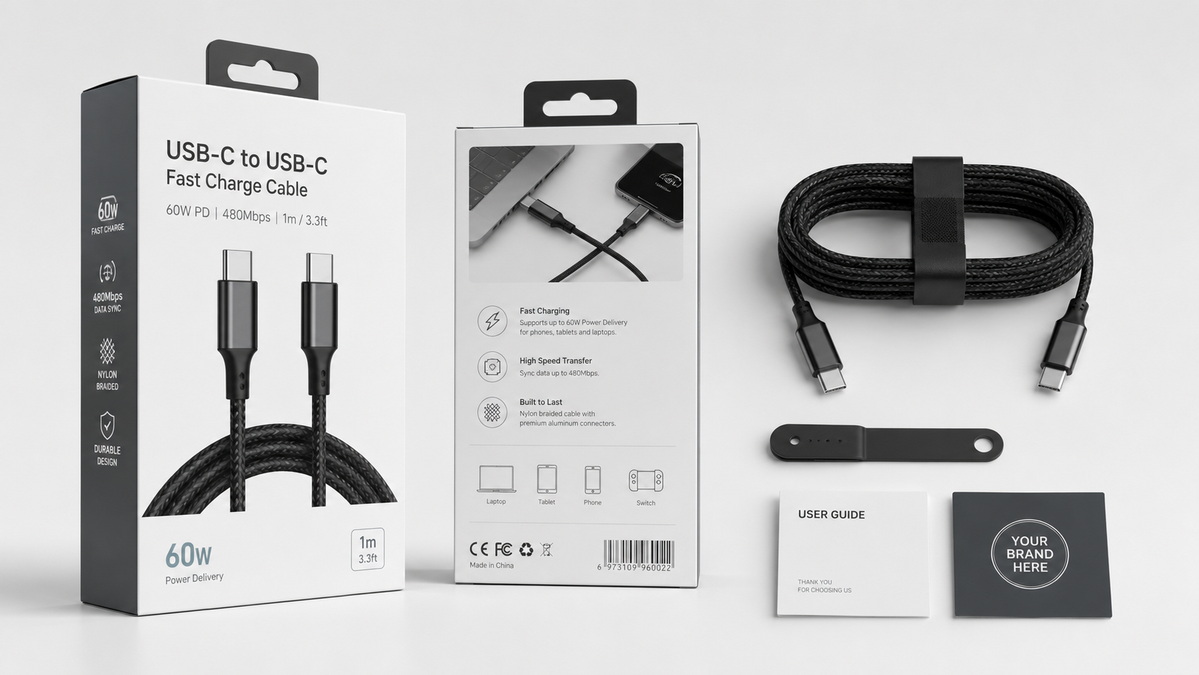
A 60W cable is suitable for many phones, tablets, and light-duty devices, while a 240W cable is intended for higher-power USB-C laptops and advanced charging applications.
No. Fast charging depends on the cable's power rating, the charger, and the device. A cable must be selected to match the target charging specification.
Yes. We support OEM branding options such as laser engraving and silk printing, depending on the product structure.
We support custom length, color, packaging, label design, logo printing, and certain shape or mold customization requests.
Quality control helps maintain product consistency, reduce customer complaints, and support stable long-term supply.
Start with the device category, required power level, and whether your customers need charging-only or data transfer performance. Then match material, length, and branding to your channel strategy.
1. USB-IF, "Cables and Connectors" — https://www.usb.org/cable_connector
2. USB-IF, "USB Charger (USB Power Delivery)" — https://www.usb.org/usb-charger-pd
3. Wandkey, "USB Type C Cable Wholesale - USB C Cable Manufacturer" — https://wandkey.com/usb-c-cable-wholesale/


