


Views: 278 Author: Otechkabel Publish Time: 2026-08-21 Origin: Site


Content Menu
● How to Select a Reliable Fiber Cable Supplier
● Fiber Cable Specifications Buyers Should Confirm
>> Fiber Type
● Top Fiber Cable Manufacturers and Suppliers Serving Poland
● 1. Shenzhen Otechkabel Electronic Co., Ltd.
>> What to Confirm Before Ordering
● 3. Corning Optical Communications Poland
● Common Fiber Cable Sourcing Problems
>> Sample Quality Does Not Match Mass Production
>> Incomplete Compliance Documentation
>> Wrong Cable Construction for the Installation Environment
● An Important Fiber Cable Verification Tip
● Recommended Supplier Qualification Process
>> Step 1: Prepare a Complete RFQ
>> Step 2: Compare More Than Unit Price
>> Step 3: Review Documents Before Sample Approval
>> Step 4: Test Samples Thoroughly
>> Step 5: Conduct a Factory Review
>> Step 6: Start With a Pilot Order
>> Step 7: Retain a Golden Sample
● FAQ
>> 1. How can I verify whether a supplier's ISO certificate has expired?
>> 2. Is a CE mark enough for Fiber Cable sold in Europe?
>> 3. What MOQ should I expect for customized Fiber Cable?
>> 4. How can I compare suppliers that quote the same Fiber Cable specification?
>> 5. Should I source Fiber Cable from Poland or import from China?
A qualified Fiber Cable supplier should be evaluated through a structured process. Buyers should avoid selecting a factory based only on a product catalog, a low quotation, or a general company certificate.
The following areas are particularly important.
| Evaluation Area | What Buyers Should Check | Why It Matters |
|---|---|---|
| Manufacturing capability | Whether the supplier manufactures optical fiber, fiber cable, cable assemblies, connectors, or only distributes finished products | Helps distinguish a true manufacturer from a trading company or reseller |
| Product engineering | Ability to customize cable construction, connector type, length, jacket material, printing, packaging, and labels | Important for OEM, private-label, and project-specific requirements |
| Raw material control | Fiber source, aramid yarn, jacket compound, reinforcement material, connectors, and packaging materials | Reduces the risk of material substitution |
| Quality process | Incoming inspection, in-process testing, final optical testing, visual inspection, traceability, and batch records | Supports stable performance in repeat orders |
| Compliance documents | Product-specific RoHS, REACH, CE-related documentation, CPR documents where applicable, and valid ISO certification scope | Prevents buyers from relying on irrelevant or expired certificates |
| Delivery reliability | Production lead time, sample timeline, material inventory, export experience, and logistics support | Essential for long-term supply programs |
| Communication efficiency | Response speed, engineering support, document clarity, and problem-resolution process | Especially important for customized cable programs |
For Fiber Cable projects, an RFQ should clearly define the fiber type, cable construction, jacket material, connector configuration, target application, performance requirements, required documentation, packaging requirements, and destination market.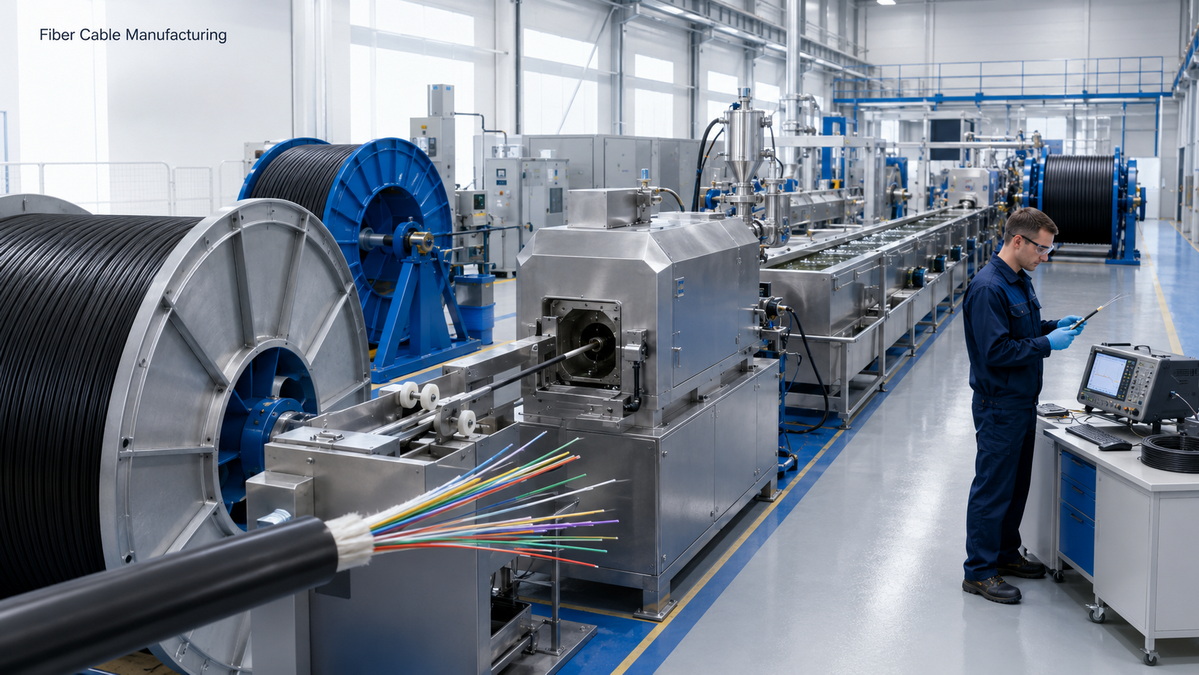
The same description, such as "outdoor fiber cable" or "single-mode fiber cable," can refer to very different products. A proper specification should include measurable requirements rather than broad product names.
Buyers should specify whether they need:
- Single-mode fiber for long-distance telecom, FTTH, backbone, and outdoor network applications
- Multimode fiber for short-distance data-center, enterprise-network, and building-cabling applications
- Bend-insensitive fiber for FTTH drops, indoor routing, and tight installation conditions
- Specialized fiber for industrial, sensing, military, medical, or photonics applications
Common constructions include:
- Simplex and duplex patch cables
- Distribution cables
- Breakout cables
- Loose-tube outdoor cables
- Microcables
- FTTH drop cables
- Armored fiber cables
- Aerial fiber cables
- Direct-buried fiber cables
- Indoor/outdoor fiber cables
- Pre-terminated trunk cables
The cable jacket directly affects fire performance, flexibility, chemical resistance, weather resistance, and installation suitability.
| Jacket Material | Typical Use | Key Consideration |
|---|---|---|
| PVC | General indoor cables and cost-sensitive applications | May not meet stricter low-smoke requirements |
| LSZH | Buildings, public spaces, data centers, and indoor installations | Buyers should verify the actual compound and applicable fire-performance documentation |
| PE | Outdoor, duct, aerial, and direct-buried cables | Suitable for moisture and weather exposure but usually not intended for indoor fire-sensitive areas |
| TPU | Industrial, robotic, mobile, and abrasion-resistant applications | Higher cost but stronger flexibility and mechanical performance |
For terminated Fiber Cable assemblies, suppliers should provide evidence of:
- Insertion loss testing
- Return loss testing
- Connector end-face inspection
- Polarity verification
- Length verification
- Visual inspection
- Packaging inspection
- Lot or serial traceability where required
A good sample is useful, but a reliable supplier must also prove that the same testing process can be maintained during mass production.
| Supplier | Market Position | Main Strengths | Capacity / Scale | MOQ Approach | Documentation to Request |
|---|---|---|---|---|---|
| Shenzhen Otechkabel Electronic Co., Ltd. | China-based export OEM supplier | Flexible customization, private labeling, cable accessories, efficient project communication | OEM-focused production model; confirm available capacity by product | Usually quotation-based by cable type and customization level | Product-specific RoHS, REACH, CE-related documents, test reports, material declarations |
| FIBRAIN | Polish fiber-optics manufacturer | Optical fiber, fiber cable, FTTH, connectivity, photonics | Multiple manufacturing centers and broad product range | Usually project-based | Product data sheets, test reports, declarations, traceability process |
| Corning Optical Communications Poland | Global optical-communications manufacturer with Polish facilities | Optical fiber, telecom infrastructure, high-volume network products | Large multinational manufacturing footprint | Typically project-based | Approved product documentation, test reports, local supply details |
| TELE-FONIKA Kable | Major Polish cable manufacturer | Telecom, fiber-optic, energy, and infrastructure cable systems | Large cable manufacturing group | Project-based | Cable-specific standards, CPR documentation, quality records |
| Technokabel S.A. | Polish cable manufacturer | Fire-resistant and specialized low-voltage/fiber cable applications | More than four decades of cable-industry experience | Not publicly standardized | Current certification scope, application-specific test reports |
| TKF / TKH Group | European cable group with Polish fiber-cable operations | European fiber-cable supply and technical infrastructure projects | Modern Polish production facility | Project-based | Product range confirmation, technical approval documents |
| A-LAN Technologie | Polish structured-cabling supplier | FTTx, local networks, fiber connectivity, system solutions | Product and solution supply focus | Quotation-based | Manufacturer details, warranty conditions, batch-traceability information |
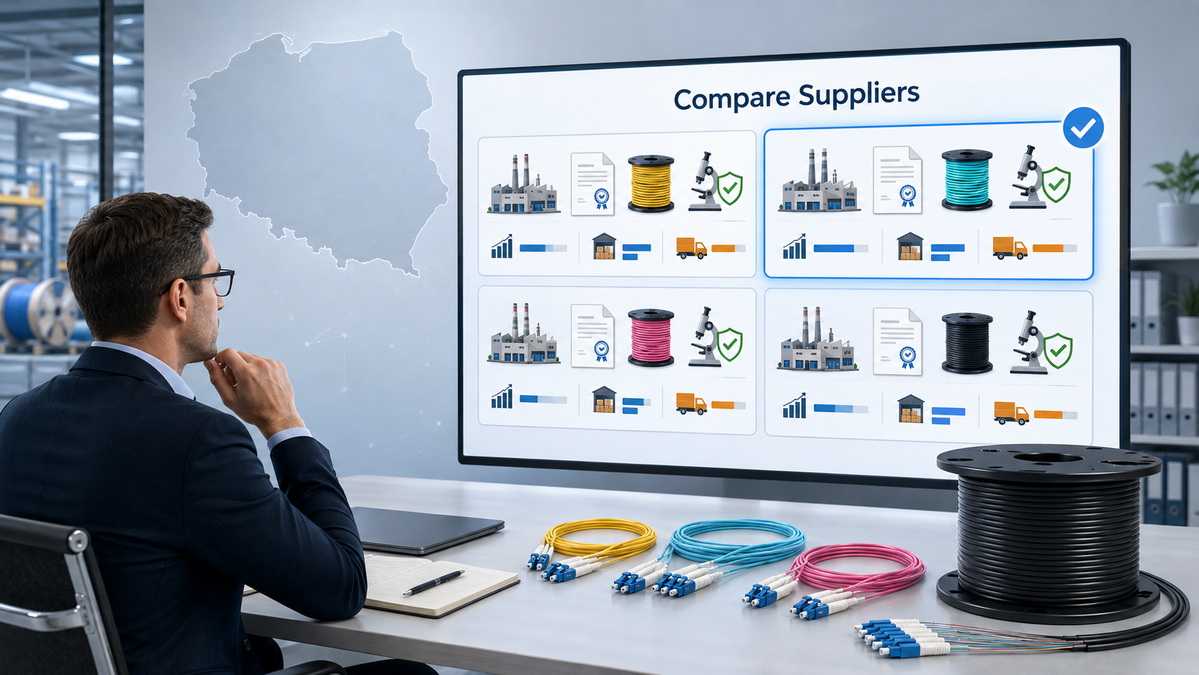
Shenzhen Otechkabel Electronic Co., Ltd. is an export-focused cable and cable-accessory supplier that can be considered by Polish and European buyers seeking flexible OEM support.
The company is particularly suitable for brands, wholesalers, electronics manufacturers, and distributors that need a supplier capable of handling customized cable programs rather than only standard catalog items. Its product and service model is relevant for buyers requiring customized cable lengths, connector combinations, colors, labeling, packaging, and private-brand presentation.
For Fiber Cable-related sourcing, buyers should confirm the exact product category, fiber type, assembly process, optical-test method, and required compliance documents before placing an order. This is especially important when the project involves pre-terminated fiber assemblies, FTTH products, indoor LSZH cables, or application-specific cable accessories.
- Flexible support for OEM and private-label cable programs
- Responsive communication for custom specifications and packaging requirements
- Suitable for small-to-medium brands that need more flexibility than large infrastructure-focused suppliers may offer
- Support for cable accessories, connectors, custom lengths, colors, labels, and retail or bulk packaging
- Practical option for buyers developing their own cable product line
- Small and mid-sized cable brands
- E-commerce sellers and distributors
- Electronics manufacturers
- System integrators requiring customized assemblies
- Wholesalers seeking private-label cable accessories
- Buyers combining Fiber Cable products with HDMI, USB, VGA, DVI, SATA, adapters, hubs, splitters, or related connectivity products
- Exact Fiber Cable construction and fiber grade
- Connector type and polishing method
- Insertion-loss and return-loss requirements
- Jacket material and color requirements
- Cable printing and branding details
- Packaging format and carton marking
- Sample approval process
- Production lead time and batch-testing records
FIBRAIN is one of Poland's most recognized companies in the fiber-optics and photonics sector. Founded in 1993, it has developed capabilities across optical fibers, fiber cable, connectivity products, FTTH solutions, and photonics-related technologies.
The company is relevant for buyers that need more than a standard patch-cable supplier. Its portfolio supports fiber-network construction, including indoor and outdoor fiber cables, microcables, FTTH products, connectors, enclosures, and network accessories.
- Long-standing Polish fiber-optics industry presence
- Broad portfolio covering fiber, cable, connectivity, and network infrastructure
- Strong fit for FTTH and telecommunications applications
- Suitable for projects requiring both cable and related network components
- Capability to support specialized fiber and photonics-related requirements
- Telecom operators
- FTTH contractors
- Network infrastructure companies
- Public-sector connectivity projects
- Industrial network integrators
- Buyers seeking Polish-made fiber-optic products
FIBRAIN is likely to be more suitable for technical and network-oriented projects than for very small private-label retail programs. Buyers should request product-specific documentation, lead-time confirmation, and details about available stock or production schedules for the required cable construction.
Corning is a major global supplier in the optical-communications industry. Its operations in Poland support the production of fiber-optic cable, telecommunications equipment, and optical fiber for European connectivity markets.
Corning's Polish manufacturing presence makes it relevant for buyers involved in structured network deployment, telecom infrastructure, high-speed connectivity programs, and large-scale optical-fiber applications.
- Global optical-communications expertise
- Local manufacturing presence in Poland
- Strong relevance for telecom and high-speed network infrastructure
- Suitable for technically specified fiber programs
- Established experience in large-scale network deployments
- Telecom operators
- Data-center infrastructure providers
- National and regional network projects
- Large contractors
- Buyers with formal supplier-qualification procedures
- Projects requiring established optical-communications solutions
Corning may be less suitable for buyers seeking low-MOQ private-label products or highly flexible custom packaging. Its strengths are generally more aligned with standardized, technically demanding, and volume-based infrastructure requirements.
TELE-FONIKA Kable is a major Polish cable manufacturer with a broad portfolio spanning telecommunications, fiber-optic cable, power cable, and infrastructure cable systems.
The company is particularly relevant for buyers seeking a large cable-group supplier with technical documentation, testing capabilities, and experience serving infrastructure, industrial, telecommunications, and energy-related markets.
- Broad cable manufacturing portfolio
- Fiber-optic and telecommunications cable capability
- Suitable for large infrastructure and industrial programs
- Strong focus on technical specifications and quality documentation
- Experience supporting international cable markets
- Infrastructure contractors
- Utility companies
- Telecommunications companies
- Large industrial buyers
- Renewable-energy project suppliers
- Buyers sourcing both fiber-optic and power-cable systems
Buyers should not rely only on group-level quality claims. Request current, cable-family-specific documentation for the exact product being purchased. This should include applicable standards, test reports, fire-performance documents where relevant, and manufacturing-site information.
Technokabel is a Polish cable manufacturer with more than 40 years of industry experience. The company specializes in low-voltage copper cables and fiber-optic cables designed for demanding installations, including fire-resistant applications.
Its product positioning is particularly relevant for projects where cable safety, building requirements, industrial installation conditions, and resistance to harsh operating environments matter as much as optical performance.
- Long-term experience in cable manufacturing
- Focus on specialized and fire-resistant cable applications
- Suitable for buildings, industrial facilities, transport, and infrastructure
- Relevant for buyers requiring both electrical and fiber-optic cable systems
- European market orientation
- Commercial-building contractors
- Railway and transportation projects
- Public-infrastructure projects
- Industrial facilities
- Fire-safety-focused installation programs
- Buyers requiring specialized low-voltage and fiber cable combinations
Confirm the intended installation environment before placing an order. Buyers should request technical documents covering fire performance, temperature range, bending radius, mechanical strength, installation method, and any project-specific safety requirements.
TKF, part of TKH Group, has expanded its fiber-optic cable production capability in Poland through a modern facility in Rawicz. This provides another regional option for buyers seeking European fiber-cable supply.
The company is relevant for procurement teams that prefer European production, established group support, and proximity to EU infrastructure projects.
- Modern fiber-optic cable manufacturing operations in Poland
- European supply-chain advantages
- Suitable for infrastructure and technical network projects
- Backed by a wider cable and technology group
- Potential fit for medium-to-large volume programs
- EU-based network contractors
- Infrastructure procurement teams
- Fiber-network project developers
- Buyers seeking regional manufacturing
- Companies requiring stable European logistics routes
Because production capabilities can vary by facility and product family, buyers should confirm that the required cable type is manufactured in Poland rather than supplied from another group location. Ask for technical documentation, available production capacity, project lead time, and batch-quality records.
A-LAN Technologie is a Polish supplier focused on structured-cabling and fiber-optic network solutions. Its offering supports FTTx, local networks, metropolitan networks, and general connectivity installations.
Unlike a vertically integrated fiber manufacturer, A-LAN is more relevant as a system-oriented supply partner. This can be beneficial for buyers seeking a wider solution package that includes fiber products, copper cabling, racks, cabinets, connectivity components, and network accessories.
- Structured-cabling and fiber-network solution focus
- Suitable for FTTx and local network applications
- Broad connectivity product offering
- Relevant for installers and system integrators
- Competitive solution-based purchasing model
- Network installers
- Structured-cabling contractors
- Local and metropolitan network operators
- System integrators
- IT infrastructure distributors
- Buyers seeking complete connectivity solutions
Buyers should verify the actual manufacturer behind the quoted product, as well as the factory location, technical documentation, warranty coverage, and traceability process. This is especially important for projects where product origin, fire-performance documents, or formal approval procedures are required.
Fiber Cable purchasing often fails because buyers compare only the visible specification and the unit price. The actual risks usually appear after production starts or after installation.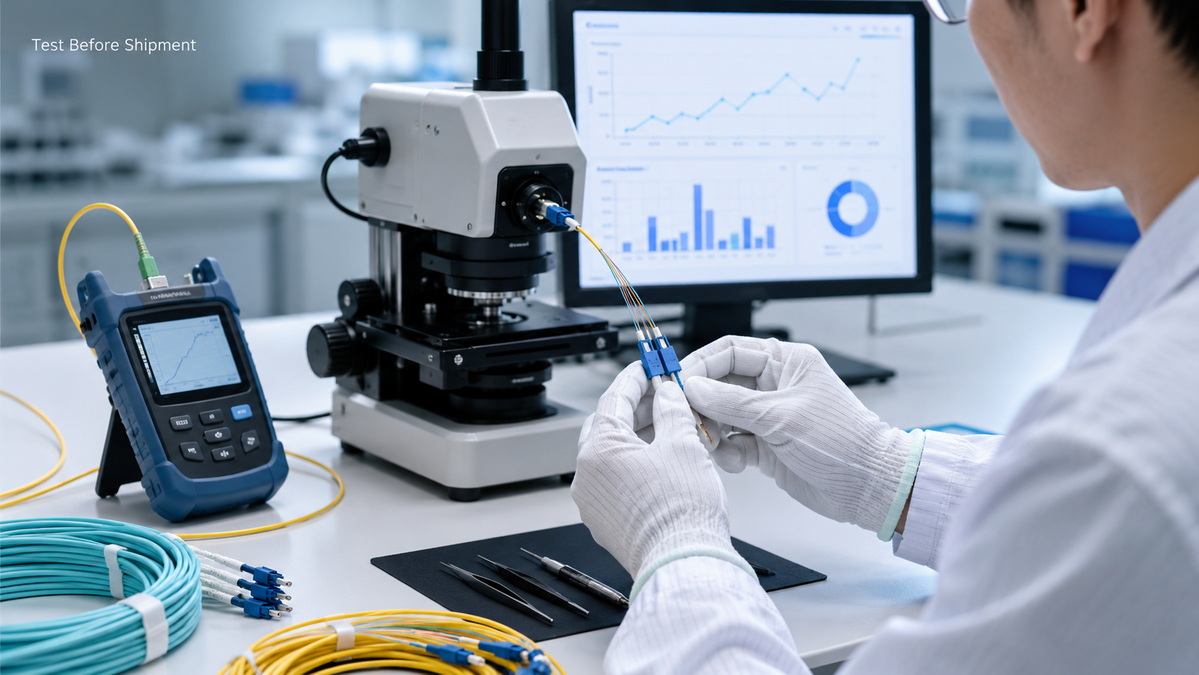
A supplier may quote LSZH, PE, or TPU cable jackets without clearly identifying the compound source or performance level. The cable may look similar but perform differently in fire, temperature, flexibility, or aging tests.
How to avoid it: Request a material declaration, technical data sheet, and a retained approved sample. For long-term orders, include the approved material requirement in the purchase agreement.
Some suppliers use general descriptions such as "single-mode fiber" without providing a defined fiber class, attenuation data, or applicable performance standard.
How to avoid it: Request the fiber specification, attenuation values, test wavelength, and cable test records. Avoid accepting broad descriptions without technical evidence.
A supplier may produce a well-finished sample manually, but batch production may use a different polishing process, connector source, inspection method, or operator skill level.
How to avoid it: Ask for a mass-production test-report template before approving samples. Require the supplier to confirm that the sample and mass-production units will follow the same process and acceptance criteria.
A company may provide a general ISO certificate or a generic RoHS statement that does not identify the actual cable product or manufacturing site.
How to avoid it: Check whether the document includes the product family, manufacturer name, factory address, issue date, expiry date, and applicable scope. Verify ISO certificates through the issuing certification body where possible.
An indoor cable may be used outdoors, a duct cable may be used for direct burial, or a standard patch cable may be selected for repeated bending in an industrial environment.
How to avoid it: Match the cable design to the actual installation environment. Confirm temperature range, UV resistance, water-blocking design, tensile strength, crush resistance, armor type, bend radius, and fire-performance requirements.
One of the most overlooked risks in Fiber Cable sourcing involves connector-process consistency.
A supplier may provide one sample with acceptable insertion loss and return loss. However, that single result does not prove that the supplier can maintain the same level across hundreds or thousands of assemblies.
Before approving a supplier, ask for:
1. A sample test report that shows test wavelength, connector type, and test method
2. A batch-level test-report format for mass production
3. Defined acceptance limits for insertion loss and return loss
4. Connector end-face inspection standards
5. Polarity verification requirements
6. Traceability rules for each batch or production lot
7. Confirmation that the same polishing and testing process will be used in regular production
This process helps buyers distinguish between a supplier that can produce a good prototype and a supplier that can support a stable long-term program.
Your RFQ should include:
- Product name and application
- Fiber type
- Cable construction
- Jacket material
- Connector type
- Cable length
- Required color
- Printing and labeling requirements
- Packaging requirements
- Annual forecast volume
- Sample quantity
- Destination country
- Required compliance documents
- Preferred Incoterm
- Expected delivery schedule
Ask suppliers to separate the following items in their quotation:
- Sample cost
- Tooling cost
- Unit price
- Packaging cost
- Testing cost
- Certification cost
- Shipping terms
- Lead time
- Payment terms
This makes it easier to identify hidden costs and compare suppliers fairly.
Request product-specific documents before approving samples. The document package should match the exact product construction rather than a similar catalog item.
Inspect:
- Cable diameter
- Jacket appearance
- Marking quality
- Connector fit
- Connector end face
- Polarity
- Insertion loss
- Return loss
- Packaging quality
- Label accuracy
- Carton strength
For recurring programs, conduct a video audit, third-party inspection, or on-site factory visit. Review production equipment, testing stations, warehouse control, raw-material storage, quality records, and packaging processes.
A pilot order is useful for checking whether the supplier can maintain the approved sample standard during regular production. It also allows buyers to evaluate communication, packaging accuracy, shipping documents, and delivery reliability.
Keep a signed and dated approved sample as the reference for future orders. The golden sample should include the cable, connector configuration, packaging, labels, technical drawing, and approved quality criteria.
Poland remains a practical sourcing market for Fiber Cable buyers, especially for FTTH deployment, telecom infrastructure, structured cabling, industrial networks, and European project supply. FIBRAIN, Corning, TELE-FONIKA Kable, Technokabel, TKF, and A-LAN provide different strengths across the market, from fiber production and infrastructure cable to fire-resistant applications and connectivity systems.
For buyers that require flexible OEM customization, cable accessories, private-label packaging, and support for developing branded cable programs, Shenzhen Otechkabel Electronic Co., Ltd. can be assessed as an export-oriented supplier option.
The most reliable purchasing approach is to define the technical specification in detail, verify product-specific documentation, test representative samples, confirm batch-testing procedures, and begin with a controlled pilot order before moving into long-term supply.
Request the full certificate, including certificate number, factory address, certification body, issue date, expiry date, and certification scope. Verify the certificate through the issuing body's official database or by contacting the certification body directly. Ensure that the listed scope covers cable manufacturing rather than only trading, design, or unrelated operations.
No. A CE mark alone does not prove that every Fiber Cable is suitable for every European application. Depending on the product and installation environment, buyers may also need RoHS, REACH, CPR-related documents, Declaration of Performance, fire-performance classification, and application-specific test reports.
MOQ depends on fiber type, cable construction, jacket material, connector configuration, custom color, printing, packaging, and whether special tooling is required. Standard products may support small pilot quantities, while proprietary cable constructions or custom packaging may require larger volumes.
Compare the underlying construction and quality process. Review the fiber source, jacket compound, reinforcement material, cable diameter, test method, connector source, test records, traceability system, packaging standard, warranty terms, and production lead time.
Polish or EU suppliers may be preferable when local logistics, regional technical approvals, rapid delivery, or project support are critical. China-based OEM suppliers may be more suitable when buyers need private labeling, customized assemblies, flexible packaging, competitive production costs, and a wider range of cable-accessory customization options. Many professional buyers maintain both regional and offshore supplier options to reduce supply risk.
- [IBISWorld: Fibre Optic Cable Manufacturing in Poland] [ibisworld]
- [FIBRAIN: Polish Producer in the Fiber Optic and Photonics Sector] [fibrain]
- [FIBRAIN Company Timeline] [fibrain]
- [Corning: Optical Fibre Manufacturing Plant in Poland] [corning]
- [TELE-FONIKA Kable: Telecommunications Cable Catalog] [tele-fonika]
- [Technokabel: Cable Manufacturer] [technokabel]
- [TKH Group: Fiber Optic Cable Production Facility in Poland] [tkhgroup]
- [A-LAN Technologie: Fiber Offer] [a-lan]


