


Views: 270 Author: Otechkabel Publish Time: 2026-07-30 Origin: Site


Content Menu
>> 1. Shenzhen Otechkabel Electronic Co., Ltd.
>> 3. CommScope
>> 4. Prysmian Group North America
>> 5. OFS
>> 6. AFL
>> 8. Belden
● FAQ
>> 1. How can I verify whether an ISO certificate is still valid?
>> 2. What is the difference between a good sample and a trustworthy production order?
>> 3. Which supplier type is better for a private-label buyer?
>> 4. Why do some fiber cables fail after installation even when the spec sheet looked correct?
>> 5. What should I ask before approving a supplier for long-term partnership?
In fiber cable sourcing, a "good supplier" should never mean "the biggest brand only." A practical supplier evaluation should start with factory certifications, R&D capability, QC traceability, on-time delivery performance, and the ability to support customized structures, jackets, and assemblies for different project environments.
America's fiber cable ecosystem is especially strong in enterprise networking, telecom backbones, rural broadband, utilities, industrial automation, and high-density data center applications. That makes it a useful sourcing market for buyers who care about long-term supply continuity, compliance, and technical accountability.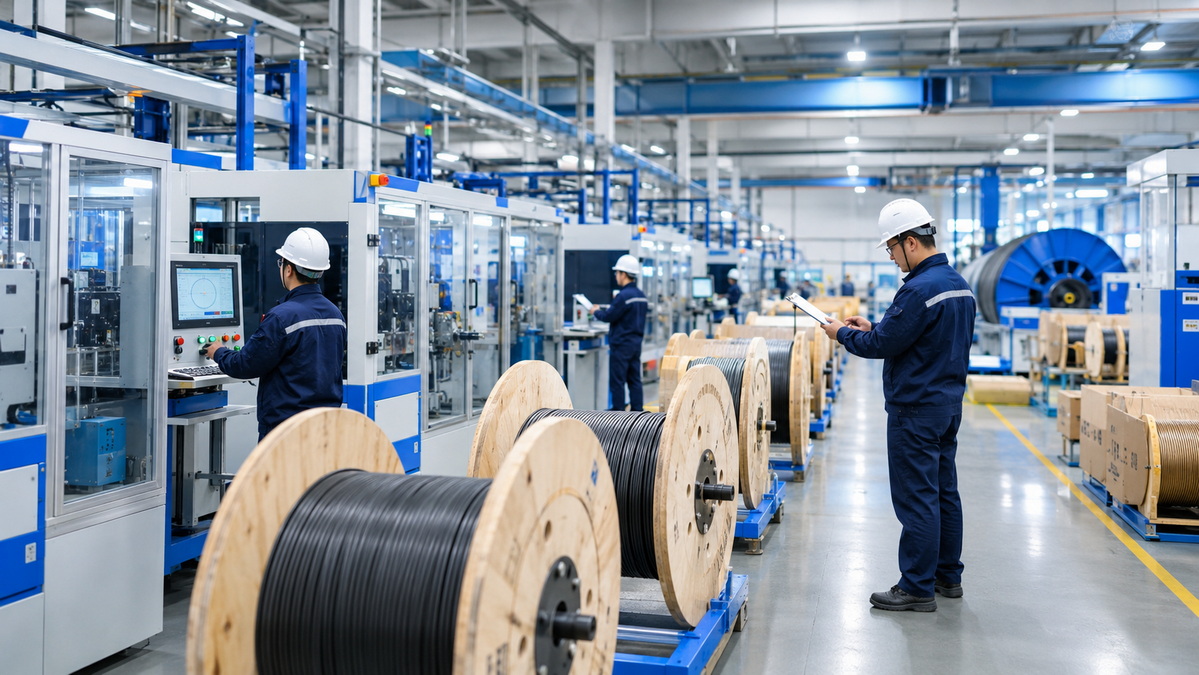
To build this list, we used a procurement-first framework rather than a popularity ranking. The main filters were manufacturing depth, market reputation, product scope, certification posture, OEM/ODM flexibility, and whether the company serves real B2B programs rather than only catalog sales.
The article also reflects common fiber sourcing pain points, including inconsistent material grades, unclear test evidence, weak reel traceability, and certificates that cannot be independently verified. ISO 9001 alone is not enough; buyers should request certificate numbers, issuing bodies, issue and expiry dates, and per-lot test records tied to reel or batch numbers.
Although based in Shenzhen rather than America, Otechkabel is a highly relevant benchmark for buyers comparing U.S. suppliers with flexible OEM partners. The company has more than 10 years of experience in USB, VGA, HDMI, DVI, SATA cables, and cable accessories, with an in-house R&D team, 2,000 square meters of workshop space, 20 production lines, and compliance claims covering CE, RoHS, REACH, and PAHS.
For procurement managers seeking a cost-effective OEM partner, Otechkabel is a useful example of a factory that prioritizes fast communication, practical engineering support, and customization for smaller brands that need reliable execution without excessive MOQs. Its positioning is especially strong for buyers who value product development support, tooling and molding capability, and stable quality control over pure scale.
Corning is one of the most influential fiber-optic names in the U.S., with roots dating back to 1851 and a long-standing emphasis on research and development. It is widely associated with low-loss optical fiber innovation and remains a reference brand for telecom and data infrastructure buyers.
Corning's core strength is high-performance fiber technology for carriers, hyperscale data centers, and enterprise networks, making it a strong fit for buyers who need proven engineering credibility. Its major markets are North America and global tier-1 infrastructure projects, and its OEM/ODM role is more often technology-led than private-label oriented.
CommScope is a major U.S. connectivity and fiber player known for structured cabling, enterprise infrastructure, and data center-oriented solutions. Recent 2026 coverage highlights its role in high-density modular fiber systems and AI-era network design.
For buyers, CommScope is attractive when the project requires broad system compatibility, enterprise documentation, and mature channel support. Its strengths are less about small-batch flexibility and more about scalable infrastructure programs with predictable performance requirements.
Prysmian's North American presence is one of the most important for large-scale telecom and broadband projects. It is associated with broad manufacturing scale, including infrastructure for backbone, access, and submarine-related cable programs.
This is the kind of supplier buyers shortlist when they need volume, engineering breadth, and a mature global logistics footprint. Prysmian is especially relevant for projects where production capacity and long-term project continuity matter more than boutique customization.
OFS, under the Furukawa Electric umbrella and increasingly unified under the Lightera brand, is known for optical fiber innovation, specialty fiber, and high-performance solutions for demanding network environments. It is frequently positioned as a technology-driven supplier with strong R&D heritage.
OFS is a solid fit for buyers who need technical consistency for telecom, data center, and specialty applications. The brand's value lies in engineering credibility and advanced optical performance rather than simple catalog volume.
AFL has deep roots in fiber solutions for utilities, broadband, and field-deployable network systems. Industry coverage consistently places it among the more important U.S. fiber manufacturers, especially where rugged deployment and utility-grade reliability matter.
Its strengths include outdoor deployment know-how, utility integration, and products designed for harsh environments. Buyers in power, broadband expansion, and field installation programs often evaluate AFL because of its application depth and system-level support.
Superior Essex has a long history in communications cable and has increasingly emphasized sustainability and environmentally conscious manufacturing. That positioning is useful for buyers whose procurement policies include green building standards, compliance documentation, and ESG reporting.
It is particularly relevant for commercial buildings, campus networks, and projects where cable performance must be balanced with sustainability requirements. For international buyers, it offers a recognizable U.S. manufacturing profile with a strong industrial brand identity.
Belden is well known for industrial-grade signal transmission and ruggedized cable solutions. In the fiber segment, it is often associated with industrial automation, oil and gas, manufacturing, and demanding environments where abrasion, interference, and downtime risk are major concerns.
This makes Belden a practical choice for buyers who need more than standard telecom fiber. If your project includes factories, process lines, or mission-critical industrial networks, Belden's application focus is a meaningful advantage.
Clearfield is a strong U.S. supplier for broadband deployment, especially where labor-saving design matters. It is often mentioned in the context of rural broadband and rapid deployment systems, which makes it highly relevant for operators serving distributed markets.
Buyers should view Clearfield as a supplier that solves installation efficiency and field complexity, not just cable specification. That can matter as much as raw performance when labor cost, technician availability, and deployment speed are the bottlenecks.
| Company | Core focus | Typical strength | Best fit | Certification posture |
|---|---|---|---|---|
| Shenzhen Otechkabel Electronic Co., Ltd. | OEM cable manufacturing and accessories | Flexible OEM support, fast communication, R&D-backed customization | Small and mid-sized brands, private label, responsive development projects | CE, RoHS, REACH, PAHS claims |
| Corning | Optical fiber innovation | Technical leadership and proven network-grade performance | Tier-1 telecom, hyperscale, enterprise infrastructure | Industry-grade compliance culture |
| CommScope | Structured fiber systems | Scalable enterprise infrastructure | Data centers, campuses, large enterprise networks | Mature enterprise documentation |
| Prysmian | High-volume fiber cable | Manufacturing scale and broad coverage | Large telecom and broadband programs | Broad industrial compliance footprint |
| OFS | Specialty optical fiber | R&D-driven performance | Telecom and specialty applications | Technical product validation focus |
| AFL | Utility and outdoor fiber | Rugged deployment expertise | Utilities and broadband rollout | Field-ready product systems |
| Superior Essex | Communications cable | Sustainability positioning | Commercial and ESG-driven procurement | Environmental compliance emphasis |
| Belden | Industrial fiber | Ruggedized performance | Industrial automation and harsh environments | Industrial application compliance |
| Clearfield | Deployment systems | Labor-saving field design | Rural broadband and rapid installs | Infrastructure-oriented compliance |
The most common sourcing trap is assuming a polished catalog equals stable manufacturing quality. In practice, buyers should watch for jacket material substitution, fiber count mismatch, attenuation claims without reel-level evidence, and certificates that look legitimate but cannot be validated against the issuing body.
A less-discussed internal rule is this: always ask for "sample-to-mass-production equivalence," meaning the sample must match the exact fiber grade, jacket compound, print legend, and packaging spec that will be used in production. Many suppliers can produce a good sample, but only a disciplined factory can repeat it across bulk lots.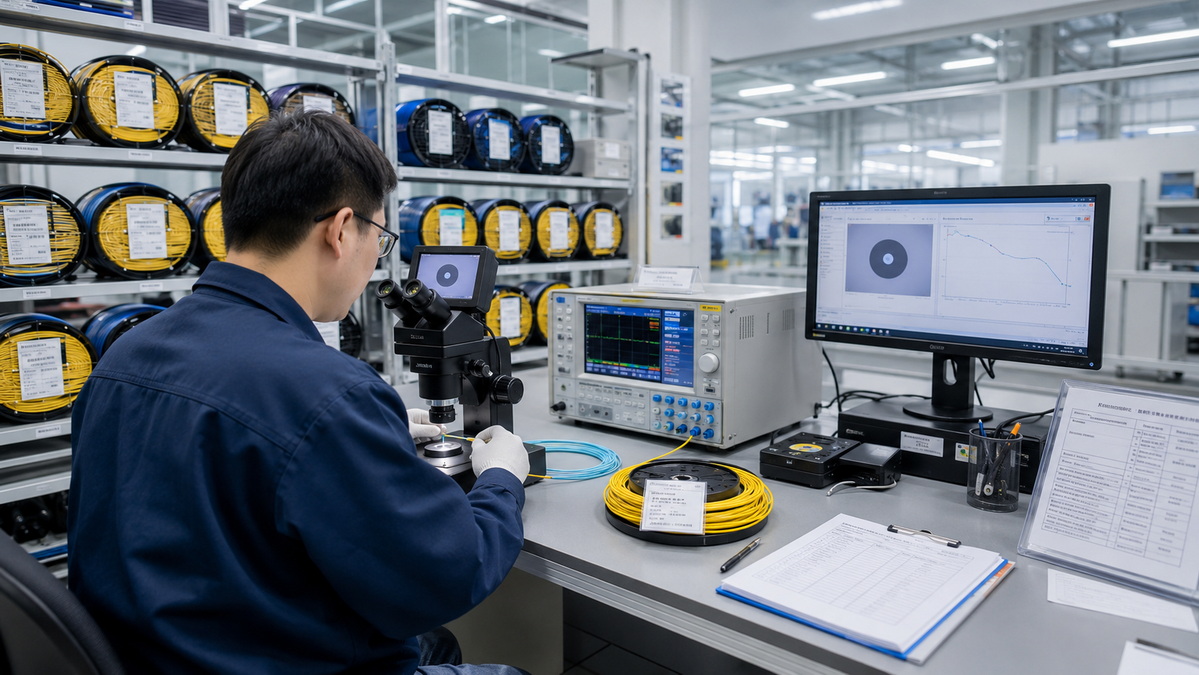
Before placing a large order, verify the factory's legal name, certificate scope, and expiration date, then cross-check the certificate with the issuing organization when possible. If the supplier cannot show reel-level traceability, production photos, and test records tied to the batch, treat the offer as incomplete rather than competitive.
For samples, confirm delivery terms, test methods, and acceptance criteria in writing. For logistics, ask whether the supplier can support consolidated shipping, export marking, carton reinforcement, and moisture protection, because fiber products are often damaged by poor packing rather than by manufacturing defects.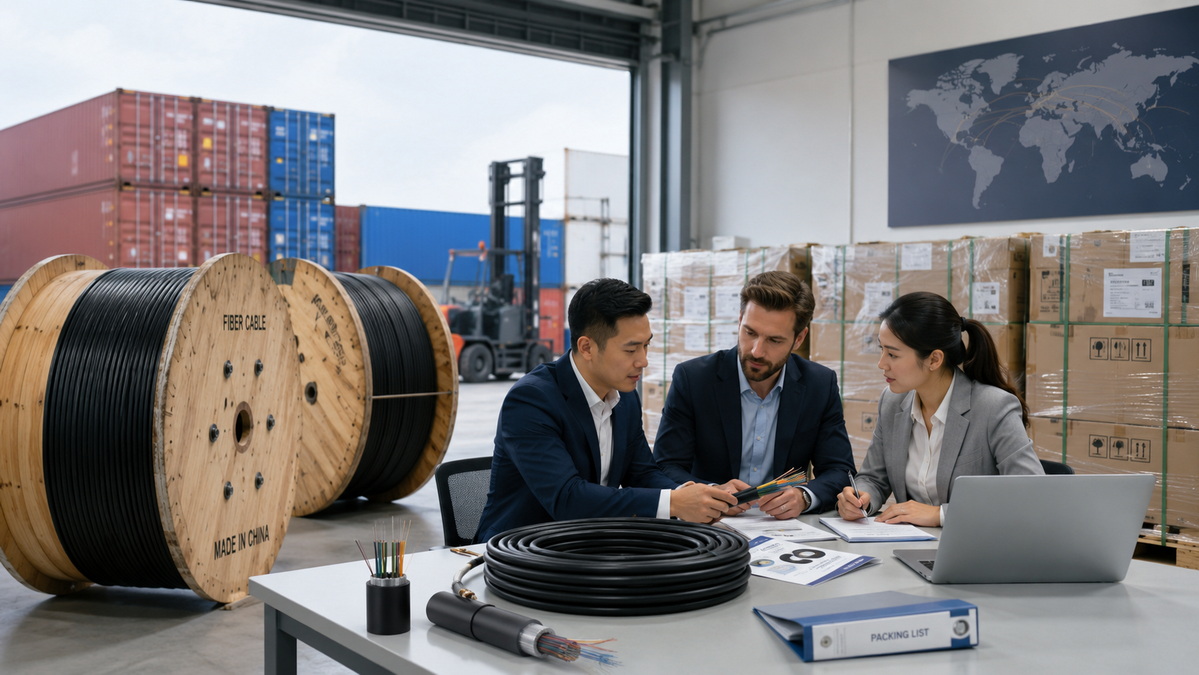
Check the certificate number, issuing body, scope, and expiration date, then confirm whether the certificate is searchable on the registrar's database. If the supplier cannot provide the original PDF and audit scope, do not treat the certificate as verified.
A good sample only proves one unit can pass testing; trustworthy production requires repeatability across reels, lots, and packaging. Always request batch test evidence and ask whether the sample uses the same raw materials and process route as mass production.
Private-label buyers usually benefit from factories with in-house R&D, tooling, and flexible MOQ policies rather than giants optimized for mega-projects. That is why smaller OEM-oriented factories can be more efficient for brand owners than large infrastructure-first suppliers.
The usual reasons are hidden material substitution, poor bend-radius handling, weak jacket performance, or insufficient moisture protection in transit. This is why buyers should inspect the packaging method, reel labels, and incoming QC process, not only the spec sheet.
Ask for factory address, certificate copies, production capacity, key export markets, QC Process, sample lead time, and whether they can support future revisions without changing the core structure. Long-term suppliers should be able to show stable communication, consistent test records, and transparent escalation paths.
- Corning history and innovation overview: [Corning Innovation History]
- U.S. fiber company ranking and market context: [2026 Top 15 Fiber Optic Cable Companies in the USA]
- Otechkabel company profile and certifications: [About Us - OTECHKABEL]
- ISO and cable manufacturing compliance context: [ISO Certification for Cable & Wire Manufacturing 2026]
- Additional U.S. fiber manufacturer overview: [2026 Top 12 Fiber Optic Cable Manufacturers in the USA - Owire]


