


Views: 222 Author: Rebecca Publish Time: 2026-02-17 Origin: Site


Content Menu
● What Cable Is Used for LED Lights?
● Key Factors When Choosing Cable for LED Lights
>> Cable Length and Voltage Drop
>> Installation Environment (Indoor vs Outdoor)
● Common Cable Types Used for LED Lighting
>> PVC Insulated Cable (General Indoor LED Lighting)
>> XLPE Insulated Cable (Medium & High Power LED Systems)
>> Silicone Cable (Harsh & High-Temperature Environments)
>> Low Smoke Halogen-Free (LSZH) Cables
● Number of Cores – Matching Cable to LED Type
>> Single-Colour LED Lights (2-Core Cable)
>> CCT Adjustable LED (3-Core Cable)
>> RGB, RGBW and Pixel LED Cables
>> Pixel and Addressable LED Cables
● Recommended Cable Sizes for LED Lighting
>> Typical Cross-Sections for Common LED Uses
>> Why Thin Data Cables Are Not Recommended
● Safety and Installation Best Practices for LED Cables
>> Connection, Joints and Terminations
>> Managing Voltage Drop and Power Injection
● Practical Cable Selection Scenarios
>> Indoor LED Strip Under Cabinet (Residential)
>> Outdoor Architectural LED Facade
>> RGBW LED Strip in a Commercial Venue
● How to Choose the Right Cable Step by Step
● OEM Cable & Harness Solutions for LED Lighting
● FAQs: What Cable Is Used for LED Lights?
>> 1. What cable should I use for LED strip lights at home?
>> 2. Do LED lights need special wiring?
>> 3. Can I use Cat5 or Cat6 cable to power LED strips?
>> 4. What size cable is best for a long LED strip run?
>> 5. How many cores do I need for RGBW LED strips?
Choosing the right cable for LED lights is critical for safety, brightness, and long-term reliability in any residential, commercial, or industrial project. This guide explains which cable to use for different LED applications, how to size it correctly, and how to avoid wiring mistakes that shorten LED lifespan or cause failures.

When planning an LED system, you must match the cable type, size (cross‑section / AWG), insulation material, and number of cores to the LED power, voltage, and installation environment. Using an undersized or incorrect cable can lead to voltage drop, dimming, flicker, overheating, or even fire risk.
For any LED lamp or strip, start from three core electrical parameters.
- Supply voltage: Many LED systems work at 12 V or 24 V DC (strips, modules) or 110–240 V AC (mains LED lamps and drivers).
- Total power (W): Sum the wattage of all LEDs on the circuit to calculate current demand.
- Current (A): Current ≈ total power ÷ voltage; this value determines the minimum conductor size you need to carry the load safely.
Example: A 24 V LED strip consuming 96 W total draws about 4 A, so the cable must comfortably handle at least 4 A with safety margin based on length and installation.
Long cable runs create voltage drop, making LEDs at the far end dimmer or unstable.
- Longer runs require thicker cable (larger mm² / lower AWG number) to keep voltage drop within acceptable limits.
- For short runs under 10–15 m with moderate current, 0.75 mm² to 1.0 mm² cable is usually sufficient, while long runs or high-power systems may need 1.5 mm², 2.5 mm², or thicker.
The environment determines insulation material and protection level.
- Indoor dry areas: PVC insulated cable is common and cost‑effective for low‑power LEDs.
- Outdoor / damp / industrial: Silicone, XLPE, UV‑resistant, or waterproof sheathed cables protect against temperature extremes, moisture, and chemicals.
- Public buildings, transport, tunnels: Low smoke halogen‑free (LSZH) cables are preferred to reduce toxic fumes in case of fire.
PVC insulated cable is widely used for low‑power indoor LED lighting due to its low cost and basic insulation performance.
- Typical use: LED downlights, ceiling panels, small linear fixtures, short LED strip runs.
- Advantages: Affordable, widely available, easy to install.
- Limitations: At high temperatures PVC can age faster and may release harmful gases during fire, so it is not ideal for harsh or high‑temperature environments.
XLPE (cross‑linked polyethylene) cable is often chosen for medium and high‑power LED lighting where higher temperature and mechanical performance are needed.
- Features: Excellent electrical performance, heat resistance, and aging resistance, suitable for continuous operation at higher temperatures.
- Applications: High‑bay LED lights in warehouses, outdoor floodlights, long trunk lines in commercial buildings.
Silicone insulated cable is ideal for LED systems in extreme environments.
- Properties: High and low temperature resistance, flexibility, oil and chemical resistance, UV resistance.
- Applications: Outdoor LED façades, industrial production areas near heat sources, flexible LED displays with frequent bending.
With growing safety and environmental awareness, LSZH cables are increasingly used for LED lighting.
- Benefits: In a fire they produce very low smoke and no halogen acid gases, improving visibility and reducing corrosion and toxicity.
- Applications: Tunnels, metro stations, airports, hospitals, schools and dense public spaces using extensive LED lighting.
For single‑colour LED strips or modules, a 2‑core cable is usually sufficient.
- One core for positive (+), one for negative (−).
- Common formats: Single‑core, twin flat cable, or round 2‑core flexible cable.
CCT (correlated colour temperature) adjustable strips require three conductors.
- One common positive or negative line plus two channels for warm and cool white.
- Use 3‑core cable rated for the total current of both channels combined.
For multi‑colour LED systems, the number of cores increases with the number of channels.
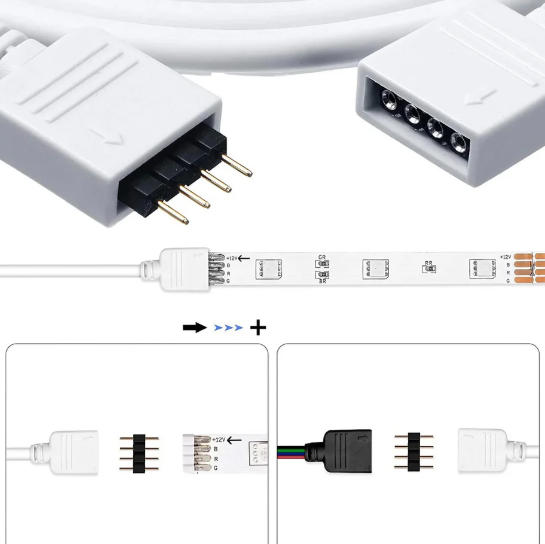
- RGB strips: Typically require 4‑core cable (common anode/cathode plus R, G, B channels).
- RGBW strips: Use 5‑core “four conductor plus common” cable, adding a dedicated white channel.
- RGB+CCT strips: Can require 6‑core cable to carry all colour and CCT control signals plus power.
Many RGB/RGBW cables use colour‑coded cores to simplify installation and reduce wiring errors.
Addressable LED strips and strings need power and data lines, sometimes with separate power injection cables.
- Pixel power cables frequently use multi‑core wire with robust insulation to handle repeated bending and outdoor use.
- For every certain number of pixels or meters, additional power injection cables may be required to maintain brightness along the run.
While exact sizing requires current and length calculations, the examples below provide practical starting points.
- Single LED bulb or small fixture: Around 0.75 mm² cable is usually sufficient for typical domestic currents.
- Multiple LED fixtures on one circuit: 1.0 mm² to 1.5 mm² cable is often recommended to reduce voltage drop and handle higher load.
- Long runs or higher power installations: 1.5 mm², 2.5 mm² or thicker cable can be used, especially for commercial or architectural projects.
- LED strip wiring (general advice): Use 0.75 mm² multi‑core or larger to ensure safe current carrying capacity; upgrade to 1.0–2.5 mm² for long runs to minimize voltage drop.
In some AC lighting systems, 1.5 mm² cable is also widely used in homes and commercial spaces, particularly where longer cable lengths or higher lighting loads are expected.
It can be tempting to use Cat5/Cat6 network cable or bell wire for powering LED strips because they are cheap and easy to find, but these cables are designed for signal transmission, not power delivery.
- Risks: Voltage drop, overheating, potential fire hazards, unstable LED performance when carrying high LED currents.
- Best practice: Use dedicated power cable (multi‑core, 0.75 mm² or thicker) for LED power and reserve Cat cables purely for control or data where specified.
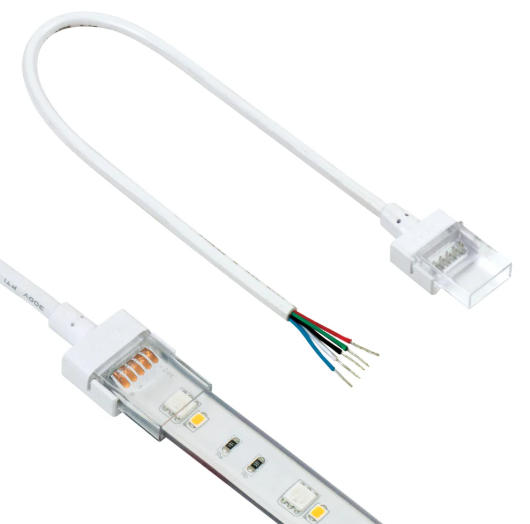
Correct joint treatment is essential to prevent hot spots and failures.
- Use proper crimp terminals, terminal blocks, or dedicated LED connectors, not twisted temporary joints.
- Ensure firm mechanical connection and good contact to avoid local heating and arcing.
- For strips, pair the correct solderless connectors or soldered joints with the intended cable type and core count.
For LED drivers and fixtures that require grounding, the earth conductor must be reliably connected.
- Use cables that include a ground core where required by local electrical code.
- Follow national and regional standards for over‑current protection and installation methods.
Large LED strip or pixel projects often need multiple feed points to maintain consistent brightness.
- Inject power at intervals according to the product specification, especially for long strips or large pixel counts.
- Use thicker cable for main power trunks, with smaller flexible leads only for very short connections to strips or modules.
- Environment: Dry indoor kitchen, short runs (2–5 m), 12 V or 24 V strip.
- Recommended cable: 0.75 mm² 2‑core PVC cable for single‑colour, or 4‑core PVC for RGB.
- Notes: Keep runs short, place the driver relatively close, and avoid daisy‑chaining too many strips from one end only.
- Environment: Exterior façade, UV exposure, rain, possibly long runs.
- Recommended cable: UV‑resistant, waterproof, or silicone/XLPE sheathed multi‑core cable, sized 1.5 mm² or above depending on total load.
- Notes: Use IP‑rated junction boxes, sealed connectors, and consider LSZH where fire safety is critical.
- Environment: Indoor, complex RGBW mood lighting, multiple controllers and long strips.
- Recommended cable: 5‑core RGBW cable with at least 0.75–1.5 mm² per core depending on power and length.
- Notes: Separate control zones, add power injection, and avoid using thin signal cables for power circuits.
Follow this process to select a safe, efficient LED cable for your project.
1. Identify LED type and configuration
- Single‑colour, CCT, RGB, RGBW, RGB+CCT, or pixel/addressable.
- Determine the needed number of cores (2, 3, 4, 5, or more).
2. Calculate total power and current
- Add up the wattage of all LEDs on one cable run.
- Divide by supply voltage to estimate current and set a safe margin.
3. Measure cable length and path
- Longer runs need thicker cable to reduce voltage drop.
- Consider routing, bends, and possible future expansions.
4. Select insulation type and safety level
- PVC for standard indoor, XLPE or silicone for higher temperature or heavy duty, LSZH for safety‑critical environments.
5. Match cable size to load and regulation
- As a practical reference, 0.75 mm² often suits small loads and short runs, while 1.0–1.5 mm² or higher is better for multiple fixtures or longer cables.
- Always respect local electrical standards and use qualified electricians for fixed wiring.
6. Plan connections and protection
- Choose suitable connectors, junction boxes, fuses or breakers, and grounding methods.
- For large installations, design power injection and trunk lines using thicker cables.
If you are an LED brand, wholesaler or lighting equipment manufacturer, working with a professional cable OEM lets you standardize your wiring and improve reliability across product lines.
As a dedicated supplier of USB, VGA, HDMI, DVI, SATA and custom cable assemblies, we can also provide custom LED lighting cables and harnesses tailored to:
- Specific LED strip or module systems (single colour, RGB, RGBW, pixel).
- Required conductor size, insulation material and jacket (PVC, XLPE, silicone, LSZH).
- Pre‑terminated connectors, labelled wiring and ready‑to‑install assemblies for faster production and on‑site installation.
If you need high‑quality, customized LED lighting cables or harnesses for your brand or project, contact our team now to discuss OEM and ODM solutions that match your electrical requirements, safety standards and cost targets.
Contact us to get more information!
For most indoor home LED strips with short runs, 0.75 mm² 2‑core PVC cable is usually sufficient for single‑colour strips, while RGB strips typically need 4‑core cable of similar or larger size. For longer runs or higher power, moving up to 1.0–1.5 mm² improves stability and reduces voltage drop.
LED systems do not always need special wiring, but they do require cables correctly sized for current and length, and with suitable insulation for the environment. It is important to choose cable types that are designed for power transmission rather than signal cables that are too thin for the load.
Cat5 and Cat6 are not recommended for powering LED strips because they are designed for low‑current data signals. Using them for power can cause voltage drop, overheating and reliability issues, especially in higher‑power or long‑run installations.
For long runs or higher power, many installers move from 0.75 mm² to 1.0–2.5 mm² cable to control voltage drop and keep current density within safe limits. The longer the cable and the higher the total wattage, the more important it is to upgrade to a thicker conductor.
RGBW strips normally require 5‑core cable: one common line plus four channels (red, green, blue and white). This allows the controller to manage each colour independently and ensures reliable operation across the full colour and white range.
1. https://www.pcm-cable.com/info/what-cable-is-used-for-led-lights-97971346.html
2. https://www.weloveleds.co.uk/blogs/led-know-how/led-cable-guide
3. https://www.litewave.co.uk/guides/using-the-right-cable-for-led-strips-why-075mm-or-higher-cable-is-best-883684.html
4. https://ledstore.pro/page/installation-of-led-lights/cable-selection
5. https://quinled.info/2018/10/20/wire-thickness-needed/


