
Views: 222 Author: Rebecca Publish Time: 2026-02-16 Origin: Site


Content Menu
● Why Wiring Harness Types Matter for Your Project
● How Wiring Harnesses Are Classified
● Wiring Harness Types by Function
● Wiring Harness Types by Application
>> Automotive Wiring Harnesses
>> Industrial and Automation Wiring Harnesses
>> Consumer Electronics and Appliance Wiring Harnesses
● Wiring Harness Types by Construction and Structure
>> Closed Bundle Wiring Harness
>> Hybrid or Multi-Branch Wiring Harness
● Wiring Harness Types by Voltage Level
>> Low-Voltage Wiring Harnesses
>> Medium-Voltage Wiring Harnesses
>> High-Voltage Wiring Harnesses
● Specialized Wiring Harness Types
>> Flexible and Moving Harnesses
>> Custom and OEM-Specific Wiring Harnesses
● Key Components Inside a Wiring Harness
>> Protection, Labeling, and Accessories
● Wiring Harness Type Comparison Table
● Practical Steps to Choose the Right Wiring Harness Type
>> Step 1 – Define Electrical Requirements
>> Step 2 – Define Environmental and Mechanical Conditions
>> Step 3 – Determine Signal and Data Needs
>> Step 4 – Choose Connectors and Interfaces
>> Step 5 – Confirm Compliance and Testing
● Where to Use Different Wiring Harness Types (Example Scenarios)
● Take the Next Step for Your Wiring Harness Project
● FAQs About Wiring Harness Types
>> (1) What is the difference between a wiring harness and a cable assembly?
>> (2) How do I know if I need a shielded wiring harness?
>> (3) Are high-voltage wiring harnesses only used in electric vehicles?
>> (4) Can one wiring harness carry power and data at the same time?
>> (5) What information should I provide to a harness manufacturer for a custom design?
Wiring harnesses are the backbone of modern electronics, vehicles, and industrial equipment, bundling multiple cables into one organized, protected assembly for power, signal, and data transmission. For OEM buyers, engineers, and importers, understanding wiring harness types is essential for specifying the right product, controlling cost, and ensuring long-term reliability.

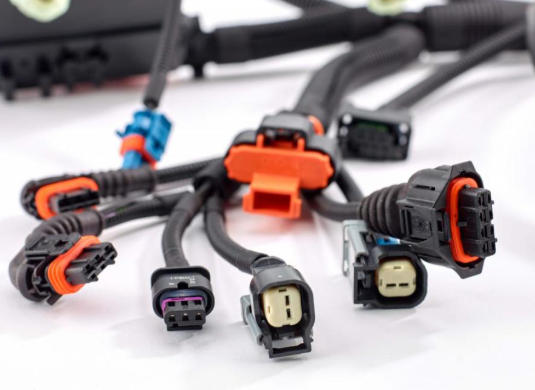
A wiring harness is an engineered bundle of wires, cables, connectors, and protective components that routes power and signals between multiple devices within a system. Instead of running loose individual wires, the harness consolidates and organizes them into one assembly, improving safety, installation efficiency, and maintenance.
Typical wiring harnesses are used in:
- Automotive and EV systems
- Industrial machinery and robotics
- Consumer electronics and appliances
- Telecom, IT, and data centers
- Medical, aerospace, and defense equipment
Choosing the wrong wiring harness type can lead to overheating, noise, poor signal integrity, premature failure, or unnecessary cost. The right classification helps you match:
- Voltage and current ratings
- Environmental conditions such as temperature, vibration, and moisture
- Mechanical constraints including space, flexibility, and routing path
- Data speed and signal integrity requirements
For OEM projects and custom cable assemblies, defining the correct harness type in your technical specifications significantly improves sourcing quality and communication with suppliers.
There is no single global standard that defines all wiring harness types, but in practice, manufacturers and engineers group them in several ways: by function, application, construction, and voltage level.
From a functional perspective, industrial wiring harnesses are often divided into three main categories: power harnesses, signal harnesses, and data harnesses.
A power wiring harness is designed to deliver electrical energy from a source, such as a battery or power supply, to loads such as motors, lamps, controllers, or inverters.
Key characteristics:
- Larger conductor cross-sections to carry higher current
- Emphasis on low voltage drop and thermal stability
- Robust insulation and jackets for safety and durability
- Common in automotive powertrains, industrial machines, and power distribution panels
Typical examples:
- Automotive battery and starter motor harness
- Industrial motor power feed harness
- High-current DC bus harness in EVs or forklifts
Signal wiring harnesses are built to transmit control and feedback signals with high reliability and minimal interference.
Typical features:
- Finer wire gauges, often with twisted pairs
- Shielding or careful routing to reduce noise and crosstalk
- Used for sensor signals, control I/O, and low-voltage logic lines
Applications include PLC and control cabinet harnesses, automotive sensor and ECU signal harnesses, and instrumentation wiring.
Data wiring harnesses focus on high-speed communication and digital or analog data transmission.
Characteristics:
- Specialized cables such as USB, HDMI, Ethernet, RF coax, or fiber optics
- Precise impedance control and shielding for high-frequency signals
- Critical in IT, telecom, infotainment, and advanced automotive systems
Common examples are harnesses for USB or HDMI ports in electronics, Ethernet harnesses in industrial networks, and RF or fiber harnesses for communication backbones.
Another practical way to understand wiring harness types is by the application or environment they are designed for.
Automotive harnesses integrate power, signal, and data lines throughout the vehicle.
Common sub-types:
- Engine wiring harness
- Chassis wiring harness
- Body and lighting harness
- Infotainment and telematics harness
They must withstand temperature changes, vibration, moisture, and chemicals, while meeting strict automotive standards.
Industrial wiring harnesses interconnect sensors, actuators, motors, controllers, and HMIs in factories and process plants.
Key requirements:
- Mechanical robustness and strain relief
- Resistance to oils, chemicals, and abrasion
- Electromagnetic interference protection in high-noise environments
Typical uses include robotics, CNC machines, assembly lines, and industrial control cabinets.
In consumer products, wiring harnesses enable compact, cost-effective interconnection of power, signal, and interfaces inside:
- TVs, set-top boxes, and gaming consoles
- Home appliances such as refrigerators, washing machines, and HVAC units
- Office equipment and PCs
In these applications, space saving, cost optimization, and ease of assembly are paramount.
The physical construction of a harness, including how wires are grouped, routed, and protected, is another important classification dimension.
Closed bundle harnesses group wires tightly together with tapes, sleeves, or tubing.
- Provide excellent organization and mechanical support
- Suitable for fixed routing paths where flexibility is moderate
- Common in automotive and industrial control wiring
Open bundle harnesses use clips, ties, and channels to loosely group wires, allowing more flexibility and easier modification.
- Useful in large equipment and control panels
- Simplifies inspection and rework
- Offers better airflow and heat dissipation than tightly bound bundles
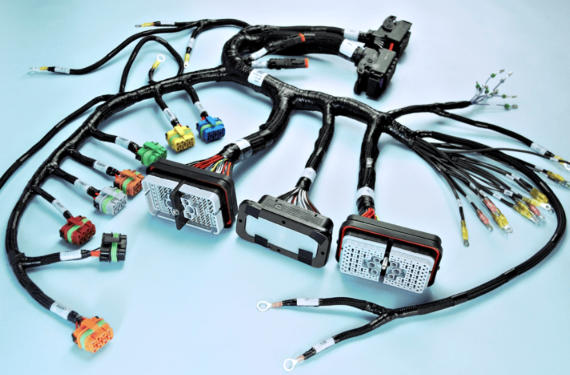
Hybrid or multi-branch harnesses have a central trunk that splits into multiple branches serving different zones or subsystems.
- Ideal for complex machines, vehicles, and aerospace systems
- Reduces total wiring length and simplifies system architecture
- Can combine power, signal, and data lines in one integrated assembly
At the simplest level, a single cable assembly can also be considered a basic wiring harness, especially when it includes connectors and strain relief.
Examples include coaxial cable assemblies, ribbon cable assemblies, and single power cable assemblies for long runs.
Many engineers and OEM buyers also classify wiring harness types by operating voltage, because it directly affects insulation, spacing, and safety requirements.
Low-voltage harnesses typically operate below 50 V, using fine-gauge copper wires.
- Used for sensors, controls, and small electronics
- Emphasis on flexibility and compact routing
- Insulation often uses thin-wall PVC or TPE
Medium-voltage harnesses usually cover the 50–300 V range in many industrial and automotive systems.
- Wire sizes commonly around 16–20 AWG
- Insulation such as XLPE or irradiated PVC with 300 V ratings
- Used in control panels, industrial robots, and AC mains distribution inside equipment
High-voltage harnesses are engineered for 300–1000 V or more, particularly in EVs and heavy industrial equipment.
Key features:
- Thicker conductors with higher current capacity
- High-performance insulation such as dual-layer XLPE or silicone
- Enhanced creepage and clearance, shielded connectors, and rigorous testing
Beyond the basic classifications, there are specialized wiring harness types engineered for particular performance needs.
Shielded harnesses integrate electromagnetic interference shielding around all or part of the bundle.
Shielding options include:
- Foil shields for high-frequency noise
- Braid shields for mechanical durability
- Combination foil and braid for maximum coverage
- Metal conduits for extreme industrial environments
These are crucial in high-speed data harnesses, medical devices, and military systems where electromagnetic compatibility is critical.
In robotics and moving machinery, harnesses must endure constant flexing and vibration without failure.
Design features:
- Fine-strand conductors for high flexibility
- Special jackets with abrasion and fatigue resistance
- Optimized routing and strain relief in cable carriers
Custom wiring harnesses are tailored to unique geometry, electrical requirements, and connector ecosystems for specific customers or platforms.
Typical customization aspects:
- Exact lengths, break-outs, and branch locations
- Specific connector brands and pin-outs
- Labeling, over-molding, and testing procedures
For OEMs and brand owners, custom harnesses simplify assembly and ensure consistent quality across production runs.
Although classifications focus on types, the building blocks of a wiring harness are also important for engineers and buyers.
- Copper or aluminum conductors
- Single core, multi-core, twisted pair, coaxial, or ribbon structures
- Insulation materials such as PVC, XLPE, TPE, silicone, and PTFE depending on temperature and voltage
Wire harnesses use a wide variety of connectors and terminals to achieve secure, repeatable connections.
Common terminal types include:
- Crimp terminals such as butt, ring, spade, hook, bullet, and pin
- Insulated and heat-shrink terminals for environmental protection
- IDC and solder terminals for specific applications
To protect and organize the harness, manufacturers apply:
- Sleeves, braided sheaths, and conduits
- Tapes, ties, clips, and grommets
- Labels, markers, and cable flags for identification
These details strongly influence installation speed and long-term maintainability.
The table below summarizes several common wiring harness types and their core characteristics.
| Wiring Harness Type | Main Purpose | Typical Voltage Range | Typical Applications |
|---|---|---|---|
| Power wiring harness | Transmit electrical energy with minimal loss | Low to high voltage | Automotive powertrain, industrial motors, power panels |
| Signal wiring harness | Carry control and sensor signals reliably | Mainly low voltage | PLC I/O, sensors, instrumentation |
| Data wiring harness | Transmit digital or analog data | Low voltage, high frequency | USB, HDMI, Ethernet, telecom, infotainment |
| Closed bundle harness | Tightly grouped, mechanically supported wires | Any, depending on cable design | Automotive, machinery, control panels |
| Open bundle harness | Loosely grouped, easy to modify | Any, depending on cable design | Large equipment, cabinets, test setups |
| Hybrid or multi-branch | Central trunk with multiple branches | Mixed power, signal, and data | Vehicles, complex machines, aerospace |
| Low-voltage harness | Sensor and control circuits below 50 V | Below 50 V | Electronics, automation, medical devices |
| High-voltage harness | High-power systems in EV and industry | 300–1000 V or more | EV battery packs, inverters, heavy equipment |
| Shielded harness | EMI-sensitive power or data circuits | Any, with EMI constraints | Medical, military, high-speed data systems |
When specifying or purchasing wiring harnesses, a clear step-by-step process reduces risk and clarifies requirements.
- Operating voltage range and safety category
- Maximum current per circuit and duty cycle
- Number of circuits and separation between power and signal lines
- Ambient and conductor temperature limits
- Vibration, movement, bending radius, and mechanical stress
- Exposure to moisture, oil, chemicals, or UV
- Signal types such as analog, digital, or high-speed
- Required data rates and impedance control for interfaces like USB, HDMI, or Ethernet
- Electromagnetic compatibility requirements and shielding strategy
- Required connector standards in automotive, industrial, or IT fields
- Locking mechanisms, sealing level, and mating cycle expectations
- Pin-outs, coding, and mis-mating prevention measures
- Applicable standards and regulations for your industry
- Dielectric strength, continuity, and insulation resistance tests
- Functional testing under simulated operating conditions
To make wiring harness types more concrete, consider a few typical scenarios.
- Electric vehicle: High-voltage power harness between battery and inverter, low-voltage signal harness for sensors, and shielded data harness for communication networks such as CAN or Ethernet.
- Factory automation cell: Power harnesses feeding motors and drives, multi-branch signal harnesses for sensors and actuators, and flexible harnesses in robot arms.
- Home appliance: Compact closed bundle harness for internal power distribution, low-voltage signal harness for the control board, and data harness for smart connectivity modules.
These examples show how several harness types often coexist within a single system.
If you are an OEM, brand owner, or distributor planning a new product line or upgrading your existing platform, choosing and implementing the right wiring harness type is critical to performance, reliability, and assembly efficiency. To move forward with confidence, prepare your project data, including drawings, cable lists, expected lengths, connector specifications, and test requirements, and share them with a professional wiring harness and cable assembly manufacturer. With the right partner, you can develop tailored harness solutions spanning USB, VGA, HDMI, DVI, SATA, and other interfaces that match your technical targets and cost expectations. Contact our team now to discuss your application and request a custom wiring harness proposal or sample development plan.
Contact us to get more information!
A wiring harness typically combines multiple cables and wires into a structured bundle with organized branches, while a cable assembly often focuses on one main cable with connectors at each end and limited branching. A harness usually serves multiple circuits and destinations, whereas a cable assembly is more linear.
You usually need a shielded harness if your system includes high-speed data, sensitive analog signals, or operates near strong sources of electromagnetic noise such as motors, inverters, or RF transmitters. Shielding helps maintain signal integrity and reduces the risk of communication errors or unexpected behavior.
High-voltage harnesses are common in electric vehicles, but they are also widely used in industrial drives, renewable energy systems, rail equipment, and heavy machinery. Any application with several hundred volts or more, combined with significant power levels, may require a dedicated high-voltage harness design.
Yes, a multifunctional harness can carry both power and data, provided it is carefully designed. Proper separation, shielding, and routing are essential to avoid interference between power and data circuits and to ensure stable performance over the product's lifetime.
For a custom design, you should share electrical requirements such as voltage, current, and signal types, mechanical constraints like lengths and routing, and environmental conditions. In addition, provide connector preferences, applicable standards, labeling requirements, and any specific testing that must be completed before mass production.


