


Views: 213 Author: Otechkabel Publish Time: 2026-08-15 Origin: Site


Content Menu
● Does iPhone 17 Come With a Charger?
● Which Charger Wattage Is Best for iPhone 17?
● Why a Higher-Wattage Charger Is Safe
● How Fast Does iPhone 17 Charge?
● Wired Charging vs. Wireless Charging
● Can You Use an Old Charger With iPhone 17?
● Does the USB-C Cable Matter?
>> What to Look for in a USB-C Cable
● Choosing a Cable for an iPhone 17 Accessory Range
>> Premium Fast-Charging Cable
● Product Bundle Ideas for iPhone 17 Users
● Common Charging Mistakes to Avoid
● FAQ
>> What charger wattage is recommended for iPhone 17?
>> Can I use a 65W charger with iPhone 17?
>> Does iPhone 17 come with a wall charger?
>> Can I use my old USB-A charger?
>> Does a higher-rated USB-C cable make iPhone 17 charge faster?
>> Is wired charging faster than wireless charging?
>> What should brands ask when sourcing USB-C cables?
iPhone 17 includes a USB-C charging cable, but it does not include a wall charger.
This means users need to purchase a USB-C power adapter separately unless they already own a compatible charger. Many people can continue using a recent USB-C charger from another phone, tablet, laptop, or charging station.
Before purchasing a new adapter, check the port on the existing charger:
- A charger with a USB-C output port can work with the USB-C cable supplied with iPhone 17.
- A charger with a USB-A output port can still charge iPhone 17, but it requires a USB-A to USB-C cable.
- A charger with limited output may charge the phone more slowly.
- A damaged, overheating, or poorly made charger should be replaced.
For a straightforward charging setup, a USB-C PD wall charger and USB-C to USB-C cable are the most practical combination.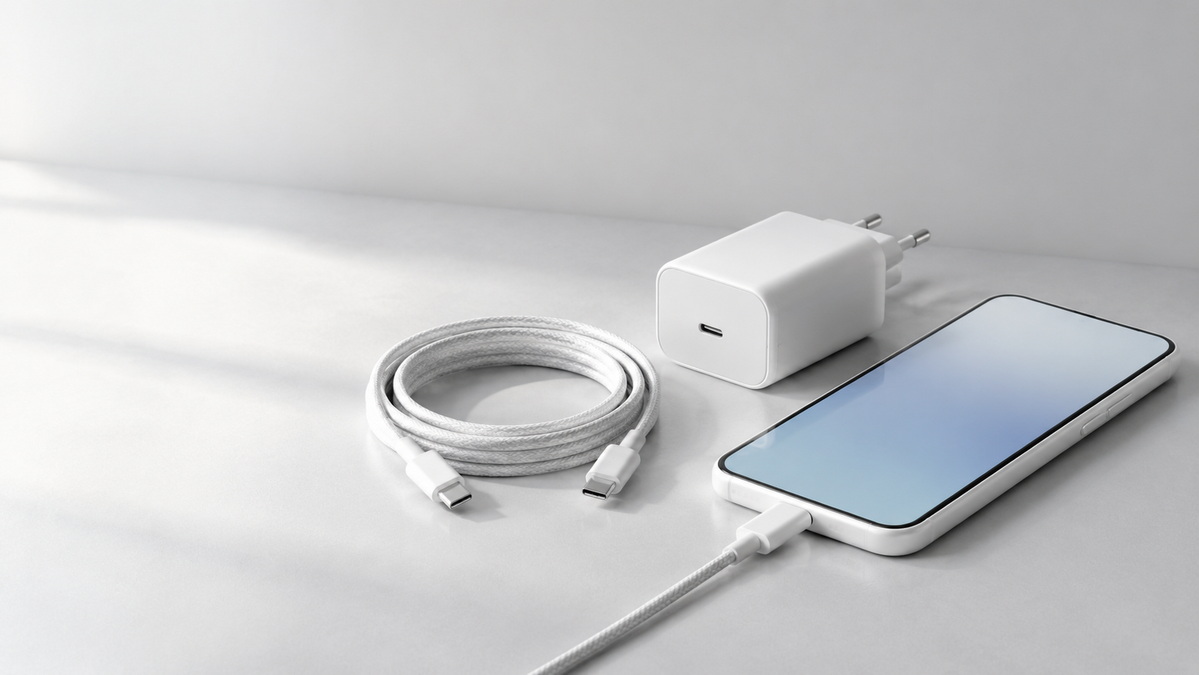
The right wattage depends on how the customer uses the phone and whether they need to charge other devices at the same time.
| Charger Wattage | Best For | Charging Experience |
|---|---|---|
| 20W USB-C PD | Overnight charging, office use, entry-level bundles | Suitable for everyday charging |
| 30W USB-C PD | Daily charging and wireless charging setups | A flexible all-round choice |
| 40W–45W USB-C PD | Dedicated iPhone 17 fast charging | Best option for rapid wired top-ups |
| 65W USB-C PD | Travel, tablets, laptops, multi-device users | One charger for several device categories |
| 100W or higher | Professional multi-device charging | Useful for laptops and shared charging stations |
For most iPhone 17 users, a 40W or 45W USB-C PD charger is the best balance between speed, size, cost, and everyday usability.
A 65W charger is useful for customers who want one adapter for both a phone and a laptop. For example, a business traveller may use a 65W charger for a notebook in the morning, then connect iPhone 17 later in the day without carrying a second wall charger.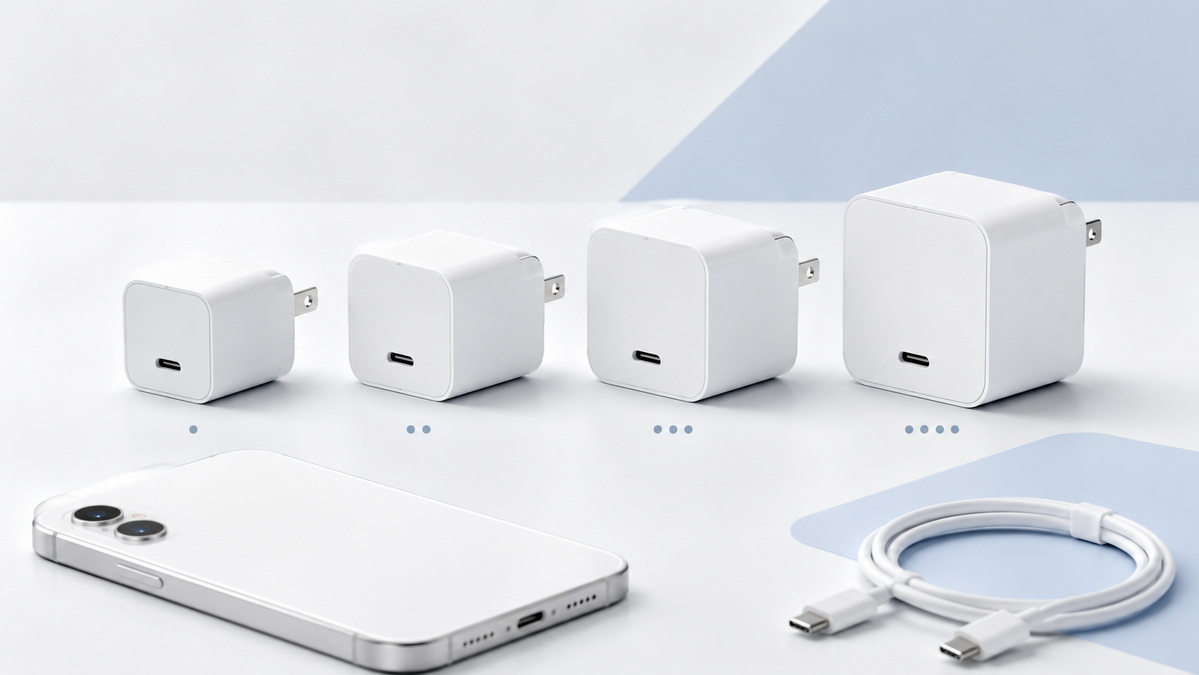
Many users worry that a 65W or 100W charger could damage a phone. In a properly designed USB-C PD charging system, this is not how charging works.
The charger makes power available, while the connected device determines the amount of power it requests. The phone, cable, and charger communicate before charging at the appropriate level.
For example, when iPhone 17 is connected to a 65W USB-C PD charger:
- The charger is capable of supplying up to 65W.
- The phone requests a compatible charging profile.
- The cable carries the negotiated power.
- The iPhone draws only the power it needs.
This makes higher-output chargers useful for customers who want a more versatile charging solution. The extra available power can support other compatible devices, including tablets, laptops, wireless chargers, and accessories.
Charging speed changes throughout the charging cycle. A phone usually charges more quickly when the battery level is low and slows down as the battery approaches full capacity.
With a compatible 40W or higher USB-C power adapter and USB-C cable, iPhone 17 can reach up to 50% charge in around 20 minutes under specified test conditions.
Actual charging results can vary based on several factors:
- Battery percentage when charging begins
- Device temperature
- Ambient room temperature
- Background apps and active usage
- Cable quality and condition
- Charger design and output stability
- Wireless charging alignment, if applicable
For this reason, brands should avoid making universal promises such as "full charge in 30 minutes." A more accurate product statement is that the charger supports fast charging with compatible devices under suitable conditions.
Wired charging remains the best option when speed is the priority. Wireless charging is more convenient for a desk, bedside table, or home office, especially for users who prefer to place the phone down rather than connect a cable.
| Charging Method | Main Benefit | Best Use Case |
|---|---|---|
| USB-C wired charging | Fast and efficient power delivery | Travel, workdays, low-battery emergencies |
| MagSafe charging | Magnetic alignment and convenient placement | Desk and bedside charging |
| Qi2 wireless charging | Compatible magnetic wireless ecosystem | Home, office, and accessory bundles |
| Standard Qi charging | Broad wireless compatibility | Basic wireless charging needs |
A wired charger is generally the better choice for users who need a fast battery top-up. Wireless charging is ideal when convenience matters more than maximum speed.
For a complete accessory range, brands may offer both options: a wired USB-C PD charger for fast charging and a magnetic wireless charger for desk or bedside use.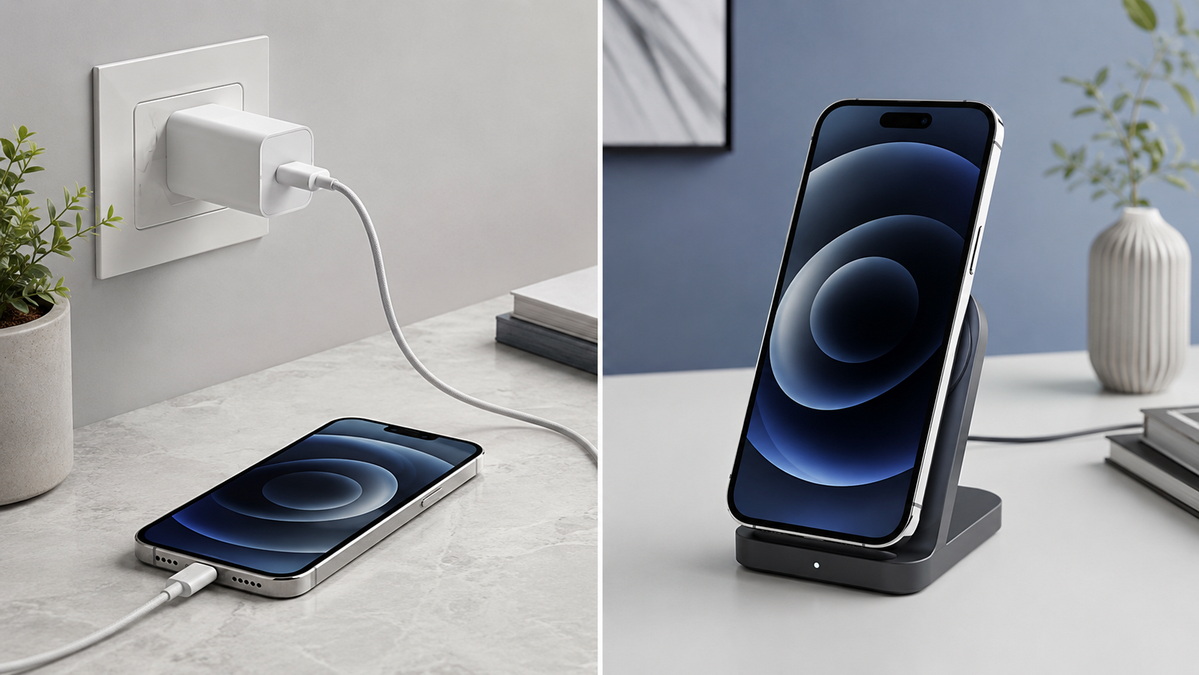
Yes, many older chargers can still work with iPhone 17. The charging experience depends on the charger port, power output, and cable type.
A recent USB-C PD charger is the most convenient option. It can connect directly to a USB-C to USB-C cable and provide efficient charging.
A 20W USB-C charger is suitable for standard charging. A 40W or higher model is preferable for customers who value faster charging.
Older USB-A chargers can still be used, but they require a USB-A to USB-C cable. They may charge more slowly than USB-C PD chargers and are less suitable for a premium fast-charging setup.
USB-A charging remains relevant for replacement cables, older office equipment, vehicle chargers, and price-sensitive markets. However, USB-C PD is the stronger choice for new product development.
Many USB-C laptop chargers can charge iPhone 17. This is especially useful for people who want to reduce the number of chargers they carry.
A laptop charger may have 45W, 65W, 100W, or higher output capability. The iPhone does not continuously receive the charger's maximum rating. It draws an appropriate amount through the charging negotiation process.
Yes. The cable is an essential part of the charging system.
Two USB-C cables may look nearly identical, but they can differ in charging capability, data-transfer speed, construction quality, length, flexibility, and durability. A cable should be selected based on its actual specification rather than only its external appearance.
For iPhone 17 charging, a dependable USB-C to USB-C cable should provide stable charging performance and strong mechanical durability.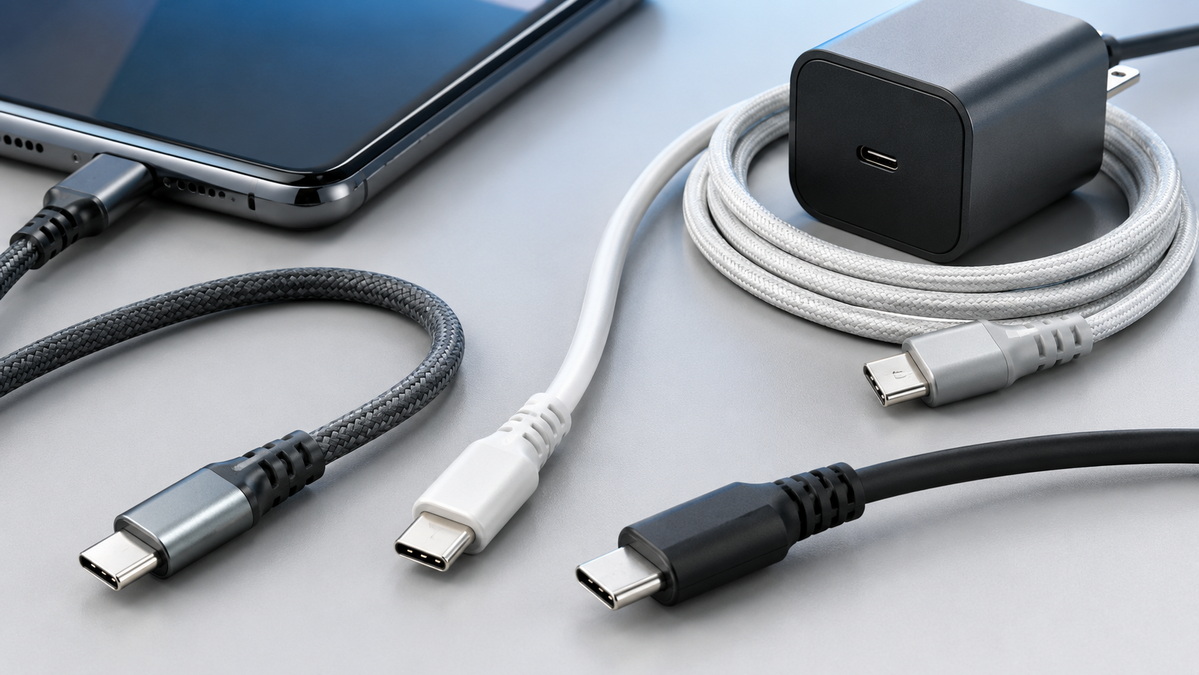
When choosing a USB-C cable, buyers should consider the following points:
1. Connector configuration
Choose USB-C to USB-C for use with USB-C PD wall chargers and iPhone 17.
2. Power capability
Clear power markings help buyers understand whether the cable is designed for 60W, 100W, 140W, 240W, or another specified power level.
3. Cable length
A 1 m cable is compact and suitable for travel. A 1.5 m or 2 m cable provides more flexibility at desks, hotel rooms, and bedside locations.
4. Jacket material
PVC, TPE, silicone, braided nylon, and other materials offer different levels of flexibility, appearance, and durability.
5. Strain relief design
The area where the cable joins the connector is often subject to repeated bending. Good strain relief helps improve service life.
6. Connector quality
Consistent connector assembly supports reliable insertion, stable charging, and long-term performance.
7. Data requirement
Some customers only need charging. Others need charging and data transfer. The required data specification should be clearly stated before purchase.
A cable with a higher power rating does not automatically make iPhone 17 charge faster. The final charging result depends on the phone, charger, cable, battery level, and operating conditions.
For brands, distributors, and wholesalers, the best cable strategy is not always to offer one model for every customer. A clear product range helps customers understand the differences and improves upselling opportunities.
An entry-level USB-C to USB-C cable can focus on dependable daily charging, standard length options, and economical packaging.
This category works well for:
- Retail replacement cables
- Promotional bundles
- Basic phone charging kits
- E-commerce marketplaces
- Budget-friendly accessory collections
A premium cable can include a braided jacket, reinforced strain relief, longer length, stronger connector housing, upgraded packaging, and a higher specified power rating.
This category works well for:
- Premium retail stores
- Gift-oriented packaging
- Travel accessories
- Business-device bundles
- Higher-margin branded products
A high-power USB-C to USB-C cable can serve phones, tablets, laptops, power banks, docking stations, and other USB-C devices.
This type of cable is especially valuable for customers who want one cable for multiple devices. It should be promoted based on its tested power and data capabilities, not generic claims.
A well-designed charging bundle gives customers a complete solution and helps reduce compatibility questions after purchase.
- 20W USB-C PD wall charger
- 1 m USB-C to USB-C cable
- Compact retail packaging
This is suitable for basic daily charging and entry-level price points.
- 40W or 45W USB-C PD wall charger
- 1 m or 1.5 m USB-C to USB-C cable
- Clear fast-charging compatibility statement
- Durable cable construction
This is a strong option for customers who need quick charging during the day.
- 65W multi-port USB-C charger
- 2 m USB-C to USB-C cable
- Optional regional plug configuration
- Travel pouch or compact packaging
This bundle is suitable for international travellers, professionals, and customers who carry multiple devices.
- Magnetic wireless charging pad or stand
- USB-C PD wall charger
- USB-C cable
- Desk-oriented retail packaging
This option is ideal for office, home, and bedside use.
Customers can improve their charging experience by avoiding a few common mistakes.
- Using a damaged or loose cable
- Choosing a charger based only on appearance
- Assuming all USB-C cables have the same power capability
- Using an old low-power adapter when fast charging is required
- Charging in very hot environments
- Covering the charger or phone during charging
- Purchasing products with unclear specifications
- Making performance assumptions without checking port type and output rating
For product brands, clear package labeling is especially important. The box should state the connector type, cable length, power rating, data capability where relevant, and included accessories.
The best charger for iPhone 17 is a 40W or higher USB-C PD charger paired with a dependable USB-C to USB-C cable. This setup is ideal for users who want fast wired charging, while 20W chargers remain a practical choice for standard daily use.
For a more flexible charging setup, a 65W or higher USB-C charger can support several compatible devices without requiring separate adapters. The iPhone will manage the power it receives, so a properly designed higher-wattage USB-C PD charger can be both practical and safe.
For brands, wholesalers, and device manufacturers, the strongest iPhone 17-compatible accessory range combines clear specifications, reliable cable construction, suitable power options, and packaging that helps customers select the right charging solution with confidence.
Shenzhen Otechkabel Electronic Co., Ltd. supports OEM USB-C cable and charging-accessory development for overseas brands, wholesalers, and manufacturers. Product options can be tailored by cable length, jacket material, connector design, power specification, logo printing, packaging, and market positioning.
A 40W or higher USB-C PD charger is recommended for users who want the fastest wired charging experience. A 20W USB-C PD charger is also suitable for standard daily charging.
Yes. A compatible 65W USB-C PD charger can charge iPhone 17. The phone draws only the amount of power it needs through the charging negotiation process.
No. iPhone 17 includes a USB-C charging cable, but the wall charger is sold separately.
Yes, but you will need a USB-A to USB-C cable. Charging may be slower than with a USB-C PD charger.
Not always. The charging speed depends on the phone, charger, cable, battery condition, and temperature. A higher-rated cable offers greater compatibility with other devices but does not override the phone's charging limits.
Wired USB-C charging is generally the better option when speed matters. Wireless charging is more convenient for desk, bedside, and daily placement charging.
Brands should confirm the cable's power capability, data specification, cable length, conductor structure, connector material, strain relief, testing process, packaging option, logo customization, and production quality-control standards.
1. Apple. [iPhone 17 – Technical Specifications]
Product specifications covering charging, included accessories, USB-C connectivity, and wireless charging capability. [apple]
2. Apple Support. [Fast Charge Your iPhone]
Charging requirements, compatible adapters, and fast-charging guidance for iPhone models. [support.apple]
3. USB Implementers Forum. [Cables and Connectors]
USB-C cable capability markings, compliance information, and connector guidance. [usb]


