


Views: 288 Author: Otechkabel Publish Time: 2026-07-03 Origin: Site


Programmable Power Supply, or PPS, is one of the most important features in modern USB-C fast charging. It allows a charger to adjust voltage and current in real time, helping devices charge faster, run cooler, and improve overall power efficiency. For brands, distributors, and OEM buyers, understanding PPS is not just a technical detail — it is a practical advantage in product design, compatibility, and customer satisfaction.
In this guide, we explain what PPS is, how it works, where it is used, and what manufacturers and buyers should know when selecting cables, chargers, and connected devices.
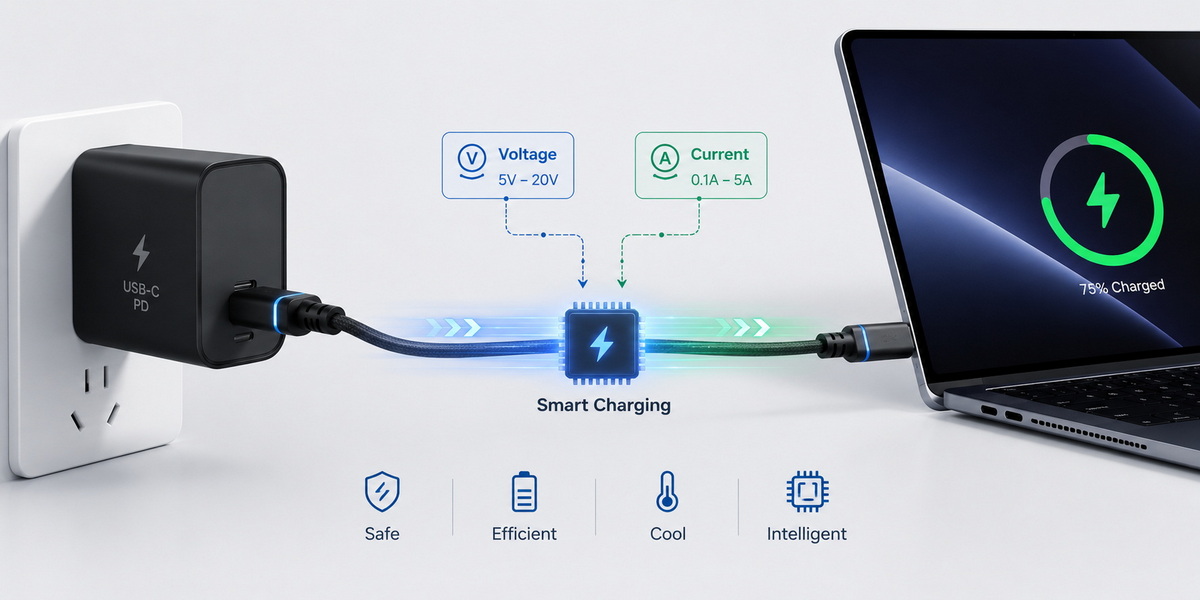
Programmable Power Supply is an advanced charging protocol defined under the USB Power Delivery standard. Instead of supplying fixed voltage levels only, PPS lets the charger dynamically adjust output in small steps to match the device's charging needs. This flexible control reduces wasted energy and helps maintain stable charging performance.
In simple terms, PPS gives devices more precise power delivery than conventional fast charging. That is why it is widely used in smartphones, tablets, laptops, and other USB-C devices that require efficient and controlled charging.
PPS works by continuously communicating between the charger and the device. The device requests the power level it needs, and the charger responds by adjusting voltage and current accordingly. This real-time negotiation helps the battery receive power more efficiently than with a fixed-output charger.
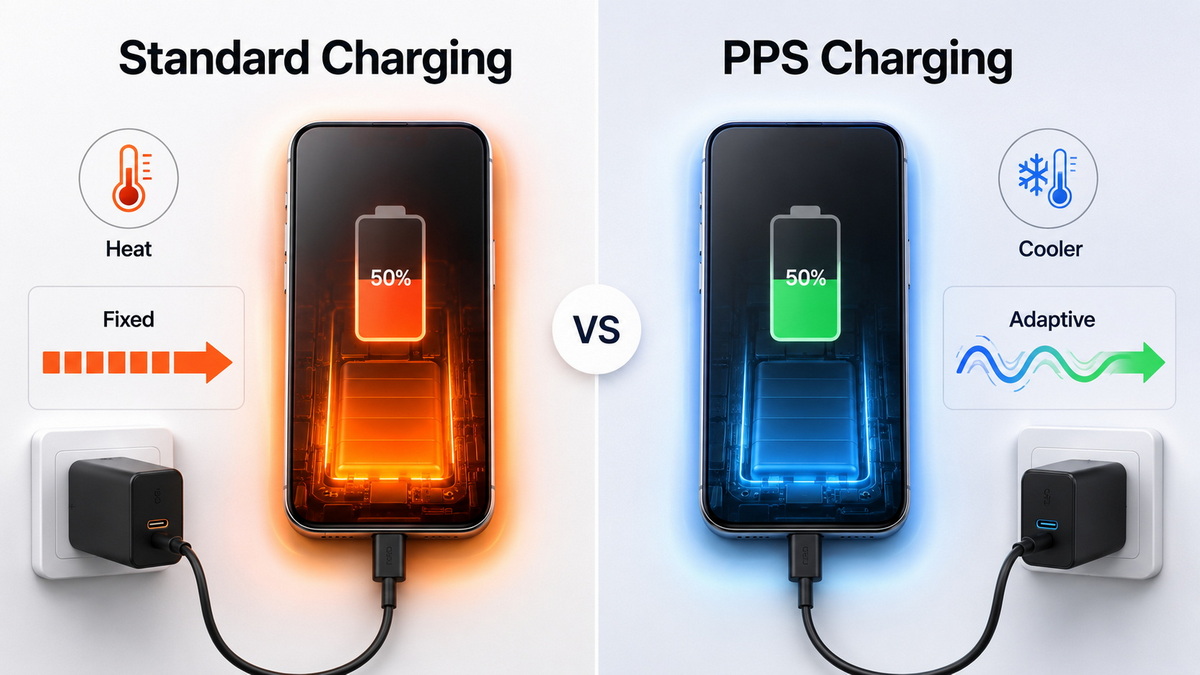
The main advantage of this system is precision. Instead of forcing the battery to accept a large power jump, PPS delivers smoother charging that can reduce heat generation and stress on the battery.
- Dynamic voltage adjustment.
- Fine-grained current control.
- Better thermal management.
- Improved charging efficiency.
- Enhanced device compatibility within USB-C ecosystems.
PPS matters because modern users want faster charging without sacrificing battery health. Traditional charging methods can generate extra heat, especially when power output is not well matched to the device. PPS helps minimize this issue by delivering power more intelligently.
For manufacturers, this means fewer thermal challenges and a better user experience. For end users, it means a more consistent charging process and lower risk of unnecessary battery stress over time.
| Feature | Standard USB-C Charging | PPS Charging |
|---|---|---|
| Voltage control | Fixed or limited levels | Dynamic, programmable levels |
| Heat management | Less precise | More efficient thermal control |
| Charging speed | Good | Often better, depending on device |
| Battery optimization | Basic | More advanced |
| Device communication | Limited | Continuous negotiation |
PPS is not just about speed. It is about smart charging, where the charger adapts to the device rather than simply pushing a preset power level.
PPS is commonly found in:
- Smartphones with advanced fast-charging support.
- Tablets and portable devices with USB-C charging.
- Some lightweight laptops and accessories.
- Power banks and charging hubs designed for premium fast-charging output.
For OEM and cable buyers, PPS adoption is important because the charging experience depends on the full chain: charger, cable, and device all need to work properly together.
A PPS-capable charger alone is not enough. The cable must also support the required current and power level. Poor-quality cables can create resistance, reduce charging performance, or cause instability under high load.
When sourcing USB-C cables for PPS applications, pay attention to:
- Current rating.
- Wire gauge.
- Connector quality.
- E-marker support for higher-power USB-C cables.
- Durability and certification requirements.
For cable manufacturers, this is a strong opportunity to position premium USB-C solutions as part of a complete PPS charging ecosystem.
If you are a brand owner, wholesaler, or OEM buyer, these checks can save time and reduce compatibility complaints:
1. Confirm the charger supports PPS under USB Power Delivery.
2. Check whether the target device actually uses PPS.
3. Verify cable specifications for the required current and wattage.
4. Test temperature performance during real charging sessions.
5. Request documentation, compliance data, and product test reports from suppliers.
A good PPS system is not just about theoretical support. It must perform well in real-world usage.
In the fast-charging market, PPS is increasingly seen as a premium feature rather than an optional extra. Consumers now expect faster charging with less heat, while B2B buyers expect dependable compatibility and fewer returns. That trend is especially relevant in USB-C product categories where charging performance influences brand reputation.
From a manufacturing perspective, this means product design is shifting toward better power management, better materials, and better cable quality. Companies that understand PPS early are better positioned to deliver reliable, competitive charging products.
If you produce cables or charging accessories, PPS should shape both product development and marketing.
- Build cables that can handle the target power class safely.
- Match product claims to real test results.
- Highlight compatibility clearly on packaging and product pages.
- Educate buyers on the difference between PPS and ordinary fast charging.
- Use application-based content to reduce confusion and support SEO.
This is where content strategy and product strategy meet. Clear technical content helps buyers make decisions faster and builds trust with search engines and customers alike.
Programmable Power Supply is one of the most useful advances in USB-C charging because it improves speed, precision, and charging stability. For consumers, it means a better charging experience. For manufacturers and OEM suppliers, it creates a clear opportunity to build more reliable products and communicate more value in the market.
If your business supplies USB-C cables, chargers, or related accessories, PPS should be part of your technical knowledge, product positioning, and content strategy.
PPS stands for Programmable Power Supply, a charging method that allows the charger to adjust voltage and current dynamically for better efficiency.
In many cases, yes. PPS can improve charging precision, reduce heat, and support better battery optimization compared with fixed-output fast charging.
No. Not all USB-C chargers support PPS. Buyers should check the product specifications before purchasing.
A high-quality USB-C cable that supports the required current and wattage is important. For higher-power applications, cable quality matters greatly.
PPS helps OEM buyers ensure better device compatibility, improved charging performance, and fewer customer complaints related to heat or inconsistent charging.
1. USB Implementers Forum. USB Power Delivery information.
2. Google Search Central. Creating helpful, reliable, people-first content.
https://developers.google.com/search/docs/fundamentals/creating-helpful-content
3. Document360. How to build an effective technical content strategy.
https://document360.com/blog/technical-content-strategy/
4. AISEOShift. How to write E-E-A-T content: A practical guide for 2026.
https://aiseoshift.com/blog/how-to-write-eeat-content/
5. QuickCreator. E-E-A-T for technical content: best practice guide.
https://quickcreator.io/blog/eeat-for-technical-content-2025-best-practice-guide/
6. Dev.to. 7 tips on how to implement SEO as a technical writer.
https://dev.to/ewacreate/7-tips-on-how-to-implement-seo-as-a-technical-writer-42i7


