


Views: 220 Author: Otechkabel Publish Time: 2026-08-02 Origin: Site


Content Menu
● What Is a USB-C Power Delivery Injector?
● Why USB-C PD Injectors Are Increasingly Important
>> Office and workstation setups
>> Portable and mobile environments
● What to Consider Before Choosing One
>> Data needs
● A Practical Way to Evaluate the Right Solution
● Why the Market Needs Smarter Power Accessories
● When a USB-C PD Injector Is the Better Choice
● Why OEM Buyers Should Pay Attention
● FAQ
>> 1. What does a USB-C Power Delivery injector do?
>> 2. Is a USB-C PD injector the same as a hub?
>> 3. Where is a USB-C PD injector most useful?
>> 4. Can a PD injector help with unstable devices?
>> 5. Does a PD injector support both charging and data?
>> 6. What should I check before buying one?
>> 7. Is it useful for custom product development?
A USB-C Power Delivery injector is a device that inserts power into a USB-C connection without interrupting data flow. In simple terms, it allows a USB-C device to receive both power and communication through the same setup, even when the original host port cannot provide enough energy on its own.
This is especially useful when working with peripherals, docks, monitors, industrial systems, or custom devices that require more power than a basic USB output can supply. Instead of replacing the host or redesigning the system, the injector creates a smarter connection path.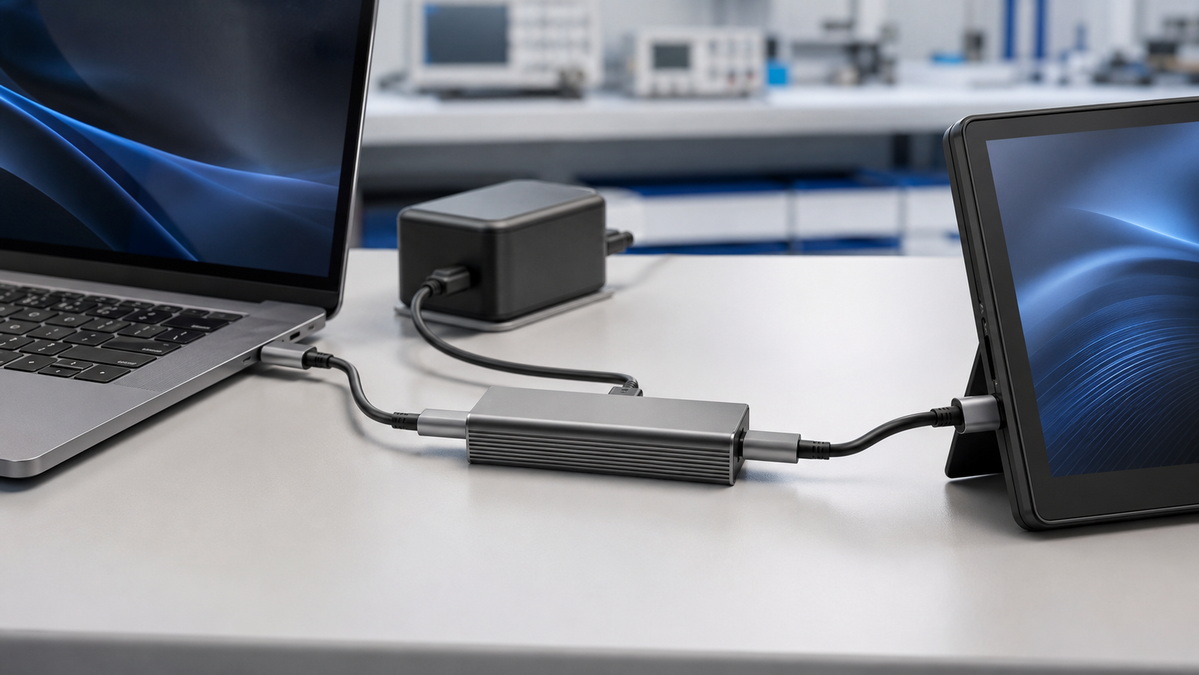
USB-C power delivery is based on negotiation. The connected devices communicate to determine the correct voltage and current level before power is delivered. This helps ensure that the device receives the amount of power it needs while reducing the chance of mismatch or overload.
A USB-C Power Delivery injector usually sits between the host and the device. Its function is to pass data through while injecting external power into the line. In practice, this allows the device to stay connected, communicate normally, and receive enough power at the same time.
This makes the injector especially valuable in setups where one connection must handle both charging and data transfer. It also provides more flexibility for environments where device power demand is higher than expected.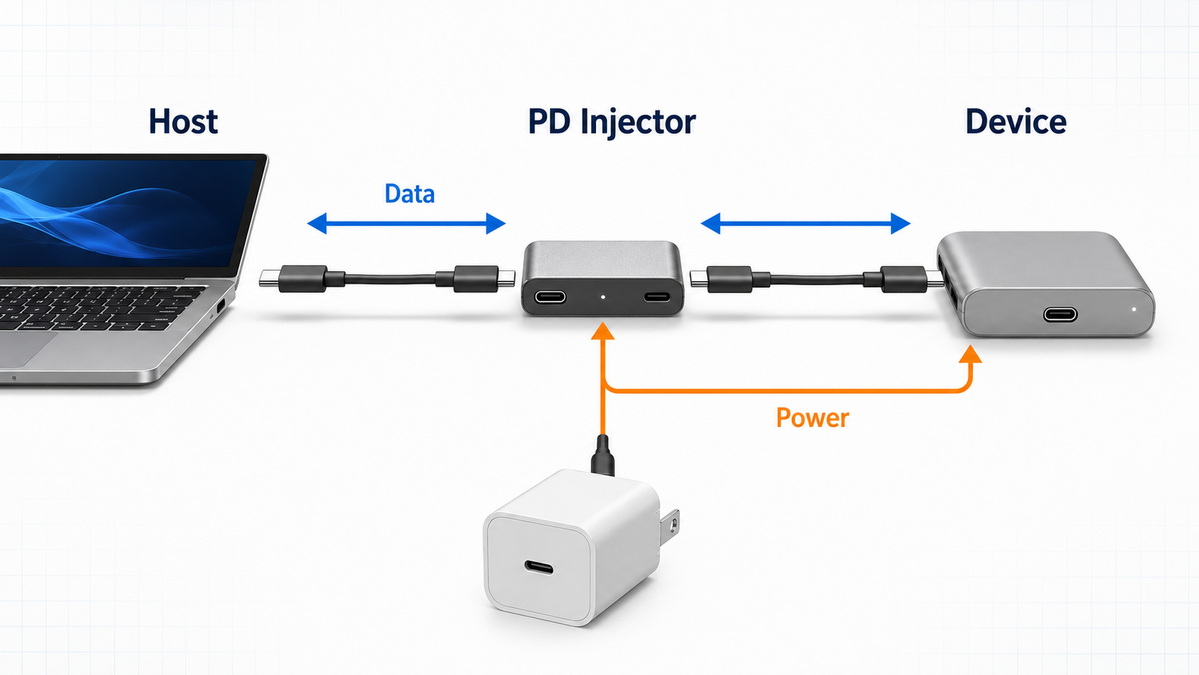
USB-C is now common in consumer electronics, commercial systems, and industrial products. As adoption continues to expand, so does the need for accessories that can support different power requirements without adding complexity.
At the same time, modern devices are becoming more capable and more power-hungry. Some peripherals now require stronger and more stable power input to perform correctly. USB-C Power Delivery injectors help address that need by supplying the extra power directly into the connection path.
They are also useful in environments that still rely on older hosts, mixed hardware systems, or legacy infrastructure. In these cases, the injector provides a practical way to connect modern USB-C devices without changing the entire system design.
USB-C Power Delivery injectors are used in a wide range of situations. Their value becomes especially clear in environments where power stability and device compatibility are important.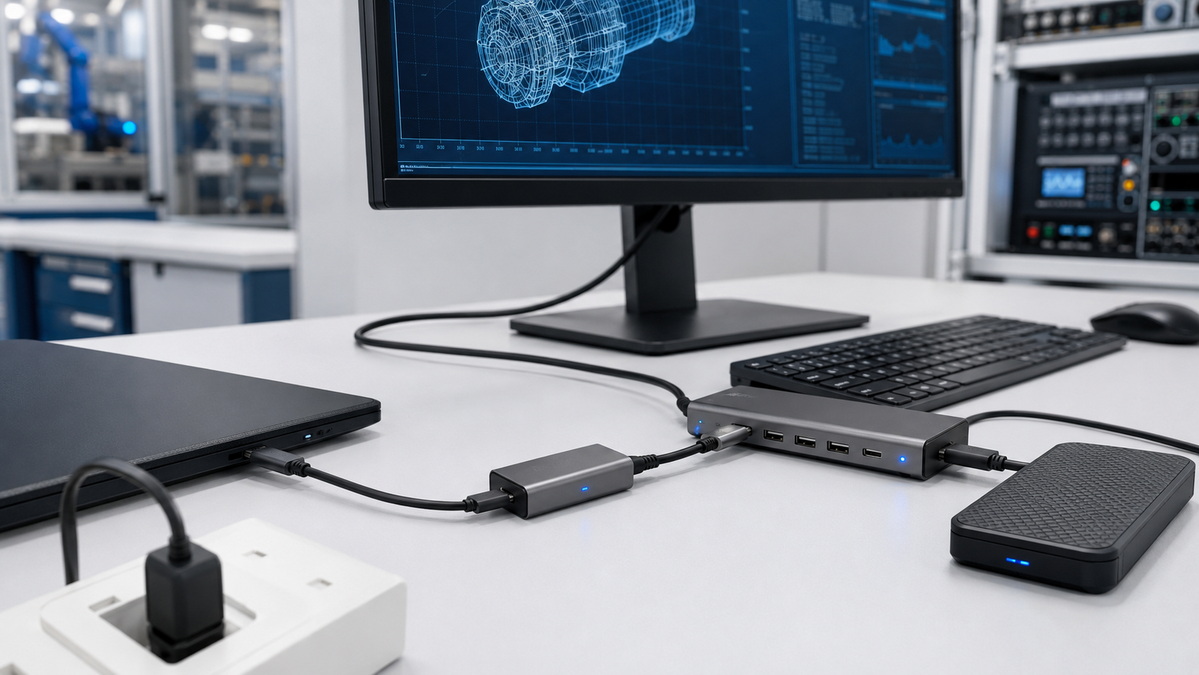
Many USB-C hubs, monitors, and accessories work better when power is delivered consistently. A PD injector can help reduce instability, low-power warnings, and unexpected disconnects.
Factories, kiosks, logistics systems, and testing equipment often need reliable device operation over long periods. A stable power source can help reduce interruptions and improve overall system performance.
For product designers and system integrators, the injector offers a useful building block when creating custom connectivity solutions. It helps support modern USB-C devices without requiring a complete redesign of the host platform.
Field teams, technical users, and mobile work setups can benefit from a simpler connection model that combines power and data in one streamlined path.
USB-C Power Delivery injectors offer several practical benefits:
- Stable power delivery helps prevent shutdowns and performance loss.
- Single-cable efficiency reduces clutter and simplifies setup.
- Better compatibility supports modern USB-C devices in mixed environments.
- Flexible integration works across office, industrial, and OEM use cases.
- Improved reliability helps devices operate more consistently under load.
These advantages make the injector especially useful when the goal is not just to connect a device, but to support it properly.
Selecting the right USB-C Power Delivery injector requires more than looking at wattage alone. Buyers and engineers should evaluate the full application environment before making a decision.
The injector should match the wattage needs of the device. If the output is too low, the device may not function properly.
Some applications require only charging, while others need full data transfer as well. The chosen product should support the intended use case.
It is important to verify that the injector works with the specific device type, host type, and USB-C power profile being used.
For commercial and industrial applications, durability matters. Strong materials, reliable connectors, and stable internal design all affect long-term performance.
Higher power levels generate more heat. Good thermal design helps maintain stability and supports safe operation over time.
Even a well-designed injector can underperform if used with poor-quality cables. Reliable cabling remains essential for power and data consistency.
A useful way to choose the right injector is to ask a few direct questions:
1. What device needs power?
2. How much power does it require?
3. Does the setup need data, charging, or both?
4. Is the environment office-based, industrial, or mobile?
5. Is the system using modern USB-C hosts, older hosts, or a mixed structure?
6. Does the product need to support OEM branding or custom integration?
Answering these questions early can reduce installation problems and make the final solution more efficient.
As USB-C becomes more common, buyers are expecting accessories that do more than simply connect devices. They want products that support stable performance, simplify deployment, and work across different hardware conditions.
That is why USB-C Power Delivery injectors are increasingly important. They solve a real-world problem in a clean and practical way. Instead of forcing users to redesign a system, they add the power support that the setup is missing.
For manufacturers and exporters, this creates an opportunity to offer solutions that are both technically useful and commercially adaptable.
A USB-C PD injector is often the better choice when:
- the host cannot supply enough power,
- the device needs both data and charging,
- the system must remain compact and efficient,
- the setup includes mixed-generation hardware,
- or the application requires stable power delivery over long periods.
In these situations, the injector is not just a supporting accessory. It becomes an important part of the overall system design.
For OEM buyers, the value of this product category goes beyond the technical function. It can support product differentiation, improve system performance, and help create more reliable end-user experiences.
A supplier with experience in cable assemblies, adapters, hubs, splitters, and switches can provide more than a standard off-the-shelf item. That kind of background is useful when you need custom specifications, private-label support, or products adapted for export markets.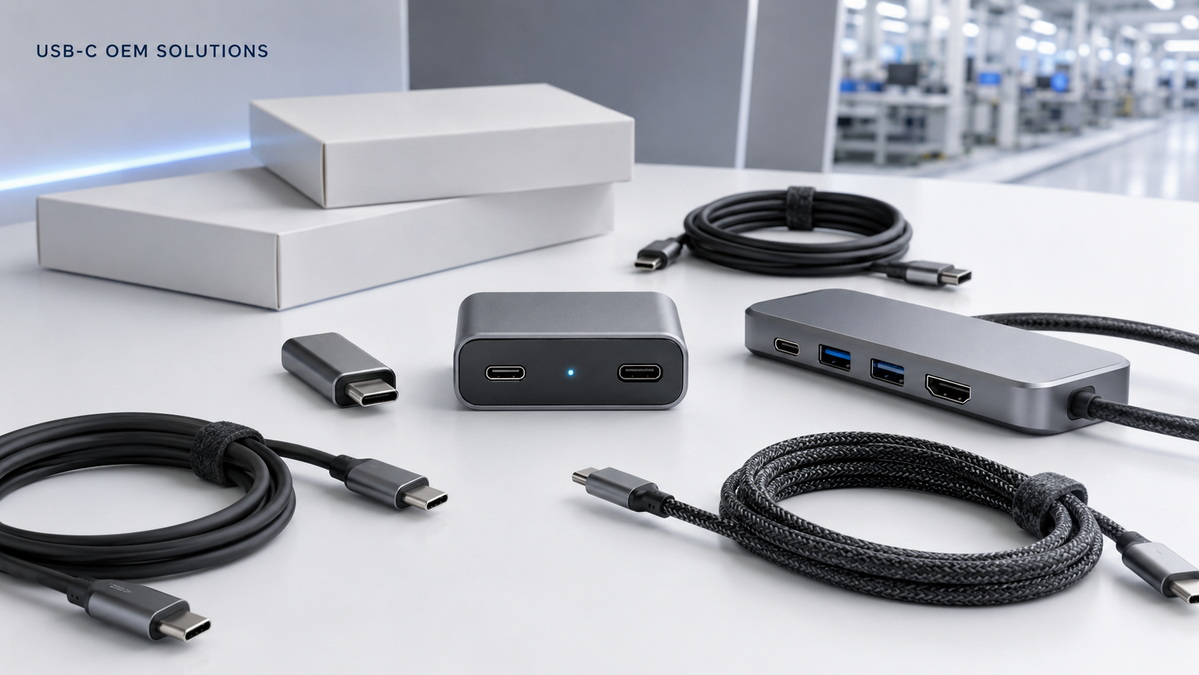
USB-C Power Delivery injectors solve a simple but important challenge: they make it possible to deliver the right amount of power without losing data connectivity. As USB-C continues to grow across consumer, commercial, and industrial applications, solutions like these will play a bigger role in keeping systems stable and easy to use.
If you are building, sourcing, or integrating USB-C cable accessories for global markets, choosing the right power solution can make a meaningful difference in reliability and user experience. Contact a trusted manufacturing partner to discuss the best option for your project.
It adds external power to a USB-C connection while keeping data communication active.
No. A hub expands connections, while a PD injector focuses on adding power into the USB-C path.
It is especially useful in office, industrial, OEM, and mixed-hardware environments.
Yes. If instability is caused by insufficient power, a PD injector can improve reliability.
Many models are designed to support both, depending on the product specification.
Check power output, compatibility, data support, thermal design, and cable quality.
Yes. It can be a practical component in OEM and custom integration projects.
1. Coolgear. "Understanding USB-C Power Delivery Injectors."
2. Coolgear. "Compact 95W USB USB 3.2 Gen 2 Type-C PD Injector (DFP)…"
3. Phil's Lab. "USB Type C Power Delivery Hardware Design."
[https://www.youtube.com/watch?v=]
4. Grand View Research / market reporting pages on USB Type-C growth trends.
[https://www.grandviewresearch.com/]
5. Market reporting on USB-C connector and USB Type-C market growth.


